-
by sayum
10 August 2026 8:42 AM







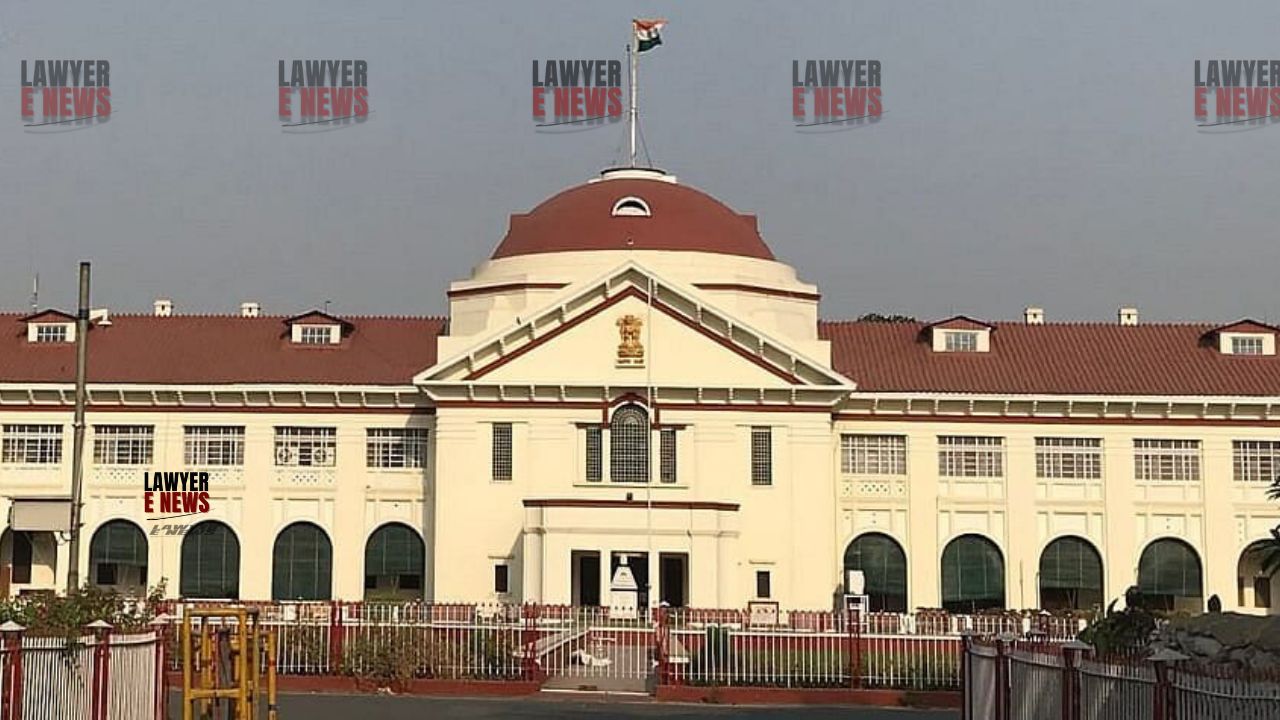
"It clearly shows that the Petitioner was not consuming electricity with dishonest intention, in fact, he was using it bonafidely." Patna High Court, in a significant ruling, quashed an FIR registered under Section 135 of the Electricity Act, 2003, for alleged theft of electricity, emphasizing that mere non-payment of electricity charges or continued consumption without evidence of 'dishonest intention' does not constitute the offence of theft.
A bench of Justice Jitendra Kumar observed that the absence of meter tampering or proof of physical disconnection indicated a lack of criminal intent.
The petitioner, Md. Shahid Imam, sought to quash an FIR (Nawadah Town P.S. Case No. 363 of 2022) alleging that he was consuming electricity in his domestic campus despite its disconnection on January 4, 2021, due to outstanding dues of Rs. 5,39,126/-. During a raid on April 19, 2022, officials of the South Bihar Power Distribution Company Ltd. (SBPDCL) found the meter running, with a significantly higher reading, leading to an estimated loss of Rs. 1,96,811/-.
The primary question before the court was whether the facts alleged in the FIR constituted an offence of 'theft of electricity' under Section 135 of the Electricity Act, 2003. The court was also called upon to determine the crucial distinction between 'theft of electricity' (Section 135) and 'unauthorized use of electricity' (Section 126) under the Act.
The High Court began by distinguishing between Section 135, which deals with theft of electricity and its punishment, and Section 126, which provides for the assessment of charges for unauthorized use of electricity.
Section 126 vs. Section 135: A Clear Dichotomy
The Court referred to the authoritative pronouncement of the Supreme Court in Southern Electricity Supply Co. of Orissa Ltd. Vs. Sri Seetaram Rice Mill (2012) 2 SCC 108, which lucidly explained the distinction. The apex court had held that Sections 126 and 127 constitute a complete code for assessment in cases not falling under Section 135.
Dishonest Intention is Paramount for Theft
Section 135, falling under Part XIV ("offences and penalties"), uses the crucial words "whoever, dishonestly" does any of the acts specified in sub-section (1)(a) to (e) to abstract, consume, or use electricity. The Patna High Court reiterated that "dishonesty" is a state of mind that must be proven for a person to be punished under this section.
Unauthorised Use Does Not Imply Theft
In contrast, Section 126 applies to cases where "there is no theft of electricity but the electricity is being consumed in violation of the terms and conditions of supply leading to malpractices which may squarely fall within the expression 'unauthorised use of electricity'." This section primarily provides a civil remedy and does not require a criminal intent or mens rea.
No Mens Rea for Section 126 Proceedings
The Court highlighted that Section 126 does not speak of any criminal intendment and is primarily an action and remedy available under the civil law, unlike Section 135 which squarely falls within the dimensions of criminal jurisprudence.
"Dishonesty" Defined
Citing the Southern Electricity Supply Co. judgment, the High Court underscored that dishonesty involves an intent to deceive, acting fraudulently, and with a deceptive mind to cause wrongful loss to another. The actions must be of the type stated under sub-sections (1)(a) to (1)(e) of Section 135.
Facts of the Present Case: Absence of Dishonest Intent
Applying these principles to the present case, the High Court noted that the SBPDCL's claim of electricity disconnection was "not supported by the material on record." Crucially, neither the FIR nor the inspection notes referred to any tampering of the meter or showed that the electricity connection was cut and the meter sealed.
Meter Running Normally, Readings Increasing
On the contrary, the inspection report indicated that the meter was in "running condition and reading was going up as per the consumption." The Court found it significant that the meter reading on the date of disconnection (as claimed by SBPDCL, January 4, 2021) was 59425 Kwh, while on the date of the raid (April 19, 2022), it was 71412 Kwh.
Civil Liability, Not Criminal Liability
The Court concluded, "It clearly shows that the Petitioner was not consuming electricity with dishonest intention, in fact, he was using it bonafidely." The only issue against the petitioner was his failure to pay the outstanding electricity charges.
FIR Quashed, SBPDCL Free to Recover Dues
Therefore, the High Court held that while there might be civil liability for the unpaid dues, "there is no criminal liability as per the whole alleged facts and circumstances."
"Hence, there may be civil liability, but there is no criminal liability as per the whole alleged facts and circumstances."
The Patna High Court allowed the writ petition and quashed the FIR, reiterating that for a charge of electricity theft under Section 135 of the Electricity Act, 2003, the indispensable element of 'dishonest intention' or mens rea must be present and proven, distinguishing it clearly from mere non-payment or 'unauthorised use' which primarily attracts civil remedies. The Court clarified that the SBPDCL remains at liberty to recover electricity charges in accordance with law, and may invoke Section 126 of the Electricity Act if its conditions precedent are fulfilled.
Date of Decision: 22 June 2026