-
by sayum
10 August 2026 8:42 AM







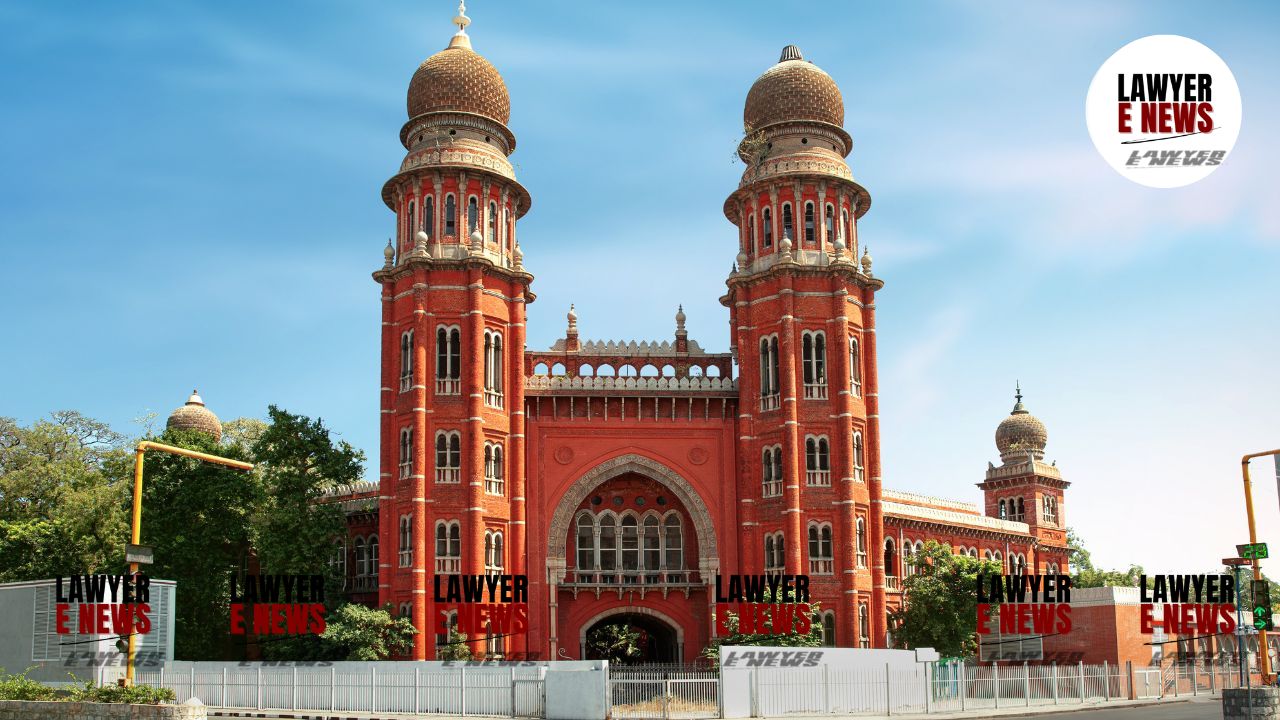
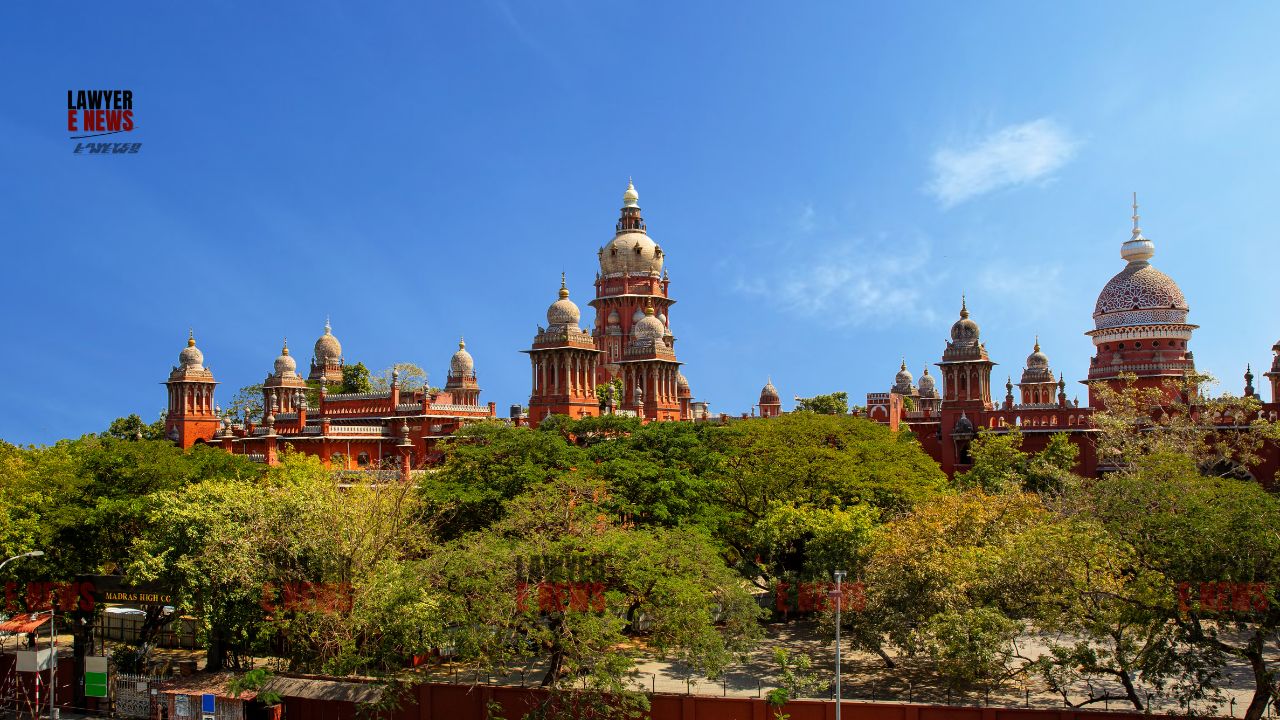
"Even if the excess was committed against the Advocates, the lawful way is to appear before the Court before which they are produced, voice their objection, appeal to the learned Presiding Officer not to accept the remand, and seek lawful remedies." Madras High Court, in a significant ruling, conditionally quashed an FIR registered against ten advocates for allegedly obstructing police from performing their duty within court premises, specifically preventing the production of two advocates for remand.
While acknowledging prima facie material for the offence of obstruction under Section 225 of the Indian Penal Code, a bench of Justice D. Bharatha Chakravarthy directed that the FIR would stand quashed only upon the petitioners filing an affidavit expressing regret for their "extreme behaviour," citing the peculiar facts including police inaction and significant delay.
The case stemmed from a protest by ten advocates within the High Court premises on November 2, 2023. The protest aimed to prevent the Sathankadu Police from producing two fellow advocates, Dinesh and Neeraj, apprehended under the NDPS Act, before a Special Court for remand. Following a review of video footage, the High Court's Security Committee directed that a complaint be lodged, leading to an FIR (Crime No. 11 of 2025) being registered against the petitioners under Sections 186, 152, and 225 of the Indian Penal Code.
The primary question before the court was whether the FIR registered against the advocates for their protest within the court premises was legally sustainable. The court was also called upon to determine if the alleged acts constituted obstruction of public servants and, if so, whether there were grounds to quash the proceedings.
FIR Under Section 186 IPC Not Maintainable
The High Court first addressed the charge under Section 186 of the Indian Penal Code (obstructing public servant in discharge of public functions). The court unequivocally held that an FIR for this offence cannot be registered directly.
Requirement of Court Complaint Under CrPC Section 195
It cited Section 195 of the Code of Criminal Procedure, 1973, which bars courts from taking cognisance of an offence under Section 186 IPC unless a complaint is made by the public servant concerned or some other public servant to whom he is administratively subordinate. The bench relied on the precedent set in Jeevanandham and Ors. Vs. State rep. by The Inspector of Police and Anr. to quash the FIR in respect of this specific offence.
Section 152 IPC Not Attracted in This Case
Regarding Section 152 of the Indian Penal Code (assaulting or obstructing public servant when suppressing riot, etc.), the court found it was not attracted. This section applies when a public servant on duty for dispersing an unlawful assembly or suppressing a riot or affray is threatened, obstructed, or assaulted.
Lack of Averments for Section 152 IPC
The court noted that the allegations in the FIR and attendant records primarily indicated prevention of production, without specific averments of assaulting or threatening the police officers on duty. It highlighted that the complaint merely stated that the protesters continued despite warnings.
Prima Facie Case for Section 225 IPC on Obstruction
However, the court found a prima facie case for the offence under Section 225 of the Indian Penal Code (resistance or obstruction to lawful apprehension of another person). This section is attracted when a person offers resistance or obstruction to the lawful apprehension of another or attempts to rescue someone lawfully detained for an offence.
Lawful Means of Protest
The court emphasized that while protest in a democratic and peaceful manner to express solidarity is permissible, there is a clear distinction when such actions cross the line into obstruction of lawful procedures. The bench observed that even if there was perceived 'excess' committed against the arrested advocates, the lawful course of action was to present objections before the court where they were produced and seek legal remedies.
Committee's Findings on Obstruction
The court referred to the High Court's Security Committee's observation, based on video footage, that the advocates were indeed prevented from being produced before the court. This indicated that the protest went "beyond protest" and constituted an act of obstruction.
Considering Advocates' Demeanor – The C.Raja Precedent
Petitioners' counsel had cited C.Raja Vs. State and Anr., where the court noted an advocate's "boisterous" and "aggressive" demeanor in fighting for client rights should not automatically lead to criminal prosecution if the main intention was not to prevent officials but to safeguard client rights. However, the present court distinguished this, implicitly stating that direct obstruction goes beyond mere boisterousness.
Conditional Quashing Due to Peculiar Facts and Police Lapses
Despite finding prima facie material for Section 225 IPC, the High Court decided to conditionally quash the FIR. This decision was based on several peculiar circumstances of the case, which weighed in favour of the petitioners.
Police Inaction and Delay
The court specifically noted that after the incident, the police did not make further attempts to produce the two arrested advocates (Dinesh and Neeraj) but instead enlarged them on bail. Furthermore, no Final Report (chargesheet) had been filed in that original case till the date of this judgment. The court also observed the significant delay, with the occurrence being in 2023 and the FIR for obstruction being filed in 2025, meaning the petitioners had been facing proceedings for approximately three years.
Demand for 'Regret' for Extreme Behaviour
The court held that considering the "peculiar nature of the facts of the case, where, even now, it is being asserted that members of the Bar were being targeted without any involvement," the FIR under Section 225 IPC could also be quashed. This was made contingent upon the petitioners filing an affidavit expressing regret for their "extreme behaviour" within ten working days.
The Madras High Court thus conditionally quashed the FIR against the ten advocates. The FIR for offences under Sections 186 and 152 IPC was quashed outright for legal infirmities, while the proceedings under Section 225 IPC were quashed subject to the petitioners filing an affidavit of regret for their conduct. This ruling underscores the delicate balance between advocates' right to protest and the necessity to maintain judicial decorum and prevent obstruction of lawful court processes, while also holding police accountable for procedural lapses and delays. If any petitioner fails to file the affidavit, the case against them under Section 225 IPC will proceed.
Date of Decision: 05 August 2026