-
by sayum
25 August 2026 9:55 AM







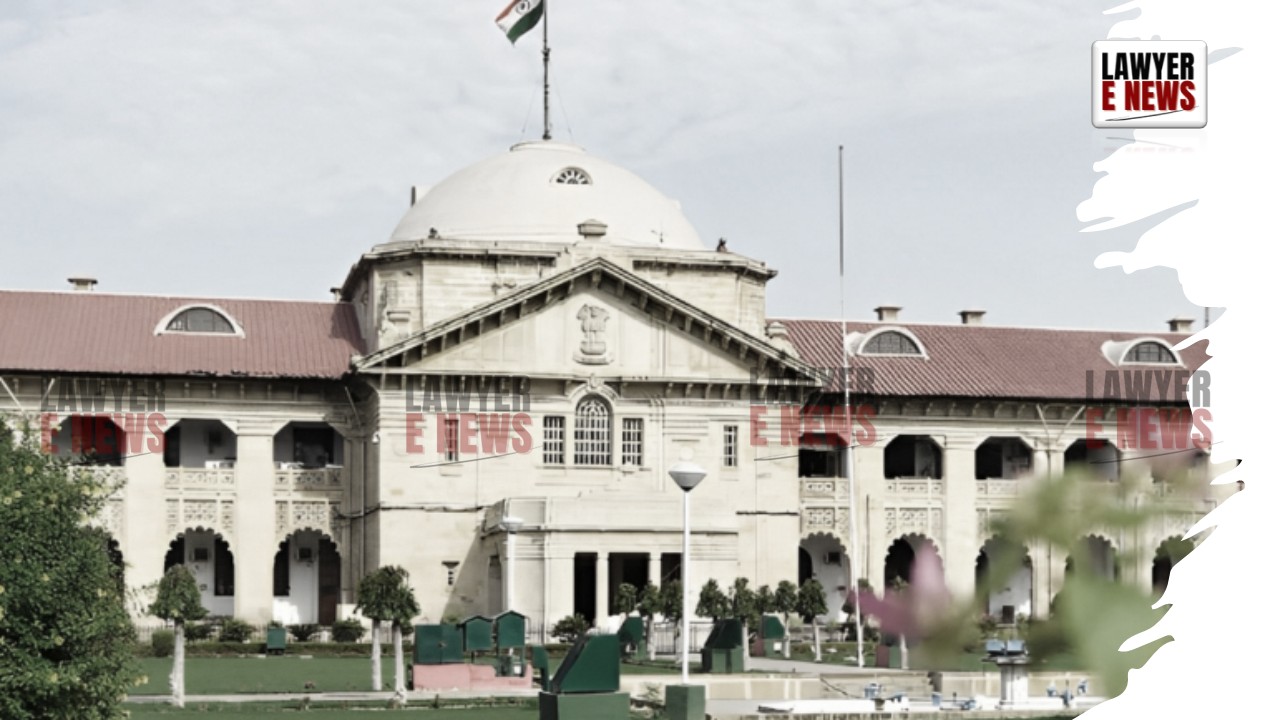
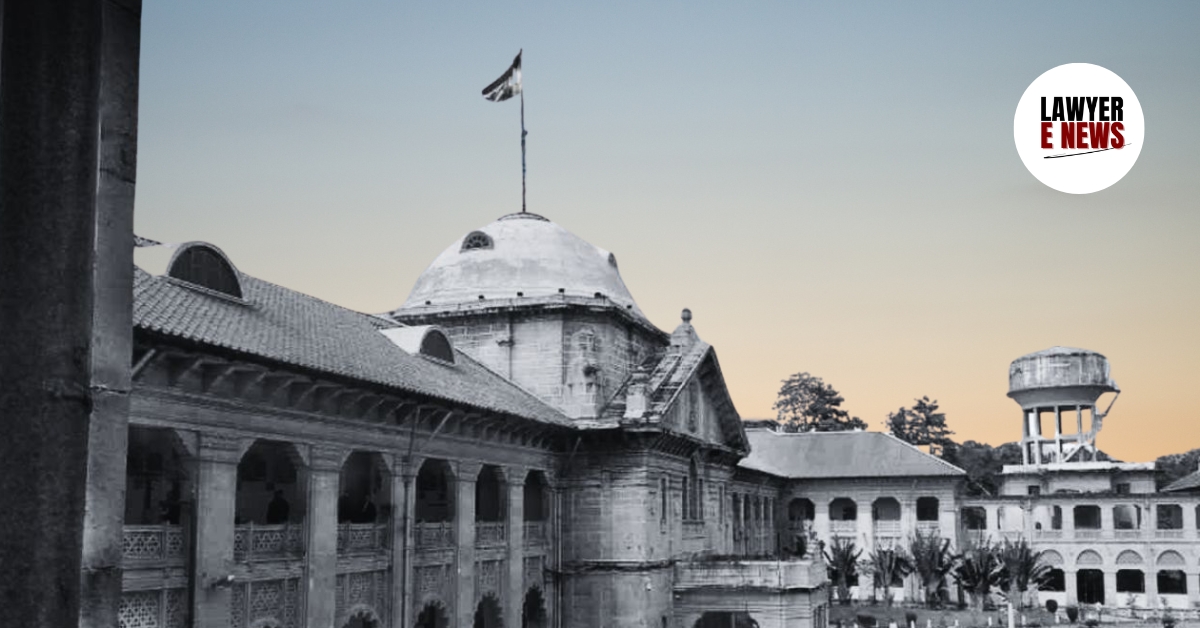
“Litigants are at liberty to initiate contempt proceedings against Bar Associations causing delay in disposal of revenue suits” — In a landmark order Allahabad High Court (Lucknow Bench) delivered a strong rebuke to the ongoing disruption of judicial proceedings caused by lawyers' strikes, warning that office bearers of Bar Associations shall be liable for contempt if such actions interfere with the disposal of time-bound revenue matters.
Justice Arun Kumar Singh Deshwal took judicial notice of repeated adjournments in a pending partition suit filed under Section 116 of the U.P. Revenue Code, 2006, due to continuous strikes by the Bar Association, Tehsil Utraula.
Mandatory Time Limit for Partition Suits Must Be Followed: “Rule 109(10) is binding”
The petitioners had sought a direction for the expeditious disposal of their suit for division of holdings, pending since November 2022, before the SDM, Utraula. The Court noted that Rule 109(10) of the U.P. Revenue Code Rules, 2016 explicitly provides that:
“The Sub-Divisional Officer shall make an endeavour to decide the suit within the period of six months and if the suit is not decided within such period, the reason shall be recorded.”
Justice Deshwal reiterated that the statutory timeline under the Revenue Code and its Rules must be followed, and cited the precedent laid down in Daya Shankar v. State of U.P., 2023 (6) ADJ 181, which emphasized strict adherence to time frames for disposal of revenue proceedings.
Continuous Strikes by Lawyers Violate Court’s Mandate in Daya Shankar Case
Importantly, the Court held that the primary reason for delay in the present case was “continuous strike on the part of advocates of Tehsil Utraula”, which had made it practically impossible for the SDM to proceed. The Court took serious note of this pattern of disruption and held:
“It is the strike of Bar Association of Tehsil Utraula, which is the reason for not concluding the proceedings in question. Therefore, prima facie it is the contempt committed by the Bar Association, Tehsil Utraula, not by the Presiding Officer.” [Para 7]
This leads to a major judicial pronouncement extending the applicability of contempt liability beyond state officials:
“If the case is adjourned due to continuous strike of Bar Association… the office bearers of concerned Bar Association will be liable for contempt of this Court for making interruption to the direction in Daya Shankar's case.” [Para 9]
Litigants Have Right to File Contempt Cases Against Bar Associations Causing Delay
The Court did not stop at individual directions. Recognizing the larger public interest, particularly of poor litigants and farmers who are most affected by delays in revenue courts, the Court issued a general direction applicable across the entire State of Uttar Pradesh.
“In case the proceedings under Revenue Code could not be concluded within the time framed by this Court in Daya Shankar because of the continuous strike of Bar Association of any Tehsil, Collectorate or Commissionerate, then the office bearers of Bar Association would be liable for contempt of this Court…” [Para 10]
Furthermore, litigants themselves are empowered to initiate contempt petitions against the office bearers responsible.
No Need for Fresh Writ Petitions: Contempt Is the Remedy for Delay
Another significant ruling that emerged from this case is the avoidance of unnecessary writ petitions seeking expeditious disposal of revenue matters. The Court held:
“The parties need not approach this Court for seeking direction for expeditious disposal… they can file contempt petition before this Court for the violation of the directions issued in the Daya Shankar’s case.” [Para 6]
This clarifies the procedural remedy for litigants frustrated by deliberate or organized delays, especially where the time limits are statutory or judicially mandated.
Directions to Circulate the Order Statewide
Recognizing the need for systemic enforcement, the Court has directed that this order be:
Circulated by the Chairman of the Board of Revenue to all revenue authorities from Tehsil to Commissionerate level, and
Pasted on public notice boards in such offices to ensure visibility.
Further, the Senior Registrar of the High Court has been tasked with ensuring communication and compliance.
In disposing of the petition, the Allahabad High Court has reiterated the primacy of judicial efficiency, procedural discipline, and public interest over professional conveniences. While upholding the six-month statutory limit under Section 116 read with Rule 109(10) of the U.P. Revenue Code and Rules, the Court has taken an unprecedented step in subjecting Bar Associations to contempt jurisdiction when their conduct obstructs access to justice.
This ruling marks a significant moment in asserting the rule of law over strike culture, particularly in revenue and rural litigation, where delay amounts to denial, and justice postponed harms the most vulnerable.
Date of Decision: 02 December 2025