-
by sayum
11 August 2026 2:00 PM







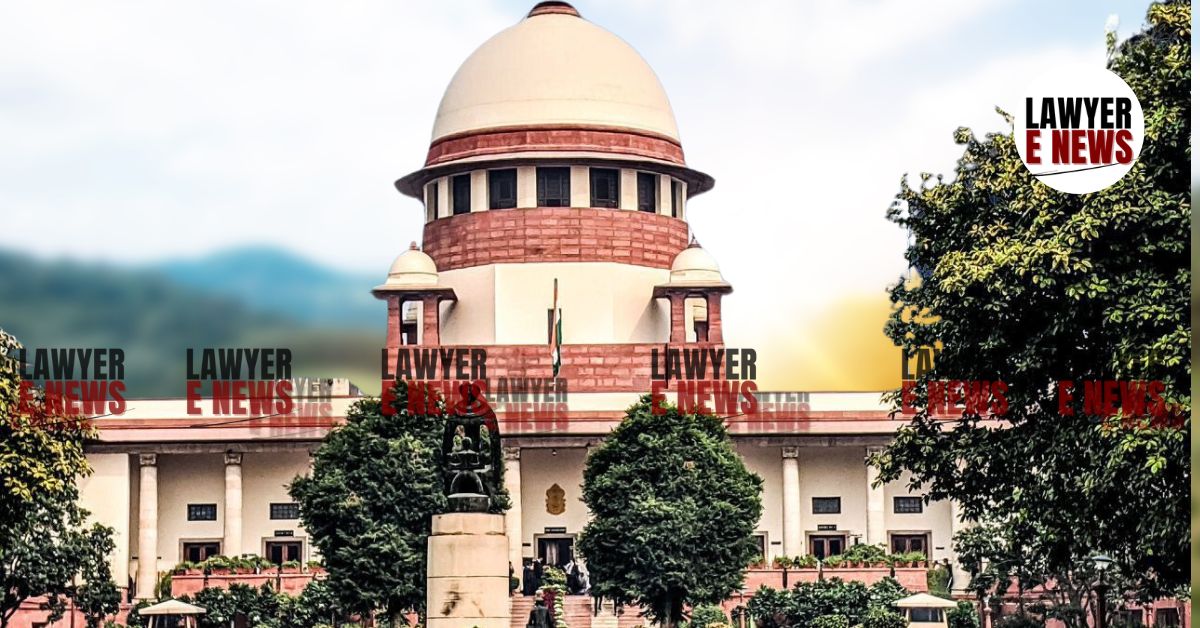
“Reimbursements Must Be Made by State Where Judge Was First Appointed or Retired — No Escape from Responsibility” - Supreme Court of India issued a strong warning to State Governments in the matter of Justice V.S. Dave President, The Association of Retd. Judges of Supreme Court and High Courts v. Kusumjit Sidhu & Ors. (Contempt Petition (Civil) No. 425-426 of 2015 in W.P. (C) No. 523/2002), making it crystal clear that failure to comply with court-ordered reimbursements for retired judges’ medical expenses will attract contempt action.
A Bench comprising Justice Abhay S. Oka and Justice Ujjal Bhuyan pulled up States for laxity in compliance and directed:
“We are putting the State to the notice that if we find non-compliance, action under the Contempt of Courts Act, 1981 will be initiated.”
The Court also clarified a critical point regarding which State Government is responsible for such payments, resolving confusion that had arisen due to transfers of judges during service.
The Origin of the Dispute: Delays in Medical Reimbursements for Retired Judges
The issue stems from repeated complaints by retired judges of High Courts and the Supreme Court about delays and denials in reimbursement of medical expenses incurred post-retirement, in violation of earlier Supreme Court directives.
Despite multiple orders — including a detailed one passed on 18th February 2025 — requiring States to ensure timely payments, several States either filed vague compliance affidavits or cited procedural complications, especially in cases where judges had served in multiple High Courts due to transfers.
Taking note of this dilatory attitude, the Supreme Court decided to tighten the noose around non-compliant States.
Court Clarifies the Responsible State: "Where First Appointed or From Where Retired"
Addressing a key ambiguity, the Court observed that many judges are initially appointed to one High Court but retire from another due to transfers during their career.
To avoid any excuses from State Governments, the Court expressly clarified:
“When we say the concerned State Government, it will be the State Government where the seat of the High Court is situated in which the retired Judge was firstly appointed or the State Government where the seat of the High Court is situated from which the learned Judge has retired.”
Thus, either the State of initial appointment or the State from which the judge retired must process and pay the reimbursements, without shifting blame or engaging in inter-State buck-passing.
States Given One Last Opportunity to File Fresh Affidavits
In a measured but stern approach, the Court granted the States one week’s time to file fresh, proper compliance affidavits, and directed that:
“The States will forward copies of the affidavit to the learned Amicus Curiae.”
Further, the Court appointed a senior amicus curiae to scrutinize the affidavits and prepare a compliance chart, indicating the extent to which each State has abided by the Supreme Court’s directives.
Listing the matter for further hearing on 29th April, 2025 at 2:00 p.m., the Court made it clear that non-compliance would no longer be tolerated.
This firm pronouncement from the Supreme Court sends an unambiguous message to all States: the dignity of the judiciary extends beyond the bench, and promises made to retired judges must be honored without obstruction or delay.
Justice Abhay S. Oka and Justice Ujjal Bhuyan’s stern warning captures the gravity:
“We request the learned Amicus to submit a chart... If we find non-compliance, action under the Contempt of Courts Act, 1981 will be initiated.”
The coming hearing on April 29, 2025, could witness serious consequences for defaulting States if they fail to comply fully.
Date of Decision: April 15, 2025