-
by sayum
24 August 2026 3:22 PM







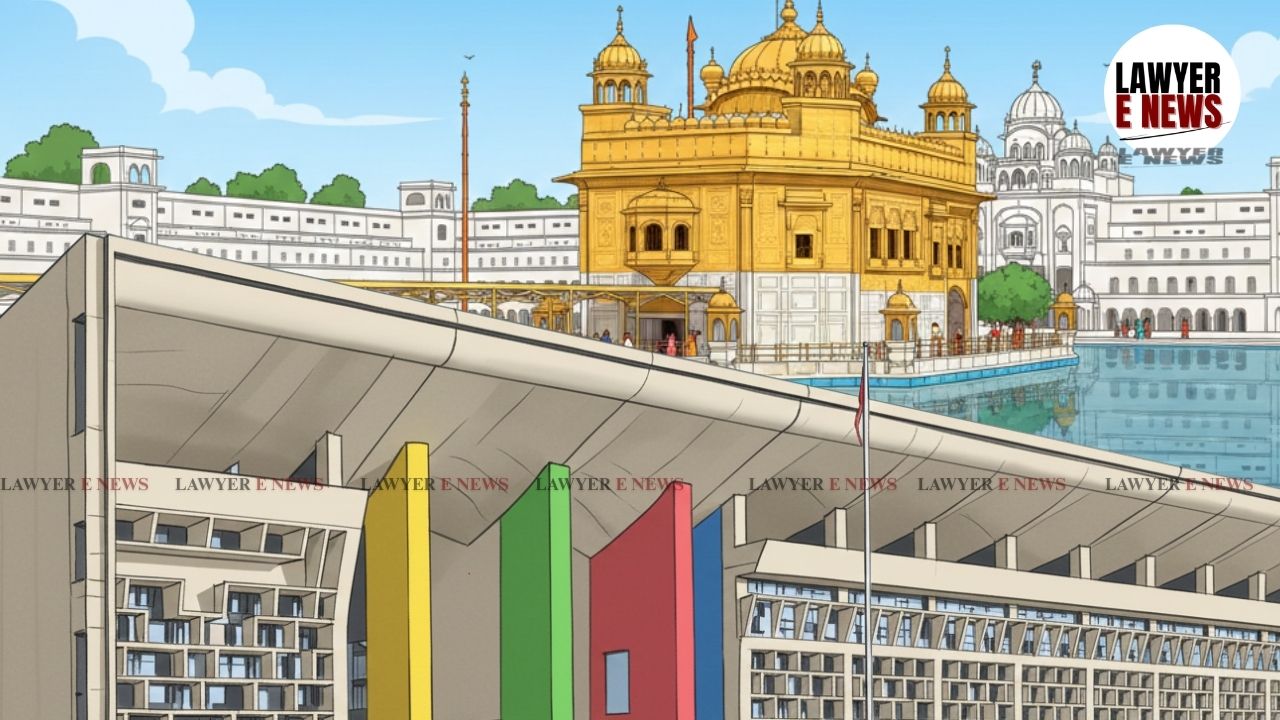
“In the absence of any licence to carry out the business of fire crackers, only conclusion that can be drawn is that the said explosive material was collected by the appellant for the sole purpose of supply to co-accused who indulge in anti-national activities”— In a recent ruling the High Court of Punjab & Haryana, comprising Justice Gurvinder Singh Gill and Justice Ramesh Kumari, dismissed the regular bail appeals of Sahib Singh, the alleged supplier of explosives used in the serial blasts near the Golden Temple in May 2023.
The Heritage Street Blasts Conspiracy
The case stems from a series of low-intensity explosions that rocked the Heritage Street near the Golden Temple, Amritsar, between May 6 and May 8, 2023. The blasts occurred near the Saragarhi Parking and the Guru Ram Das Sarai, causing panic and damage to property, though no loss of life was reported. Following the incidents, the police apprehended two primary suspects, Azadbir Singh alias Azad and Amrik Singh alias Mika, who were allegedly acting under instructions from handlers abroad to "create terror in the public and government."
During interrogation, the co-accused disclosed that they had procured the explosive materials—specifically meant for manufacturing crude bombs—from the appellant, Sahib Singh. Based on these disclosures, Sahib Singh was arrested, and a subsequent search of his factory premises in Anngara, Amritsar, led to the recovery of significant quantities of chemical substances, including Potassium Nitrate, Potassium Chlorate, Sulphur, and Aluminium powder. The prosecution invoked stringent provisions under the Unlawful Activities (Prevention) Act (UAPA) and the Explosive Substances Act against the appellant.
The 'Firecracker' Defence vs. Forensic Evidence
Appearing for the appellant, the defence counsel argued that Sahib Singh was falsely implicated and was merely running a firecracker business. It was contended that the materials recovered were standard ingredients for firecrackers and that the appellant had purchased them legitimately from Saharanpur. The defence further relied on the Supreme Court’s judgment in Union of India v. K.A. Najeeb, arguing that the delay in trial and the lack of sanction under the UAPA warranted the grant of bail.
However, the Bench meticulously dissected this defence by juxtaposing it with the Forensic Science Laboratory (FSL) report. The FSL analysis confirmed that the recovered mixtures (Nitrite and Chloride ions) were consistent with low explosives capable of causing damage to life and property. Crucially, the Court noted that while these materials are indeed used in firecrackers, the appellant failed to produce any valid license authorizing him to manufacture or possess such explosive substances. The Court observed that the unauthorized possession of dual-use chemicals, which were ultimately used to assemble the IEDs planted at the religious site, heavily weighed against the plea of innocence.
The High Court placed heavy reliance on the statutory bar against bail under Section 43D(5) of the UAPA. Citing the Supreme Court’s recent ruling in Gurwinder Singh v. State of Punjab (2024), the Bench reiterated that if the Court, upon perusal of the case diary, is of the opinion that the accusations are "prima facie true," bail must be denied.
The Court held that the recovery of 10 sealed parcels of explosive material from the appellant's exclusive possession, corroborated by the disclosure statements of the co-accused who planted the bombs, established a strong prima facie case. The Bench reasoned that the material was collected for the "sole purpose" of supplying it to elements involved in anti-national activities. The Court further distinguished the K.A. Najeeb precedent, noting that while constitutional courts can grant bail despite the UAPA bar in cases of prolonged incarceration, the gravity of the offence and the specific evidence in the present case did not justify such leniency.
Dismissing the appeals, the Court highlighted the appellant's "chequered history." It was noted that Sahib Singh is involved in seven other criminal cases, including multiple registrations under the Explosives Act. Although he had been acquitted in some earlier matters, trials were pending in others. The Court concluded that given the recovery of bomb-making material, the serious nature of the conspiracy to disturb religious harmony, and the statutory restrictions under the UAPA, the appellant was not entitled to the concession of regular bail.
Date of Decision: 26.11.2025