-
by sayum
24 August 2026 3:22 PM







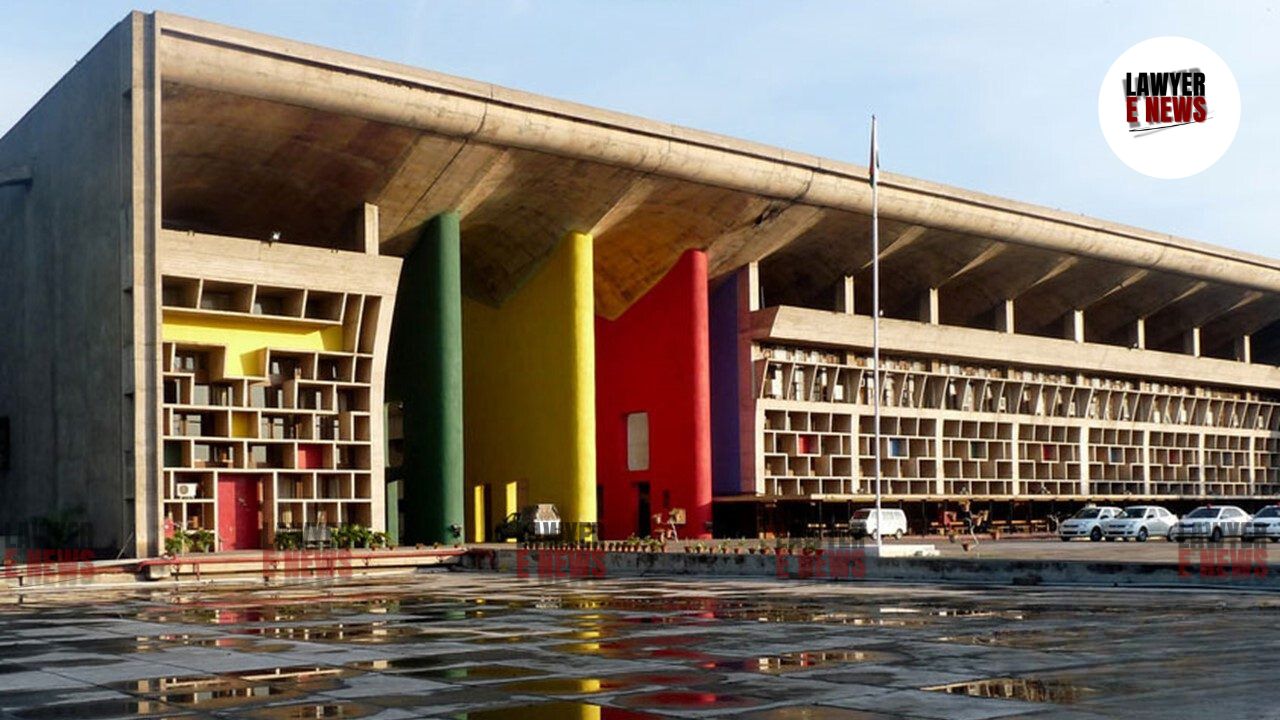
“Inducing a younger brother to execute a deed to 'save family honor' against a sister's partition suit constitutes undue influence... A document obtained through undue influence and proven to be a sham creates no estoppel against the executor”— In a seminal ruling High Court of Madhya Pradesh (Gwalior Bench), comprising Justice G. S. Ahluwalia, allowed a First Appeal pending since 1976, declaring a 1966 "Dastbardari" (Relinquishment Deed) null and void.
The 56-Year Legal Saga
The Court was adjudicating a First Appeal arising out of a Civil Suit dismissed in 1973. The dispute involved a "Dastbardari" executed in 1966 by the younger brother, Syed Habib Shah (Appellant), in favor of his elder brother, Syed Mansoor Shah.
The controversy began when their sister, Malka Begum, filed a partition suit in 1964. Habib Shah had initially filed a written statement admitting his sister's share. However, the elder brother, Mansoor Shah, allegedly exercised undue influence, convincing Habib that admitting the sister's claim would bring "disrepute to the family." Consequently, Habib was made to sign a Relinquishment Deed declaring he had no share in the property.
The litigation had a chequered history, having been dismissed in default in 1989 and eventually restored by the Supreme Court in August 2024 with a direction to decide on merits.
“Party Cannot Take Advantage of Own Wrong”: On Missing Trial Court Records
A significant procedural hurdle was the destruction of the Trial Court's record in 2006. The respondents argued that the appeal should be dismissed as the record (including order sheets and written statements) could not be reconstructed.
Justice Ahluwalia rejected this contention, observing that the respondents had failed to cooperate in the reconstruction process despite repeated opportunities. The Court held that the destruction of records does not automatically warrant the dismissal of an appeal. Citing State of U.P. Vs. Abhai Raj Singh, the Court noted that acquitting or dismissing merely on the ground of non-availability of records would encourage "dubious persons and detractors of justice."
“Elder Brother in Fiduciary Capacity”: The Doctrine of Undue Influence
The Court conducted a deep dive into Section 16 of the Indian Contract Act. It held that a fiduciary relationship existed between the elder brother (Mansoor) and the younger brother (Habib), where the latter reposed confidence in the former.
The Court observed that the transaction was "unconscionable" on the face of it because Habib Shah surrendered his entire share without consideration. Once the fiduciary relationship and the unconscionable nature of the transaction were established, the burden of proof shifted to the beneficiary (the elder brother's heirs) to prove that the deed was not induced by undue influence. They failed to discharge this burden.
“Paper Transaction to Defeat Sister’s Rights”: Section 92 Evidence Act Exception
The respondents argued that under Section 92 of the Evidence Act, oral evidence could not contradict the written terms of the Relinquishment Deed. The Court, however, applied the exception to this rule.
Relying on Gangabai v. Chhabubai, the Court held that the bar under Section 92 does not apply when a party pleads that the document was a "sham" and was never intended to be acted upon. The Court noted that the "Dastbardari" was never produced in the sister’s partition suit (Suit No. 7-A/1964) nor used during the final decree proceedings. It was a "paper transaction" meant solely to pressure the sister and frustrate her suit, not to actually transfer title between the brothers.
“Renunciation of Chance of Succession is Void”: Spes Successionis
The Court further held that the deed was legally defective under Muslim Law and Section 6(a) of the Transfer of Property Act. The Court reasoned that one cannot relinquish a right that the transferee does not admit exists. Since Mansoor Shah denied Habib had any title to begin with, a relinquishment deed was conceptually flawed. Furthermore, the transfer of spes successionis (chance of succession) is void ab initio.
The High Court set aside the 1973 judgment of the Additional District Judge, Gwalior. The "Dastbardari" dated 23-2-1966 was declared null and void. The Court restored the rights of the parties as per the preliminary decree in the connected partition suit, entitling the Appellant (Habib Shah’s heirs) and the Respondents (Mansoor Shah’s heirs) to a 2/5th share each.
Date of Decision: 27/11/2025