-
by sayum
25 August 2026 12:32 PM







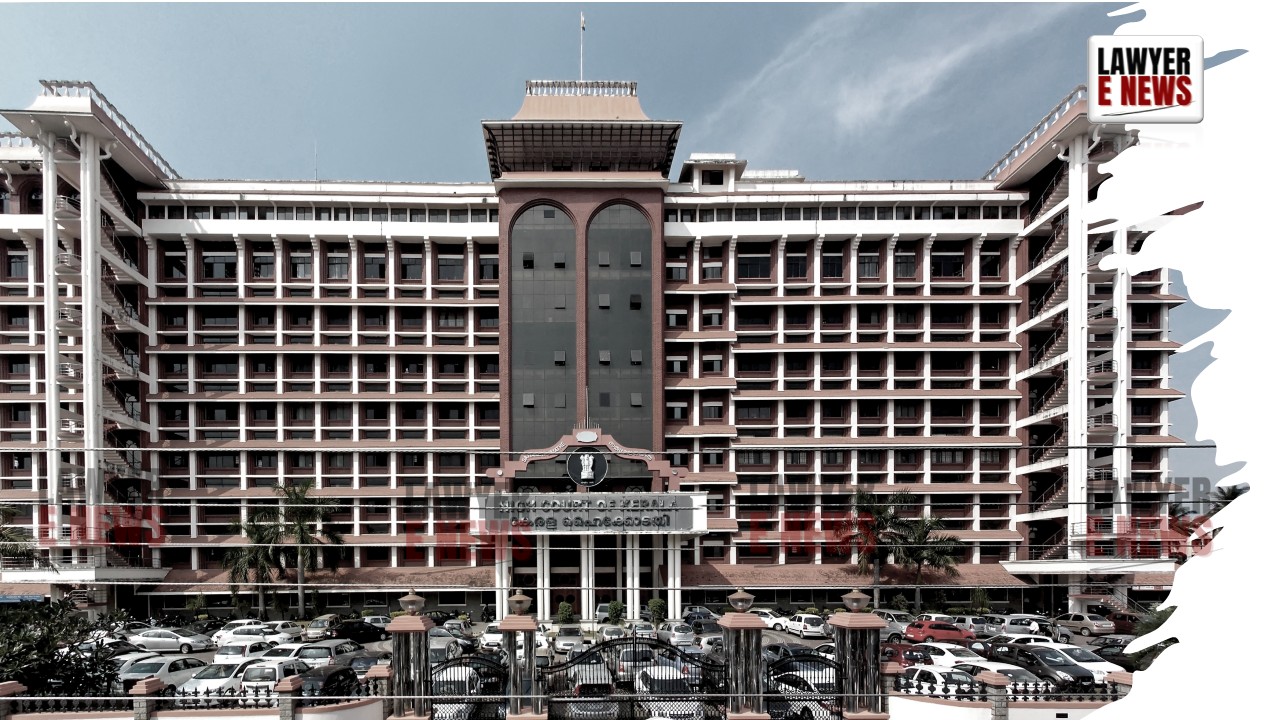
“Temporary promotion under Rule 13A must be followed by passing the test within 3 years — otherwise reversion is mandatory”, In a detailed and legally significant ruling Kerala High Court dismissed a service law challenge filed under Article 227 of the Constitution, upholding the Kerala Administrative Tribunal’s order denying retrospective seniority and promotion to an SC employee who failed to pass the required departmental test within the prescribed period under Rule 13A(2) of the Kerala State and Subordinate Services Rules (KS&SSR), 1958.
A Division Bench comprising Justice Anil K. Narendran and Justice Muralee Krishna S. ruled that the petitioner, Ramani P., had no enforceable right to claim seniority or promotion from a retrospective date, since she passed the qualifying departmental test only in 2005, four years after her immediate junior was promoted in 2001, and thus failed to meet the three-year window mandated by the Rules.
“Promotion under Rule 13A is not an open-ended benefit — exemption ends after three years if test is not passed”
The petitioner, a member of the Scheduled Caste community, joined service in 1991 as an LDC/Bill Collector and was promoted to Senior Clerk on 12.01.2006, after passing the departmental test in June 2005. She sought retrospective promotion from 2001, when her immediate junior was promoted, invoking test exemption rules meant to protect the rights of SC/ST employees.
She based her claim on Rule 13A(1)(a) and Rule 13AA of the KS&SSR, along with the Government Circular dated 24.02.2012 (Annexure A3), which clarified that SC/ST employees could avail of a 3-year test exemption period from the date their promotion would have occurred, had they qualified.
However, the High Court noted that the petitioner never acquired the test qualification within the statutory 3-year window — i.e., by 07.02.2004, which was three years from the date her junior was promoted. Consequently, she was not entitled to the retrospective benefit she sought.
"She did not acquire qualification within that time and even if she was promoted she would have been reverted on 07.02.2004. She was actually promoted on 12.01.2006. She can claim seniority only with effect from the said date," the Court held.
Seniority Cannot Be Based on Illegal Promotion — Department Had Right to Rectify Error
The petitioner had been temporarily granted higher seniority through Annexure A5 order dated 11.01.2016, placing her above certain 2003 promotees. Based on this, she was promoted to Head Clerk/Revenue Inspector in 2016 and then to Superintendent in 2017.
However, after objections from other employees, the department reviewed and cancelled the erroneous seniority grant via Annexure A1 order dated 21.05.2018, and reverted her promotion.
The High Court held that the department acted well within its rights to correct the mistake and that the petitioner had acquired no vested right in the incorrect seniority.
“Since it had been found that the seniority of the applicant was assigned erroneously, the respondent had cancelled the retrospective promotion and restored her to her original position,” the Court recorded.
The Court observed that such corrections made within one and a half years were well within a “reasonable period”, especially when notice and opportunity to respond were granted.
"Sit Back Principle" Not Applicable — Error Corrected Within Acceptable Timeframe
The petitioner had argued that having discharged duties in the promotion post for a considerable time and having been promoted based on the earlier order, she was entitled to the protection of the “sit back principle” — i.e., a settled seniority should not be disturbed after the passage of time.
However, relying on the Supreme Court’s rulings in Shiba Shankar Mohapatra v. State of Orissa (2010) 12 SCC 471 and R.K. Mudgal v. R.P. Singh AIR 1986 SC 2086, the High Court emphasized that the sit back principle applies only when seniority remains unchallenged for 3–4 years. In this case, the objection and reversion occurred within 18 months, and hence:
“This period of about one and a half year is not sufficient to presume long delay to raise a contention on sit back principles. Applicant is not entitled to get the support of the sit back principles.”
Supervisory Jurisdiction Under Article 227 Cannot Be Used as an Appellate Power
The High Court also restated the limited scope of its supervisory jurisdiction under Article 227, holding that interference with the Tribunal’s order is warranted only when there is a patent perversity, manifest illegality, or violation of natural justice.
Quoting Shalini Shyam Shetty v. Rajendra Shankar Patil (2010) 8 SCC 329 and Jai Singh v. MCD (2010) 9 SCC 385, the Court clarified:
“The supervisory jurisdiction cannot be exercised to correct all errors of the order or judgment of a lower court or tribunal, acting within the limits of its jurisdiction.”
Finding the Tribunal’s order legally sound and consistent with statutory rules, the Court refused to interfere.
This judgment provides critical clarity on the conditional nature of test exemption benefits for SC/ST employees under KS&SSR, particularly under Rule 13A. The Kerala High Court emphasized that while temporary promotions without departmental tests are permissible, they are not automatic or indefinite, and failure to qualify within the specified time nullifies retrospective benefits.
The ruling also highlights that correction of erroneous seniority assignments is permissible, provided due process is followed and done within a reasonable timeframe. The “sit back” doctrine, meant to prevent arbitrary changes after long delays, cannot shield employees from reversions where the error is identified and acted upon swiftly.
Date of Decision: 04/02/2026