-
by sayum
25 August 2026 12:32 PM







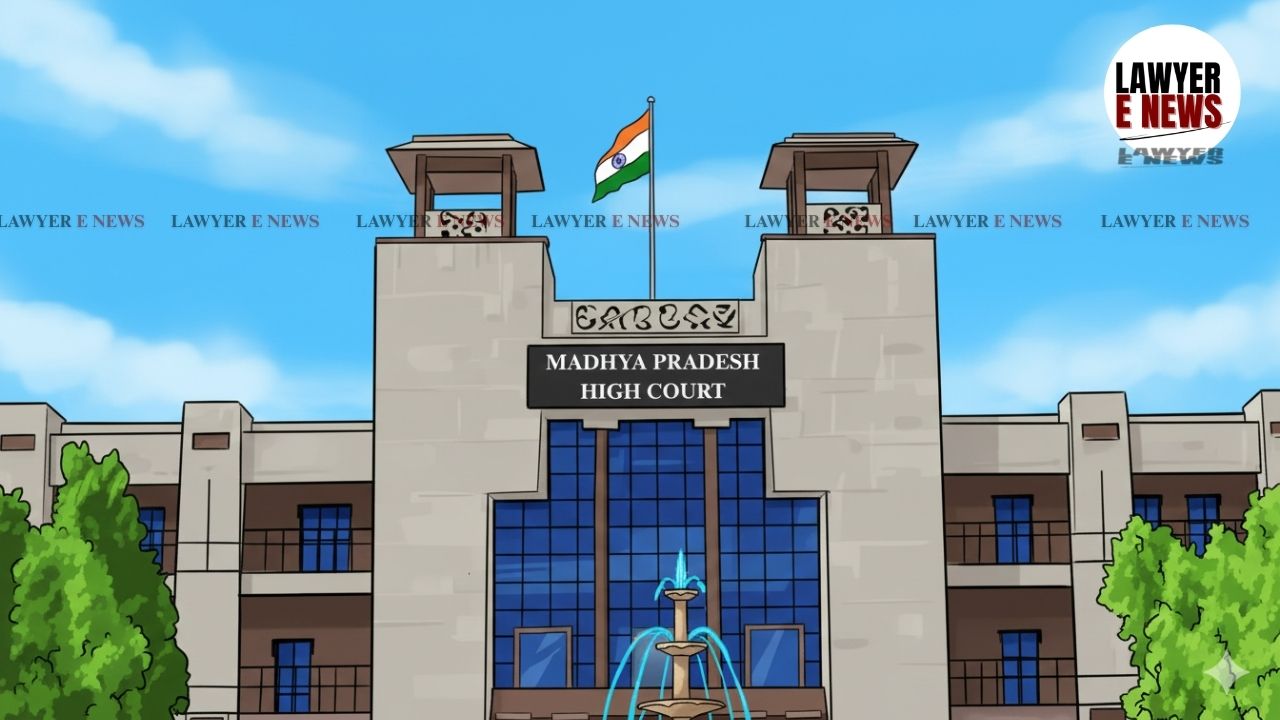
"Remedy Lies Before DRT, Not Civil Court" – In a significant ruling clarifying the jurisdictional bar imposed by the SARFAESI Act, the Madhya Pradesh High Court allowed a civil revision filed by AU Small Finance Bank, rejecting a civil suit filed by a subsequent purchaser of a mortgaged property. The Court held that once a secured creditor initiates measures under Section 13(4) of the SARFAESI Act, any challenge thereto—including by persons who purchased the property after the mortgage—must be brought only before the Debt Recovery Tribunal (DRT) under Section 17, and the civil court’s jurisdiction is completely barred under Section 34 of the Act.
Justice Vivek Jain held: “This suit has been filed only to avoid the measures taken by the Bank under Section 13(4) and for no other real purpose. This suit is clearly barred by Section 34 of SARFAESI Act.”
The Court set aside the trial court’s order which had refused to reject the plaint under Order VII Rule 11(d) CPC, erroneously holding that a bona fide purchaser could invoke civil court jurisdiction to seek declaration of title and injunctive relief against the Bank.
Plaintiff Bought the Property After Mortgage: Remedy Under Section 17 SARFAESI Act
The plaintiff in the suit had purchased the property on 23.03.2023, nearly four years after the property had been mortgaged in favour of the Bank on 24.07.2019. Subsequently, the Bank initiated recovery proceedings under Section 13(4) and obtained a magistrate’s order under Section 14 SARFAESI Act to take possession of the asset.
Alleging that the Bank was attempting to take possession of her house, the plaintiff sought a declaration of ownership and a permanent injunction restraining the Bank. The trial court had refused to reject the suit, observing that a bona fide purchaser was entitled to seek protection from a civil court.
However, the High Court found that the cause of action in the suit arose solely out of the Bank’s SARFAESI actions, not from any defect in title or fraud by the vendor. As such, Section 17, which allows “any person” aggrieved by measures under Section 13(4) to approach the DRT, was applicable even to subsequent purchasers.
“The plaintiff is transferee after creation of mortgage… She raises no question that the DRT cannot decide,” the Court held.
Security Agreement Need Not Be a Mortgage Deed: Stamp Duty Argument Rejected
The plaintiff’s counsel had argued that the underlying document was not a valid mortgage because stamp duty was paid under Article 6 (agreement) rather than Article 43 (mortgage deed) of the Indian Stamp Act (as applicable in Madhya Pradesh). Rejecting this, the Court clarified that the definitions under Section 2(zb) (security agreement) and 2(zf) (security interest) of the SARFAESI Act are broad, and encompass any agreement creating a charge or interest to secure repayment.
“Even if the mortgage deed is deemed to be an agreement, it is a valid and lawful agreement… and it would fall within the definition of security agreement in terms of Section 2(zb),” Justice Jain observed.
Civil Court Cannot Injunct SARFAESI Measures: Well-Settled Law
Relying on a catena of Supreme Court judgments, including Jagdish Singh v. Heeralal (2014) 1 SCC 479, SBI v. Allwyn Alloys (2018) 8 SCC 120, and Sree Anandhakumar Mills Ltd. (2019) 14 SCC 788, the Court held:
“The jurisdiction of Civil Court is completely barred, so far as the measures taken by a secured creditor under Section 13(4) of the Act, against which an aggrieved person has a right of appeal before the DRT.”
The High Court also distinguished the Prabha Jain line of cases, noting that in that matter, the dispute involved validity of the mortgage itself, which is outside DRT’s scope. In contrast, in the present case, the plaintiff did not challenge the vendor’s title or the validity of the mortgage.
Civil Suit Rejected, Plaintiff Directed to Approach DRT
Setting aside the trial court’s refusal to reject the plaint, the High Court held that the suit is barred by law and the plaint must be rejected under Order VII Rule 11(d) CPC.
The Court concluded:
“Plaint filed by the plaintiff is rejected holding the suit to be barred by law in terms of Section 34 of SARFAESI Act. Plaintiff is set at liberty to approach the DRT under Section 17 of SARFAESI Act within 30 days of this order.”
This ruling reaffirms the exclusive domain of DRTs in adjudicating challenges to SARFAESI measures, even by non-borrowers or subsequent purchasers, and strengthens the mandate of speedy debt recovery through specialised fora.
Date of Decision: 05 February 2026