-
by sayum
25 August 2026 12:32 PM







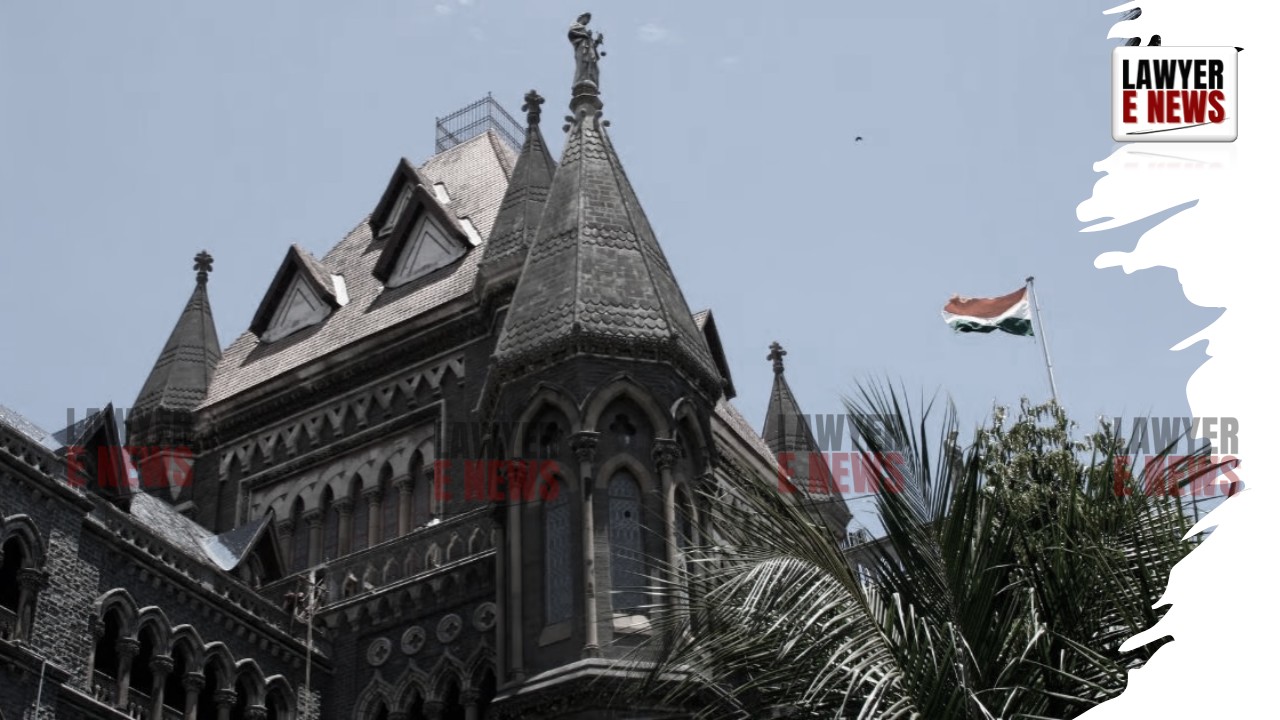
The Bombay High Court has dismissed a Letters Patent Appeal filed by an individual claiming ownership of a bifurcated flat, categorically holding that writ jurisdiction cannot be invoked to adjudicate complex and disputed questions of title.
A Division Bench comprising Justice G. S. Kulkarni and Justice Aarti Sathe upheld the decision of a Learned Single Judge who had refused to interfere with the orders of the Maharashtra State Co-operative Appellate Court. The Court observed that the appellant failed to produce a single authenticated document to support the existence of a 1,500 sq. ft. composite flat or its subsequent lawful division, concluding that the litigation was an attempt to defeat the rights of a bona fide allottee through the perpetration of illegalities.
Judicial Scrutiny of Sham Transactions and the Limits of Writ Jurisdiction
The dispute originated from the competing claims over Flat No. 702 in the Suyog Darshan Co-operative Housing Society. Appellant No. 1, Sheikh Amin Akhtar, contended that he had purchased Flat No. 701, which allegedly measured 1,500 sq. ft., and subsequently divided it into two units, numbered 701 and 702. He asserted that Flat No. 702 was thereafter given on a leave and license basis to Appellant No. 2. However, Respondent No. 5, a government employee, claimed entitlement to Flat No. 702 pursuant to an award by the Co-operative Court and subsequent directions from the Co-operative Appellate Court, which found the flat to be vacant in the Society’s records. The Appellate Court had directed the Society to hand over possession to Respondent No. 5, failing which a Court Receiver was to take forcible possession.
The Appellants challenged these interlocutory and review orders before a Learned Single Judge, who disposed of the Writ Petition on June 13, 2011. The Single Judge observed that since the dispute involved disputed questions of title and allegations of fraud, the appropriate remedy lay before a competent civil forum and not under the extraordinary jurisdiction of the High Court. Aggrieved by this, the Appellants moved the Division Bench in a Letters Patent Appeal, alleging violations of natural justice and asserting that the orders were obtained by fraud.
In a scathing assessment of the Appellant’s conduct, the Division Bench noted that the claim of the flat being 1,500 sq. ft. was contradicted by the Society’s approved plans, which showed the original Flat No. 701 to be significantly smaller. The Court characterized the litigation as an abuse of process intended to cause hardship to a rightful owner who had invested his life savings. The Bench emphasized that the Appellant’s failure to approach the correct forum was likely due to the inherent weakness of his claim.
"This is a classic case where the rights of the legitimate/rightful owner of the flat/premises have been grabbed on account of the perpetration of illegalities on the part of Appellant No.1, which has caused extreme hardship and grave prejudice to Respondent No. 5. Respondent No. 5... has been dragged into this unfortunate litigation for the last several years only on account of the illegal and mischievous means adopted by Appellant No.1, who does not have any legal right insofar as the said flat is concerned."
The Court further scrutinized the documentary evidence, noting that the sale deed executed in favor of the Appellant specifically mentioned only Flat No. 701. The Bench found no evidence of any permission sought from the Society or the Collector’s office for the alleged bifurcation. Furthermore, the Court viewed the leave and license agreements produced by the Appellant as sham documents created as an afterthought to project a semblance of possession and "perfect a title which never existed."
Regarding the scope of the Letters Patent Appeal, the Bench concurred with the Single Judge’s reasoning that writ courts are ill-equipped to decide factual matrices involving fraud and title. The Court reiterated that the Co-operative Appellate Court’s refusal to exercise review jurisdiction was justified, as the Appellant could not establish a prima facie right to the property.
"Once the order itself clarifies that the Court cannot deal with the issue of title, then, the Petitioners are no way prejudiced. With these observations, the petition is disposed of... In our view, this is a clear case of Appellant No. 1 defeating the rights of Respondent No. 5, as he has time and again, despite directions from various courts to vacate Flat No. 702 and no valid title thereto, refused to surrender possession."
The Bench also highlighted that the Appellant had not approached the Court with clean hands. By attempting to mislead the Court regarding the dimensions of the flat and the nature of its division, the Appellant disqualified himself from seeking equitable relief. The Court noted that the Respondent Society’s approved plans were the definitive word on the layout, which the Appellant had willfully ignored to further a "bogus contention."
In its concluding remarks, the High Court upheld the Single Judge’s order in its entirety. The Bench granted liberty to Respondent No. 5 to take all necessary legal steps to secure possession of Flat No. 702, including moving applications in any pending proceedings or utilizing the services of the already appointed Court Receiver. The appeal was dismissed with the observation that the judicial machinery should not be utilized to shield illegal occupants from the rightful claims of bona fide allottees.
Date of Decision: February 11, 2026