
-
by sayum
25 August 2026 12:32 PM







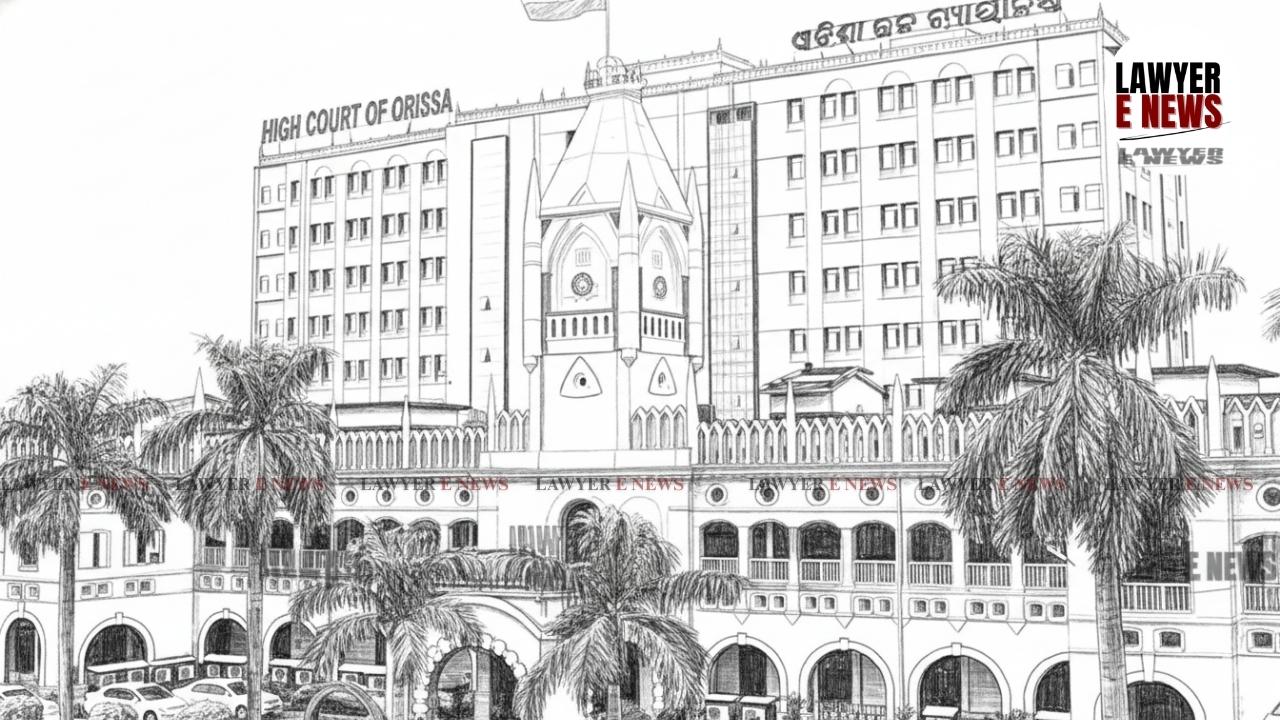
“Burden of Proof on Owner Arises Only After Authority Records Foundational Satisfaction” – In a judgment reinforcing the importance of procedural fairness in quasi-judicial proceedings, the Orissa High Court held that confiscation of vehicles under the Odisha Excise Act cannot be sustained unless the confiscating and appellate authorities record a clear and reasoned satisfaction that the vehicle was used in the commission of an offence.
Allowing a challenge to the confiscation of a private vehicle allegedly used to transport 51 litres of illicit liquor, Justice B.P. Routray remanded the matter to the Excise Commissioner for fresh adjudication after providing an opportunity of hearing to both the owner and the prosecution.
“Authority Must First Be Satisfied with Reasons That Vehicle Was Used in Offence” – Confiscation Cannot Precede This Step
The petitioner, Umesh Patra, challenged the orders of the Authorized Officer (dated 16.07.2025) and the Appellate Authority (dated 02.12.2025), which had upheld confiscation of his Maruti Celerio car under Section 71 of the Odisha Excise Act, 2008. The seizure was made on 11.04.2025 after excise officials allegedly found 51 litres of Non-Duty Paid IMFL being transported in the vehicle.
The petitioner contended that:
“He was unaware of the presence of illicit liquor in the vehicle, which was placed in the dickey by a co-passenger Kartika Gope, whom he had given a lift in good faith.”
Rejecting the blanket approach taken by the authorities, the High Court held:
“Both the authorities, without discussing about their satisfaction to believe use of the offending vehicle in committing such offences, have held that the Petitioner has failed to prove his innocence.” [Para 14]
The Court made it clear that the burden on the owner under Section 71(5) to prove lack of knowledge or connivance arises only after the authority has recorded its satisfaction with reasons that the vehicle was used in commission of an offence.
“Mechanical Reliance on Seizure Report Violates Principles of Natural Justice”
Justice Routray emphasised the quasi-judicial nature of confiscation proceedings, highlighting that:
“The confiscating authority has the power as a quasi-judicial body to receive evidence and enforce attendance... but the order under Annexure-1 does not reveal examination of any witness except relying on the report of the investigating officer.” [Para 14]
The Court underscored that principles of natural justice require an independent assessment, not blind reliance on an investigating officer’s report, especially when the criminal trial (2(a)CC Case No.165 of 2025) is still pending.
Mens Rea May Not Be Required, But Innocence Must Be Considered
Though the Odisha Excise Act does not mandate mens rea, the Court reiterated that confiscation statutes must not ignore procedural safeguards. Relying on Supreme Court rulings in Nathulal v. State of MP (2010), Bishwajit Dey v. State of Assam (2025) 3 SCC 241, and Danish v. State of Tamil Nadu (2025 SCC OnLine 2276), the Court observed:
“Even where mens rea is excluded, it must be absolutely clear that the statutory purpose would be defeated without such exclusion. Confiscation power must be exercised with procedural fairness and caution, particularly to protect innocent owners.” [Paras 11–12]
The Court equated the protection under Section 71(5) of the Odisha Excise Act with safeguards under NDPS Act provisions on confiscation.
Confiscation Independent of Criminal Trial, But Not of Judicial Satisfaction
While acknowledging that confiscation under Section 71 is independent of the outcome of the criminal trial, the High Court clarified that such power cannot be exercised mechanically:
“The liability for confiscation of such property used in commission of the offences is to be determined by the Confiscating Authority up to his satisfaction with reasons to believe that such offences under the Act has been committed.” [Para 10]
Order Set Aside – Matter Remanded to Appellate Authority for Fresh Decision
Given the failure of both the original and appellate authorities to record proper reasons and comply with procedural obligations, the High Court refrained from deciding the merits of the confiscation itself. Instead, it remanded Excise Appeal Case No.31 of 2025 to the Commissioner of Excise, Odisha for de novo consideration.
“The appellate authority shall re-hear the matter afresh, granting opportunity of hearing to the Petitioner and prosecution, and pass such order in accordance with law, speaking the reasons thereof.” [Para 15]
This judgment is a firm reminder that while State authorities are empowered to confiscate vehicles used in excise offences, such power must be exercised judiciously and fairly, not arbitrarily. The High Court has reinforced that reasoned satisfaction is a precondition to shifting the burden of proof onto the owner, and that procedural fairness must be upheld, even in preventive or welfare legislation.
Date of Decision: 09 February 2026





