-
by sayum
25 August 2026 12:32 PM







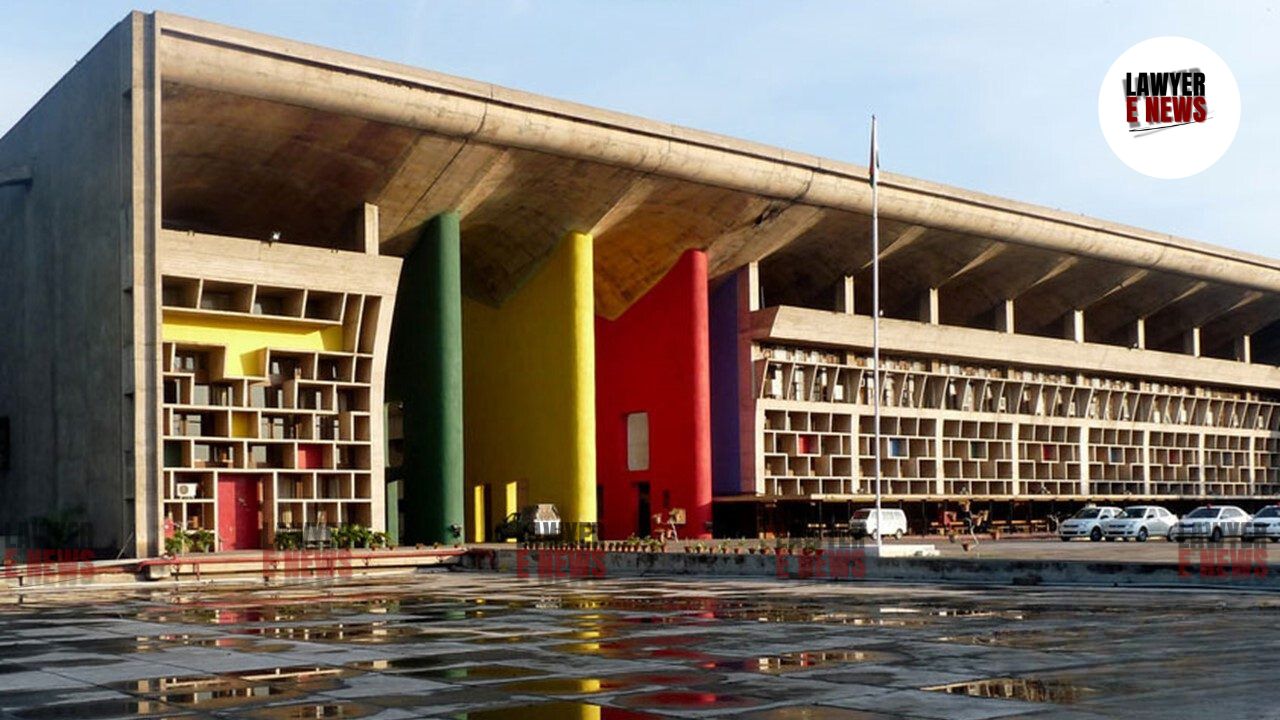
In a significant reinforcement of the mandatory nature of pre-institution mediation in commercial disputes, the Punjab and Haryana High Court has set aside a trial court's order and rejected a plaint for non-compliance with Section 12A of the Commercial Courts Act, 2015.
Presiding over the matter, Justice Pankaj Jain held that while the law provides an exception for suits contemplating "urgent interim relief," such urgency must be genuine and well-founded upon material facts rather than being a mere "moonshine" or "camouflage" intended to bypass the statutory mandate of mediation. The Court emphasized that the threshold for seeking urgent interim relief, such as attachment before judgment under Order XXXVIII Rule 5 of the CPC, cannot be met through vague and unsubstantiated allegations.
Urgency Must Be Real, Not A ‘Moonshine’ To Bypass Mediation
The litigation arose from a recovery suit filed by M/s Amit and Company against Rana Polycot Limited, seeking a sum of approximately Rs. 2.08 Crores for material supplied. Accompanying the suit was an application for attachment before judgment under Order XXXVIII Rule 5 of the CPC, asserting that the defendant was attempting to alienate assets to defeat the potential decree. Relying on this plea of "urgency," the plaintiff bypassed the mandatory pre-institution mediation required under Section 12A of the Commercial Courts Act. The Commercial Court initially allowed the attachment of Rs. 2 Crores in the defendant's bank account and dismissed the defendant's application for rejection of the plaint under Order VII Rule 11 of the CPC. This led to the present revision petitions before the High Court.
The primary legal question before the High Court was whether the plaintiff’s application for attachment before judgment constituted a genuine "contemplation of urgent interim relief" sufficient to exempt the suit from the rigors of Section 12A. Justice Pankaj Jain observed that the mandatory nature of Section 12A is no longer res integra, citing the Supreme Court’s landmark rulings in M/s Dhanbad Fuels Private Limited v. Union of India and Novenco Building and Industry A/S v. Xero Energy Engineering Solutions Pvt. Ltd. The Court noted that for suits instituted after August 20, 2022, compliance is an absolute necessity unless the exception of urgency is triggered. However, the Court warned that the judiciary must be vigilant against "unfounded excuses" by plaintiffs to evade mediation.
"The Court needs to ascertain as to whether the interim relief urgently claimed by the plaintiff, is well founded or is merely a moonshine. ... The test for 'urgent interim relief' is if on an examination of the nature and the subject-matter of the suit and the cause of action, the prayer of urgent interim relief by the plaintiff could be said to be contemplable when the matter is seen from the standpoint of the plaintiff."
The High Court further scrutinized the standards required for "attachment before judgment" under Order XXXVIII Rule 5 of the CPC. Relying on the guiding principles established in Onkar Mal Mittal v. State Bank of Patiala, the Court reiterated that such an order cannot be passed on the mere asking of the plaintiff. There must be concrete material to show that the defendant is about to dispose of property with the specific intent to obstruct the execution of a decree. Vague allegations, such as the defendant simply selling off properties, are insufficient to satisfy the conscience of the Court.
The High Court found the plaintiff’s pleadings regarding the "urgency" to be woefully inadequate. The plaintiff had merely alleged that the defendant was "wandering in the village" to sell land. Justice Pankaj Jain characterized this assertion as "too discrepant" to gather any genuine intent of the defendant to defeat a decree. The Court held that since the application for attachment was based on such flimsy grounds, it could not be used as a legitimate gateway to bypass the mediation process.
"In the considered opinion of this Court, mere assertion that the defendant was seen roaming in the village is too discrepant to gather intent of defendant which calls for adjudication of application under Order XXXVIII Rule 5 CPC. ... The urgent interim relief claimed by the plaintiff is too discrepant and is an unfounded excuse to by-pass the mandatory requirement of Section 12A of 2015 Act."
The Ratio Decidendi of the judgment is that the "urgent interim relief" exception under Section 12A of the Commercial Courts Act must be tested on the touchstone of whether the urgency is plausible and supported by material particulars. If the prayer for interim relief is found to be a proforma or deceptive device to skip mediation, the suit is institutionally defective and liable to be rejected under Order VII Rule 11 of the CPC. The Court held that the stand-point of the plaintiff must be considered, but it does not permit the inclusion of baseless claims to circumvent the law.
Consequent to these findings, the High Court allowed both revision petitions, setting aside the trial court’s attachment order and ordering the rejection of the plaint. Justice Pankaj Jain clarified that since the rejection was based on the procedural non-compliance of Section 12A, the plaintiff remains at liberty to file a fresh suit after complying with the mandatory pre-institution mediation requirements. This ruling serves as a stern reminder to commercial litigants that the path to the courtroom must necessarily pass through the mediation center unless a verifiable and immediate peril to the subject matter of the suit is demonstrated.
Date of Decision: February 06, 2026