-
by sayum
25 August 2026 12:32 PM







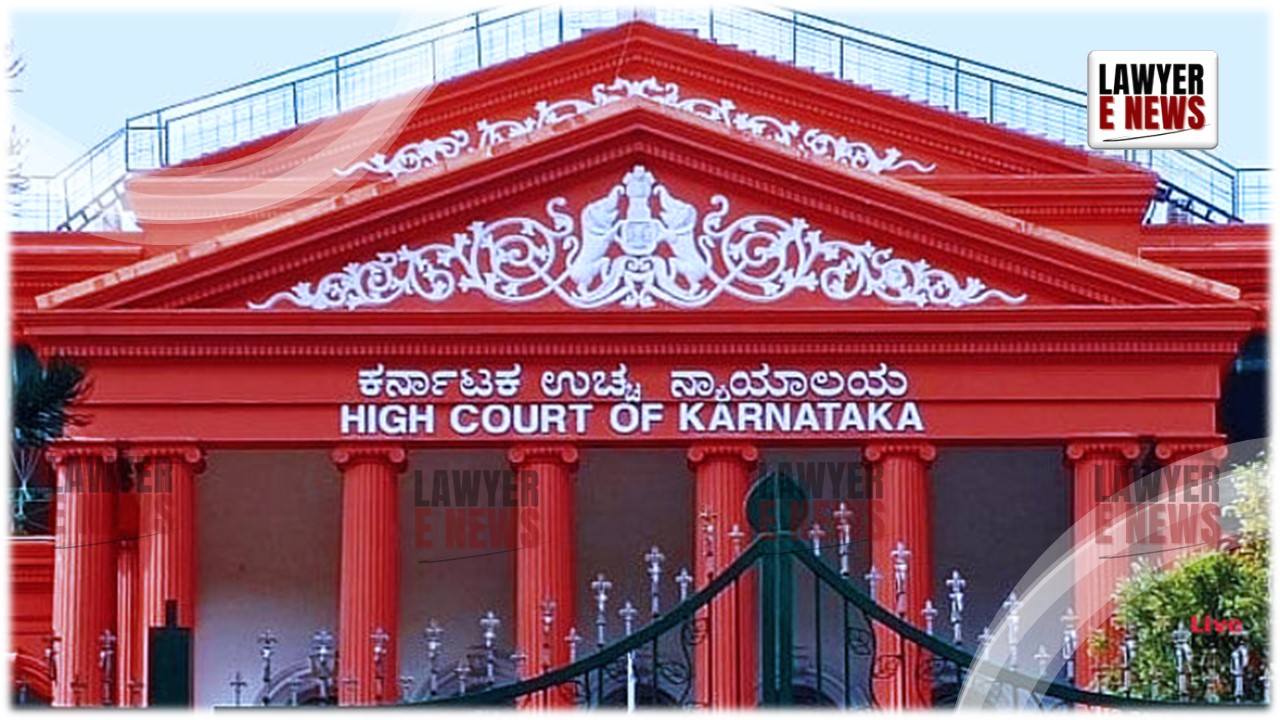
Custodial Interrogation of Politically Influential Accused Cannot Be Replaced by Conditional Interrogation Under Anticipatory Bail: Karnataka High Court
"No Exceptional Grounds for Pre-Arrest Bail in Murder Conspiracy Involving Sitting MLA", In a detailed and strongly reasoned order delivered on February 10, 2026, the High Court of Karnataka refused anticipatory bail to B.A. Basavaraja, sitting MLA and former Minister, accused of instigating a fatal assault in a high-profile murder case rooted in a property dispute and political rivalry.
Justice S. Sunil Dutt Yadav, while discharging the interim anticipatory bail granted earlier on December 26, 2025, held that the petitioner failed to establish any exceptional circumstances to invoke the extraordinary discretion vested in the Court under Section 482 of the Bharatiya Nagarik Suraksha Sanhita, 2023 (BNSS).
The Court noted that the gravity of the offence, the existence of prima facie material, the need for custodial interrogation, and the social and political influence of the petitioner rendered the case unfit for anticipatory bail, especially where the allegations pointed to direct threats issued by the petitioner and his associates to the deceased.
"Custodial Interrogation Is Qualitatively Different": Court Rejects Limited-Custody Argument
Addressing the petition under Section 482 BNSS, filed in relation to Crime No. 73/2025 (now under CID investigation), the Court was categorical that custodial interrogation could not be compromised simply because the accused is a legislator. The Prosecution had argued that the petitioner was misleading the investigation, feigning ignorance about co-accused, and evading proper confrontation with material evidence including Call Detail Records (CDRs) and photographs.
The Court, relying on the Supreme Court’s authoritative pronouncement in State rep. by CBI v. Anil Sharma, emphasized:
“Custodial interrogation is qualitatively more elicitation-oriented than questioning a suspect who is well ensconced with a favourable order under Section 438 of the Code. Very often interrogation in such a condition would reduce to a mere ritual.” [Para 38]
The petitioner’s plea to allow limited interrogation under judicial supervision was summarily rejected, with the Court noting:
“The accused cannot dictate how the interrogation or enquiry must be made… Success in such interrogation would elude if the suspected person knows that he is well protected.” [Para 36, 38]
Interim Bail No Guarantee to Final Relief: No Vested Right, Rules Court
The Vacation Bench had earlier granted interim anticipatory bail to the petitioner. However, Justice Yadav clarified that such relief does not create a vested right, and courts retain full discretion to reassess the matter on merits once the State’s objections are heard:
“The mere grant of interim anticipatory bail being in the nature of transitionary order till final order is passed, the same would not confer any vested right to the petitioner for grant of anticipatory bail in the main matter.” [Para 15]
This observation was crucial in discharging the interim protection, even though the petitioner argued that the interim order had not been specifically challenged.
Material Suggests Petitioner’s Involvement Beyond Mere Association
The Court undertook a comprehensive review of the case chronology and materials, noting that the deceased had repeatedly named the petitioner in prior complaints, alleging land mafia activities and life threats. Notably, a written complaint by the deceased dated 18.02.2025, addressed to the Commissioner of Police, Bengaluru, named Byrathi Basavaraj (petitioner), among others, and warned:
“If anything untoward happens to me, Byrathi Basavaraj, Jagadish @ Jagga and Kiran are responsible.” [Paras 5–7, 22–23]
The Court held that this cannot be brushed aside, despite the closure of the departmental enquiry into the complaint:
“Prima facie, such material would indicate that the petitioner cannot merely wash his hands off as if he is a stranger and has no relationship to the incident or the deceased.” [Para 26]
Influence, Fear of Witnesses, and Likelihood of Derailing Investigation Weighed Heavily
The judgment also discussed the potential to influence witnesses and derail the investigation, citing that the petitioner, being a sitting MLA, has significant sway over the local administration. The Court cited Supreme Court's observations in P. Chidambaram v. Directorate of Enforcement to underline that:
“Anticipatory bail is not to be granted as a matter of rule and it has to be granted only when the court is convinced that exceptional circumstances exist.” [Para 43]
Further, referring to the Section 164 CrPC statement of the deceased's mother, the Court accepted the prosecution's submission that she was acting under fear, adding further complexity to the facts:
“The explanation to the factual context… is prima facie made out… The contention of the Prosecution that the mother of deceased is under fear has sufficient force and cannot be brushed aside.” [Para 33]
Refrains from Monitoring Interrogation
The High Court repeatedly underscored that courts cannot interfere with the manner of investigation, including how interrogation is conducted:
“If the court is to interfere in each and every stage of the investigation and the interrogation of the accused, it would affect the normal course of investigation.” [Para 40, citing P. Chidambaram]
This reiteration of judicial restraint fortified the Court’s conclusion that it is for the CID to decide the course and nature of interrogation, especially when sensitive material such as CDRs and photographs linking the petitioner with co-accused is in question.
Anticipatory Bail Denied, Interim Protection Discharged
Holding that no exceptional circumstances warranted the grant of pre-arrest protection and that the need for custodial interrogation was real and justified, the Court concluded:
“Considering that the grant of anticipatory bail is an extraordinary relief… there is a possibility of fair investigation being hampered… Accordingly, the petition is rejected.” [Paras 44–45]
As a corollary, the interim anticipatory bail granted on 26.12.2025 was formally discharged.
Tightening the Threshold for Anticipatory Bail in Grave Offences Involving Political Actors
This judgment sets a clear precedent in reinforcing the principle that social status or political office cannot shield an accused from custodial interrogation where prima facie material exists. More importantly, it affirms that anticipatory bail remains an exceptional relief, not a tool to neutralize police investigation in serious crimes.
By aligning with the jurisprudence laid down in Anil Sharma and P. Chidambaram, the Karnataka High Court has clarified that personal liberty, though sacrosanct, is not absolute, especially when weighed against the need for fair and effective investigation in heinous offences.
Date of Decision: 10 February 2026