
-
by sayum
25 August 2026 12:32 PM







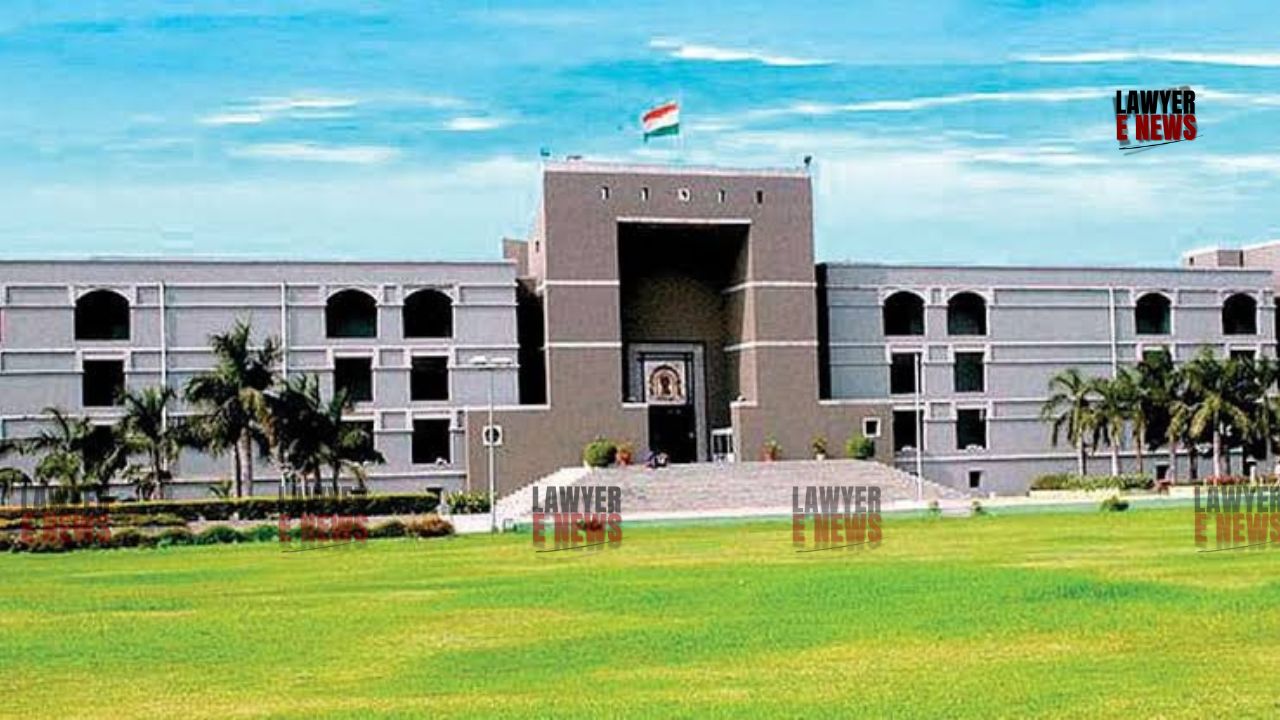
“Courts Must Not Award Niggardly Amounts… Dignity Under Article 21 Is at Stake”, In a deeply humane and rights-oriented judgment, the Gujarat High Court has enhanced compensation from ₹8.77 lakh to ₹21.19 lakh for a minor girl whose right leg was amputated below the knee in a road accident. Holding that tribunals must adopt a “sensitive and humane approach” in cases involving children with lifelong disability, the Court observed that compensation cannot be token or conservative when the injury permanently alters the course of a child’s life.
A Minor Dragged by a Car – Amputation Below Knee
The accident occurred in 2013 when the minor claimant, returning from a temple with family members, was walking on the extreme left side of the road. A Hyundai car, driven rashly and negligently, hit her from behind and dragged her for some distance.
The injuries were catastrophic. Her right leg had to be amputated below the knee. The stump length was merely 6.5 cm below the knee, severely restricting mobility and future prospects.
The Motor Accident Claims Tribunal, Bhuj-Kutch, had awarded ₹8,77,000 by assessing notional income at ₹24,000 per annum, applying a multiplier of 15 and accepting 36% whole body disability.
The minor claimant appealed seeking enhancement.
Income of a Minor: Minimum Wages and Future Prospects Cannot Be Ignored
Justice Suthar held that even in cases involving minors, courts are duty-bound to assess loss of earning capacity on the basis of minimum wages payable to a skilled worker at the relevant time.
Relying on Hitesh Nagjibhai Patel v. Bababhai Nagjibhai Rabari (2025 INSC 1070), the Court held that the Tribunal erred in mechanically adopting a nominal income of ₹24,000 per annum.
For 2013, the minimum wages in Gujarat were ₹5,750 per month. Adding 40% future prospects as per Pranay Sethi and Sarla Verma, the monthly income was recalculated at ₹8,050.
Applying multiplier 18, appropriate for a minor as reiterated in Kajal v. Jagdish Chand, the total future income was computed at ₹17,38,800.
Physical Disability vs Functional Disability: 36% Was Unrealistic
A crucial correction made by the High Court was in assessing disability.
Though the doctor ultimately assessed 36% whole body disability, the Court held that physical disability and functional disability are distinct.
With an amputation stump of only 6.5 cm below the knee, inability to walk without support and incapacity to perform heavy work, the Court held that 50% permanent functional disability was appropriate, drawing guidance from Schedule I, Part II of the Workmen’s Compensation Act.
Thus, the future loss of income was recalculated at 50% of ₹17,38,800, amounting to ₹8,69,400.
The Tribunal’s mechanical acceptance of 36% was termed erroneous.
“Compensation Must Not Be Token” – Pain, Dignity and Lifelong Deprivation
The Court relied heavily on the Supreme Court’s decisions in Kajal v. Jagdish Chand, Master Ayush, Sidram, and Pappu Deo Yadav to underline that compensation in cases of severe disability of minors must be liberal and realistic.
Quoting from Sidram, the Court echoed the warning:
“If courts nit-pick and award niggardly amounts oblivious of these circumstances, there is resultant affront to the injured victim.”
The Court recognized that serious injury:
“not only permanently imposes physical limitations but too often inflicts deep mental and emotional scars… undermining the dignity which is now recognized as intrinsic to Article 21.”
Non-Pecuniary Damages Substantially Enhanced
The Tribunal’s award of ₹80,000 for pain, shock and suffering was enhanced to ₹5,00,000.
For loss of marriage prospects, the amount was raised from ₹70,000 to ₹3,00,000, acknowledging the lifelong impact of amputation on a minor girl’s social and matrimonial life.
For loss of amenities and enjoyment of life, ₹2,00,000 was awarded.
Recognizing the lifelong need for mobility assistance, ₹1,50,000 was granted towards artificial limb and future medical expenses.
Additionally, ₹1,00,000 was awarded towards special diet, attendant charges and transportation.
The Court affirmed that medical expenses of ₹1,22,000 awarded by the Tribunal were proper and required no interference.
Total Recalculation: ₹21,19,400
The High Court recalculated the compensation as follows:
Future loss of income ₹8,69,400
Pain, shock and suffering ₹5,00,000
Loss of marriage prospects ₹3,00,000
Loss of amenities ₹2,00,000
Artificial limb ₹1,50,000
Special diet, attendant and transport ₹1,00,000
Total ₹21,19,400
The appellant became entitled to an additional ₹12,42,400 with proportionate costs and interest as awarded by the Tribunal. The respondents were directed to deposit the enhanced amount within four weeks.
A Constitutional Reminder: Dignity and Article 21
This judgment is not merely about arithmetic enhancement. It is a constitutional reaffirmation that compensation jurisprudence must be aligned with dignity under Article 21.
The Court emphasized that compensation is awarded once and for all; the claimant cannot return seeking future enhancement. Therefore, courts must avoid a “niggardly approach” and must account for lifelong deprivation, emotional trauma and loss of autonomy.
In recognizing the transition “from the world of the able-bodied to the world of the disabled,” the Gujarat High Court has reinforced that just compensation must reflect not only economic loss but the profound human cost of disability.
Date of Decision: 05 February 2026





