-
by sayum
04 August 2026 1:39 PM







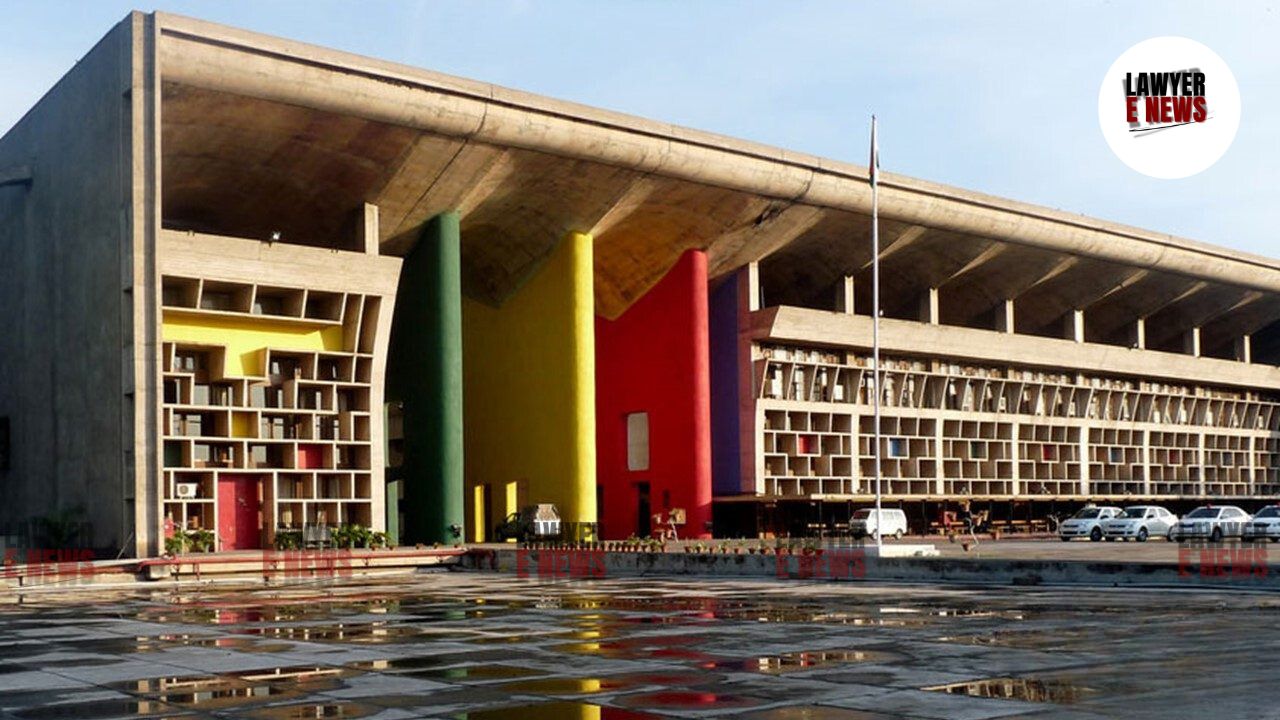
“Framing Charge Without Prior Sanction and Without Pre-Charge Evidence in Protest Petition Case is Procedurally Defective”: Punjab and Haryana High Court, in a significant ruling delivered by Justice Surya Partap Singh, set aside the charge-sheet and summoning order against a retired college principal accused of forgery, criminal conspiracy, and misappropriation of funds. The Court held that no cognizance could be taken against a public servant for acts directly connected with official duty without prior sanction under Section 197 CrPC, and that warrant case procedures must be followed when the case is instituted on a protest petition and not on a police report.
The judgment was concerning allegations that the petitioner, while serving as college principal, sanctioned false salary and HRA bills.
Cognizance Taken Despite Police Cancellation and Departmental Clean Chit
The petitioner, Ved Parkash Sheoran, a retired Principal of a government college in Jind, was summoned to face trial under Sections 409, 420, 465, 468, 471, and 120-B IPC. The proceedings stemmed from a complaint filed by Respondent No. 2, a fellow faculty member, alleging that the petitioner forged salary and attendance records for co-accused Jyoti Jangra, an Extension Lecturer.
However, both a departmental inquiry and a police investigation found no merit in the allegations. The police filed a cancellation report, yet the Magistrate, bypassing preliminary evidence, took cognizance on the protest petition alone, invoking Section 190(1)(b) CrPC.
Despite the State's disinterest in prosecuting the case and the absence of any independent evidence linking the petitioner to fabrication, the Trial Court proceeded to frame charges against him in February 2023, treating the case as though it was instituted on a police report. The petitioner’s revision petition was dismissed by the Sessions Court on limitation grounds.
“Public Servant Can’t Be Prosecuted Without Prior Sanction If Act Has Nexus With Official Duty”: High Court Applies Supreme Court Test
Justice Surya Partap Singh held that Section 197 CrPC squarely applied to the petitioner, whose alleged actions—sanctioning salary and HRA bills—were performed in discharge of official duties. Referring to the Supreme Court’s test in Raghunath Anant Govilkar v. State of Maharashtra (AIR 2008 SC 1486), the Court reaffirmed:
“If the omission or neglect on the part of the public servant to commit the act complained of could have made him answerable for dereliction of official duty, then the act is deemed committed in the discharge of official duty.”
On applying this principle, the Court concluded:
“There was a direct nexus between the alleged commission of offence and the official duty of the petitioner... Thus, any cognizance against the petitioner without sanction under Section 197 CrPC was barred.”
The Court emphasized that the State itself was not aggrieved, and any alleged loss was to the State Exchequer, not the complainant, further reinforcing the need for State sanction.
“Case Based on Protest Petition Is Not a Police Report—Pre-Charge Evidence Mandatory”: Trial Procedure Flawed
A core procedural defect identified by the Court was the improper classification of the case as one instituted on a police report, despite the police having filed a cancellation report. The Court held:
“The learned trial Court... treated the instant case to be a case instituted on police report, whereas it should have been treated to be a case instituted on private complaint.”
Referring to Supreme Court precedent in Nupur Talwar v. CBI [(2012) 11 SCC 465] and Nahar Singh v. State of U.P. [(2022) 5 SCC 465], Justice Singh ruled:
“It was well within the competence of the trial court to take cognizance on the protest petition, even without preliminary evidence. However, once such cognizance was taken, the case had to be tried as a warrant case instituted otherwise than on a police report, mandating pre-charge evidence and witness list.”
Because the complainant was never called to lead pre-charge evidence and no list of witnesses was provided, the charge-sheet was found to be procedurally unsustainable. The trial was left in a procedural vacuum—neither following norms for police report trials nor those for private complaints.
“Prima Facie Case Cannot Be Based on Assumptions Alone”: Court Finds No Material Evidence Linking Petitioner to Forgery
The Court also expressed concern that the Magistrate took cognizance without any oral or documentary evidence showing the petitioner’s role in creating forged documents. It observed:
“Unless some oral or documentary evidence to show his involvement... would have been there, ipso facto it could not have been observed that the bills sanctioned by the petitioner were forged and that he was involved.”
Even under the lenient threshold of prima facie scrutiny at the charge stage, no material was found to implicate the petitioner beyond the complainant’s allegations, which had already been dismissed by the department and police.
Key Observations from the Judgment
Charge-Sheet and Trial Court Orders Quashed
Setting aside both the order framing charge dated 09.02.2023 and the Revisional Court’s affirming order dated 26.02.2024, Justice Surya Partap Singh held:
“Without adopting the procedure meant for warrant case trial, and without prior sanction of the competent authority, the charge-sheet filed against him is not sustainable.”
The Trial Court was directed to reconsider the matter afresh, keeping in mind:
Clear Message Against Procedural Violations in Prosecution of Public Servants
This ruling sends a strong message to subordinate courts on adhering to procedural safeguards, particularly in cases involving public servants. The judgment underscores that statutory protections like Section 197 CrPC are not technicalities, but vital components of criminal jurisprudence meant to protect public functionaries from vexatious litigation for acts done in good faith during official duties.
It also reinforces that classification of cases (police report vs. private complaint) is not a mere formality. Failure to follow the correct procedure, including calling for pre-charge evidence, renders the entire trial unsustainable.
Date of Decision: 13.10.2025