-
by sayum
11 August 2026 2:00 PM







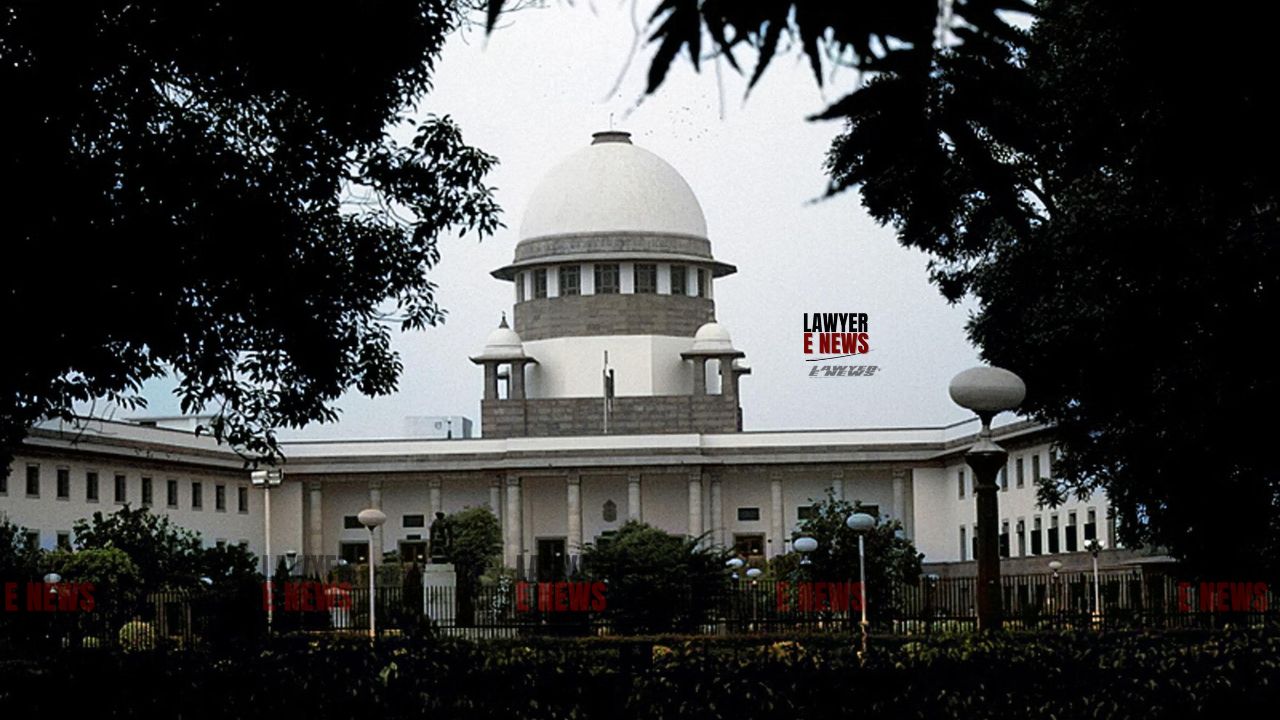
“It Is Trite That the Employee Has No Right to Be Promoted, but Has a Right to Be Considered Unless Disqualified” — Supreme Court of India, in P. Sakthi v. The Government of Tamil Nadu & Ors., Civil Appeal @ SLP (C) No. 30700 of 2024, allowed the appeal of a police constable who had been denied consideration for promotion despite a prior departmental punishment being set aside. The Court held that the appellant’s right to be considered for promotion had been unjustly denied, and directed his case to be considered from 2019, with full consequential benefits.
The appellant, P. Sakthi, was appointed as a Police Constable in Tamil Nadu on March 1, 2002. In 2019, he applied under the 20% departmental quota for in-service promotion to the rank of Sub Inspector. However, his application was rejected by the Superintendent of Police through an order dated April 13, 2019, on the ground that a punishment order dated May 9, 2005 — imposing postponement of increment for one year — rendered him ineligible under the recruitment rules.
The said rules disqualified candidates with any disciplinary punishment, except for minor ones like black marks or censure. However, the 2005 punishment had already been set aside by the Government in 2009, and the criminal case arising from the same incident had ended in acquittal.
The appellant had been accused of assaulting a colleague after a duty-related altercation at a check post, but was acquitted in the criminal trial and subsequently cleared in departmental proceedings.
The core issue was whether the appellant could be denied promotion in 2019 based on a punishment that had been expressly set aside ten years prior.
The Court noted that once the punishment had been nullified, there was no valid legal impediment to the appellant’s promotion. The refusal to consider him in 2019 was, thus, arbitrary and without authority.
The Court emphasized: “It is trite that the employee has no right to be promoted but has a right to be considered, when selections for promotions are carried out, unless disqualified; which right has been impinged, unjustly, in the above case.”
The Court found that the appellant was wrongly denied his rightful consideration due to an administrative oversight based on a punishment that no longer existed in law.
The bench comprising Justices K. Vinod Chandran and Sudhanshu Dhulia held that the appellant was entitled to be considered for promotion as if his record was clean in 2019. Since he had filed his writ petition in the same year and was overaged by the time of this judgment, the Court directed the respondents to consider him for promotion from 2019.
The judgment clarified: “The appellant must be considered for promotion, dehors any disentitlement due to his having become overaged. The consideration will be made and if found eligible, he shall be promoted from 2019 and consequential benefits also shall be paid to him.”
The Supreme Court's judgment restores the appellant’s right to career progression and reinforces the principle that once a disciplinary punishment is set aside, no adverse inference or disqualification can be drawn on its basis. The denial of promotion consideration, in this case, was found to be unjust, and the Court provided comprehensive relief by ordering retrospective promotion with full benefits.
Date of Decision: May 2, 2025