-
by sayum
25 August 2026 6:19 AM







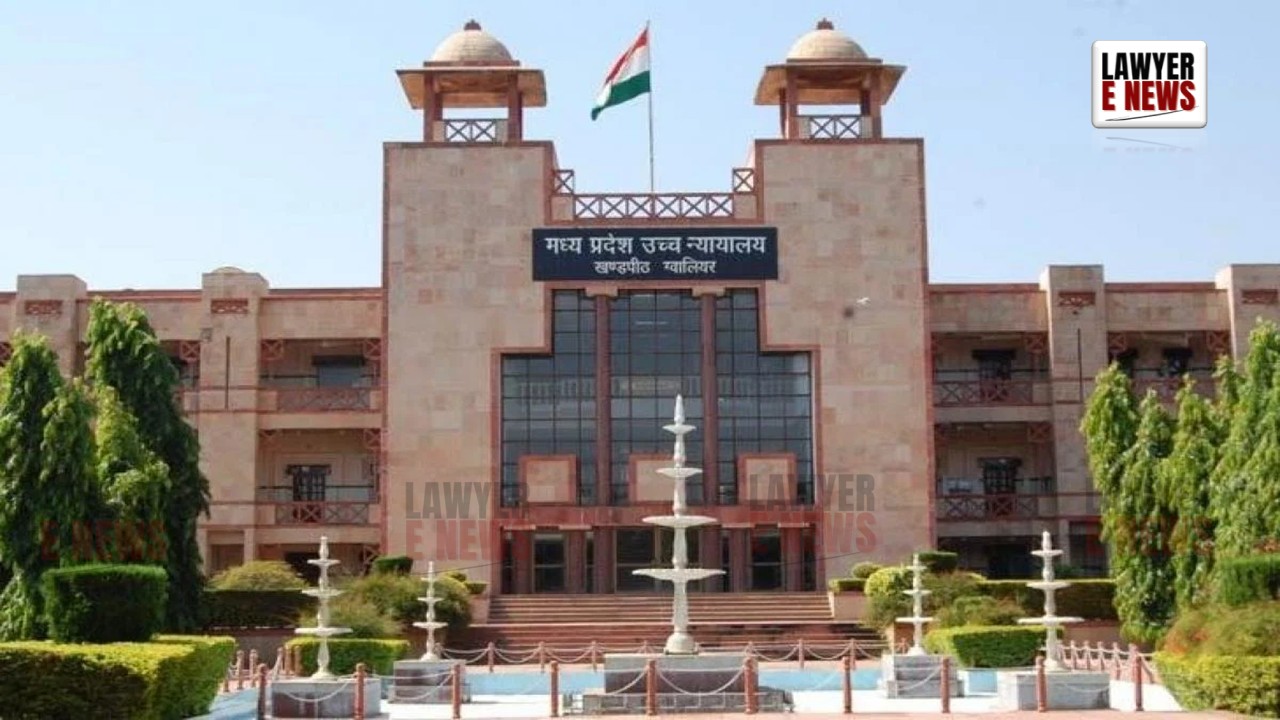
“A decree obtained by fraud, suppression and misrepresentation is a legal nullity—neither finality nor res judicata can shield a judgment born in deceit,” In a landmark judgment High Court of Madhya Pradesh at Indore upheld the Trial Court’s declaration that a 1997 civil decree concerning ownership of temple property was void ab initio, having been obtained through fraud, forged documents, and non-joinder of necessary parties. The decree, passed in Civil Suit No. 42-A/1996, had purportedly granted Gokuldas—who claimed to be a successor of a temple math—rights over substantial land belonging to Murti Shri Ram Mandir, Nalkheda.
Justice Alok Awasthi ruled emphatically that “fraud vitiates even the most solemn judicial acts”, and that “a decree obtained by concealment of facts and forged documents is a nullity in the eyes of law, liable to be ignored by all courts, at all stages.”
“Temple Property Vests in the Deity, Not the Pujari – Spiritual Role Does Not Confer Proprietary Rights”
The dispute involved temple lands located at Nalkheda and Dokarpura, including survey lands and a dharamshala associated with Shri Ram Mandir, claimed by Gokuldas under a purported will of Guru Narayan Das, the last religious head of the temple math. However, the Trial Court, and now the High Court, found the will to be forged, and held that Gokuldas never acquired any legal or spiritual succession rights.
The Court held that “The Pujari is only a manager or servant of the deity and does not possess proprietary or transferable rights over endowed property.” Citing the Supreme Court’s ruling in State of M.P. v. Pujari Utthan Avam Kalyan Samiti [(2021) 10 SCC 222], the High Court reiterated that “temple property vests in the deity as a juristic person; the Pujari’s name may only appear in the remarks column of revenue records, but he cannot claim Bhumiswami status.”
“Will was Forged; Prior Legal Proceedings Were Suppressed – Decree is a Product of Fraud”
The impugned decree dated 10 January 1997, passed in favour of Gokuldas, was found to have been obtained on the basis of a forged will of Guru Narayan Das, which had already been declared fabricated in earlier litigation. The Court took into account:
Exhibit P/14, a handwriting expert report, which confirmed that the will did not bear the handwriting or signature of Guru Narayan Das.
Exhibit P/12, a criminal complaint, and testimony from DW-1 Jagdish, son of Gokuldas, admitting awareness of the will’s falsity.
Justice Awasthi observed that “These facts leave no room for doubt that the decree was obtained by fraud, concealment and misrepresentation. Such a decree, being vitiated by fraud, is void ab initio and cannot confer any legal right.”
“Decree Obtained Without Joining Deity and Aukaf Committee – Deliberate Suppression of Necessary Parties”
The Court was categorical that the non-joinder of the deity (Murti Shri Ram Mandir) and the Aukaf Committee, despite their clear interest in the temple property, was a deliberate and conscious act of suppression by Gokuldas. This alone rendered the earlier decree a legal nullity.
Quoting the Supreme Court in S.P. Chengalvaraya Naidu v. Jagannath [(1994) 1 SCC 1], the Court observed:
“A judgment, decree or order obtained by playing fraud on the Court is a nullity and non est in the eye of law. Such a decree has to be treated as nullity by every Court, superior or inferior.”
The Court further relied on A.V. Papayya Sastry v. Government of A.P. [(2007) 4 SCC 221], Smriti Madan Kansagra v. Perry Kansagra [2020 SC], and Vishnu Vardhan v. State of U.P. [2025 INSC 884], all reinforcing that fraud constitutes an overriding exception to res judicata, finality, or merger of judgments.
“Res Judicata Cannot Protect a Fraudulent Decree – Nor Can Order XXIII Rule 3-A CPC Apply”
Rejecting the appellant’s argument that the suit was barred by res judicata and Order XXIII Rule 3-A of CPC, the Court stated:
“Fraud is an exception to both res judicata and finality. A decree obtained by fraud may be challenged at any stage, in any court, including through collateral proceedings.”
It was also clarified that the 1997 decree was not a compromise decree, and hence the bar under Order XXIII Rule 3-A was inapplicable.
“Moreover, the deity—being a separate juristic person—was not even a party to the earlier suit. Thus, the present suit was not barred and was rightly held maintainable.”
“No Ownership Rights Can Arise from Possession or Revenue Records Alone”
The appellants relied on revenue entries (Khasra, Khatauni, etc.) to claim ownership of the temple lands. However, the Court held:
“Revenue entries only show possession and have presumptive value—they do not confer ownership or title. The 1972 entry (Ex. P/10) recording the property as ‘Murti Shri Ram Mandir Mafi Okaf’ confirms that ownership vests in the deity.”
The Court relied on Union of India v. Vasavi Cooperative Housing Society [(2014) 2 SCC 269], observing that “plaintiff must succeed on the strength of their own title—not on the weakness of the adversary’s claim.”
“State Can Represent the Deity as Guardian — Deity is a Perpetual Minor”
The appellants objected to the State’s locus in filing the suit. But the Court reaffirmed that a temple deity is a perpetual minor, and under Hindu law and public endowment principles, the State may act as guardian and protector of such religious property. The suit was filed through the Sub-Divisional Officer, duly authorized by the Collector.
“The deity is the juristic owner of the property, and the State, as parens patriae, is duty-bound to protect it from misappropriation or fraudulent alienation.”
“Gokuldas Violated Celibate Tradition – Disqualified from Succession in Nihang Math”
In a striking observation, the Court noted that Gokuldas’ two marriages disqualified him from succeeding as the spiritual head in the Nihang tradition, which requires celibacy. The Court found the trial court’s reasoning valid, stating:
“The deviation from the Guru-Shishya parampara’s celibate discipline rendered Gokuldas ineligible to claim any spiritual or managerial succession.”
Fraudulent Decree Cancelled – Appeal Dismissed in Totality
The High Court concluded that the decree dated 10.01.1997 was a product of deliberate fraud, concealment of prior proceedings, forged documents, and suppression of the deity’s interest, and therefore void ab initio.
“The property in question lawfully vests in the deity Murti Shri Ram Mandir, Nalkheda, with the State acting as its guardian.”
Accordingly, the appeal was dismissed, and the judgment of the Trial Court dated 14.03.2007 was affirmed.
Date of Decision: 28 November 2025