-
by sayum
04 August 2026 1:39 PM







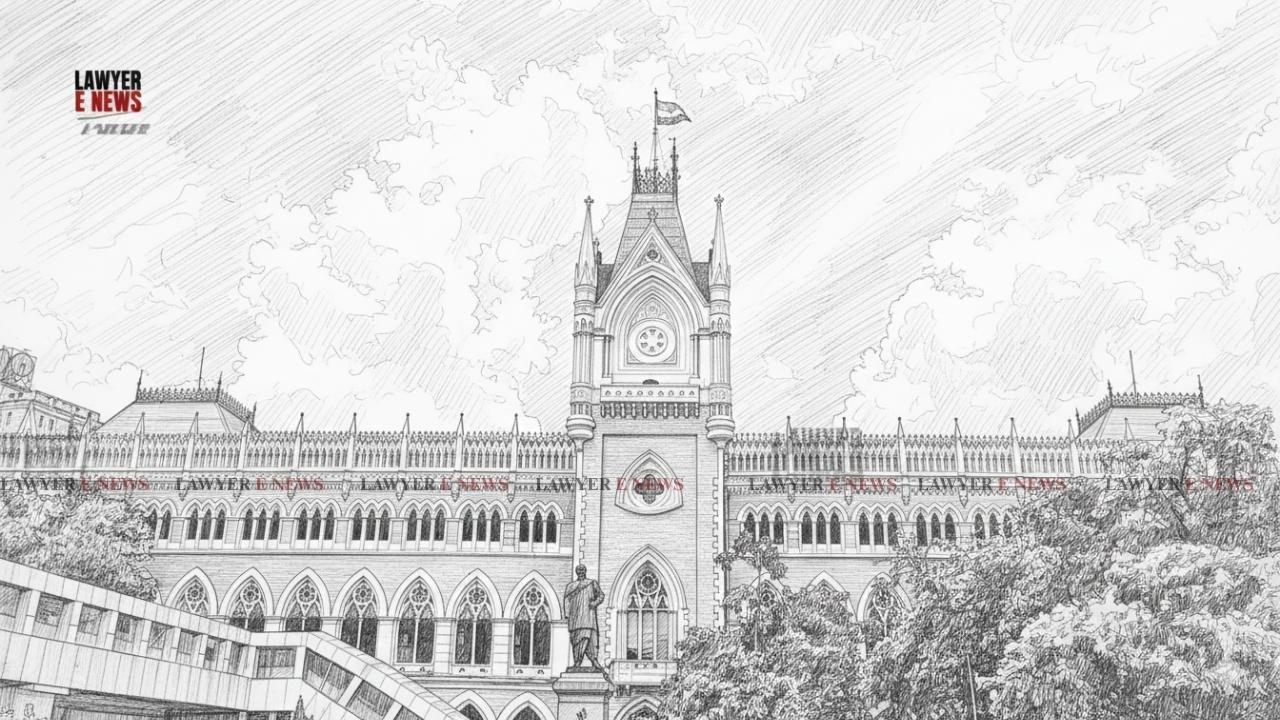
“No Recovery Can Be Made from Low-Ranked Staff Who Served Higher Posts Without Misrepresentation”, In a significant ruling protecting employees from retrospective financial burdens, the Calcutta High Court in WPA 5675 of 2018, held that recovery of excess salary from Group-D employees, who were made to perform Group-C duties for over a decade, was illegal, arbitrary, and violative of Article 14 of the Constitution.
Justice Shampa Dutt (Paul) ruled that the Directorate of Local Bodies’ Memo dated 27.05.2013 and the Order dated 01.11.2017 issued by the Chairman of Tarakeswar Municipality, which had initiated re-fixation of pay and recovery of salary, were impermissible in law, since the petitioners never misrepresented their position and acted under orders of their superiors.
"This Court arrives at the conclusion that recovery, if made from the petitioners herein, would be iniquitous, harsh and arbitrary to such an extent, as would far outweigh the equitable balance of the employer’s right to recover," held the Court, relying heavily on the binding precedent of State of Punjab v. Rafiq Masih, (2015) 4 SCC 334.
“Employees Were Asked to Do Higher Duties, Salary Was Granted by Competent Authority—No Fraud or Misrepresentation Proven”
The petitioners were appointed as Rent Collectors (Group-D) in 1994 under Tarakeswar Municipality, West Bengal. Due to shortage of staff, they were directed to perform Group-C level duties, and accordingly, the Municipality passed a resolution on 28.06.2003 to place them in Group-C pay scale, which was formally granted from 01.08.2004 by the Chairman via Order dated 28.08.2004, based on a Government communication dated 28.06.2004.
Despite enjoying the higher pay for over a decade, the Municipality, in 2013, initiated steps for “by-name approval” from the Directorate. This triggered a letter dated 27.05.2013, directing recovery of excess drawals from 12 employees, alleging they were wrongly paid. In 2017, the pay scale was abruptly downgraded, and salary deductions were ordered, even for retirees.
The Court noted:
"The excess payment was not made on account of any misrepresentation or fraud on the part of the petitioners. Such payment was granted by a competent authority and continued for nearly 14 years.”
“Supreme Court Has Made It Clear—Recovery from Group-C and Group-D Staff After Years Is Prohibited”
Justice Shampa Dutt (Paul) meticulously analysed a line of landmark judgments, including:
Based on the authoritative ruling in Rafiq Masih, the Court reiterated five situations where recovery is impermissible, specifically highlighting the first three which squarely applied in this case:
The Court observed:
“The petitioners were made to perform higher responsibilities and were paid accordingly for over a decade. The long delay in initiating recovery itself makes the order arbitrary.”
The recovery, directed from employees who had either retired or were close to retirement, was termed a “clear breach of constitutional protections under Article 14”.
“Refund to Be Made Where Recoveries Have Already Occurred”: Court Orders Complete Restitution
Among the 12 affected employees, three had already refunded the excess amounts—a fact recorded by the Municipality in their affidavit. Invoking para 61 of Syed Abdul Qadir, the Court ordered the refund of these recovered amounts within three months, stating:
“To maintain parity, the amounts recovered from other employees be refunded to them within three months from the date of receipt of this judgment.”
Thus, not only was future recovery barred, but past recoveries were reversed, restoring complete financial relief to all petitioners.
Municipal Orders Set Aside: Court Terms Recovery Action ‘Illegal and Contrary to Law’
Finally, the High Court quashed both the:
holding them as inconsistent with binding Supreme Court directions and principles of fairness.
The Court observed:
“Once the grant of higher pay was made by a competent authority and continued for over a decade without challenge, the sudden withdrawal and recovery is not only inequitable, but also procedurally and constitutionally flawed.”
A Judicious Stand Against Financial Harassment of Low-Income Employees
The Calcutta High Court’s judgment stands out for its clarity, constitutional grounding, and humane approach. By refusing to allow the state to penalise Group-D employees who loyally discharged higher duties, the Court has fortified the rule of equity in service jurisprudence, particularly for those in lower rungs of government employment.
This ruling serves as a strong judicial reminder that administrative mistakes or delayed rectifications cannot be unjustly visited upon those who acted in good faith and had no hand in the error.
Date of Decision: 26 November 2025