-
by sayum
04 August 2026 1:39 PM







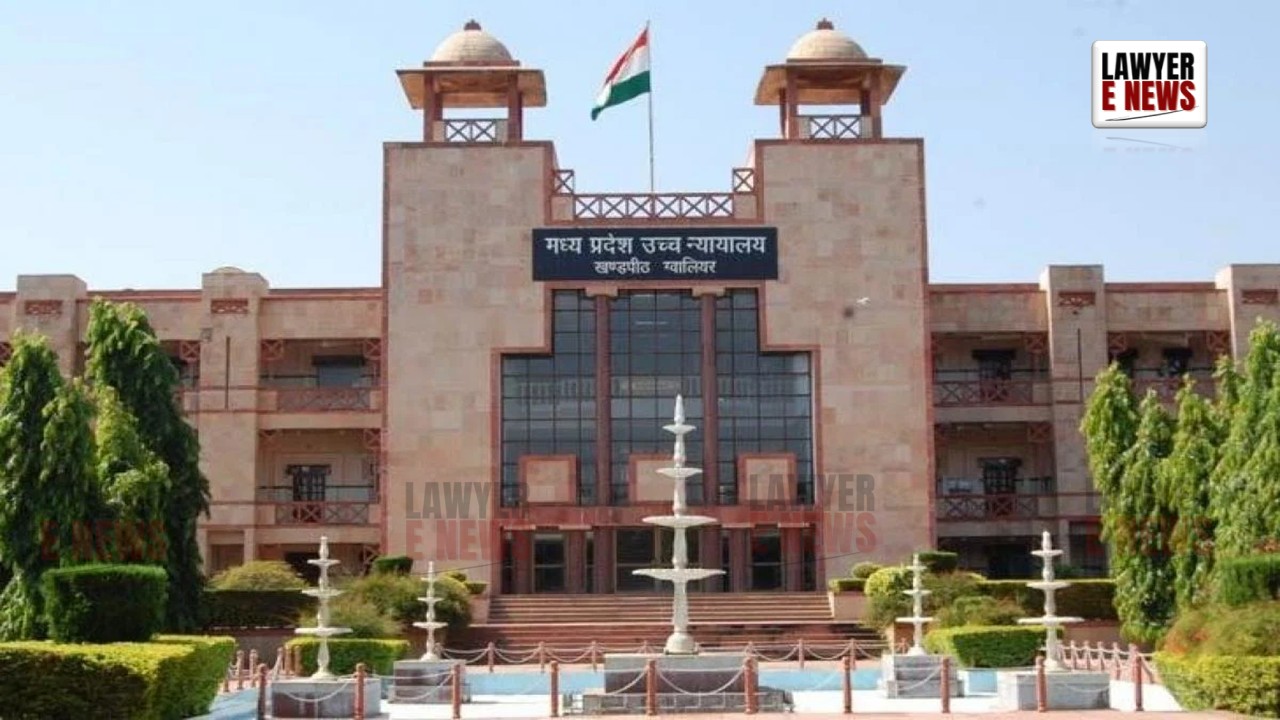
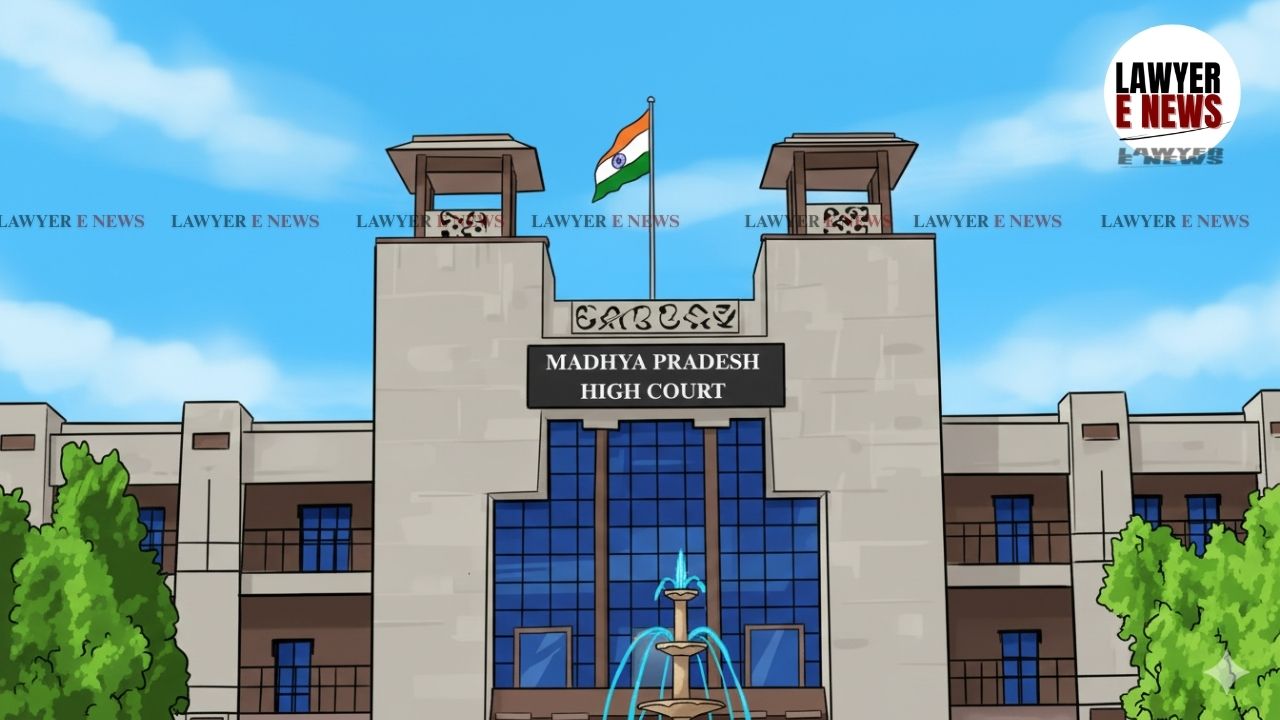
"Mere Existence of Title Deed Does Not Establish Possession Nor Justify Injunction After Decades of Inaction", In a judgment carrying profound implications for advocates handling property and injunction matters, the Madhya Pradesh High Court has ruled that possession must be established, not merely alleged, even where title documents exist. Justice Pavan Kumar Dwivedi rejecting the plaintiffs’ plea for a temporary injunction in a suit filed nearly 70 years after the sale deed was executed.
The case arose from a civil suit seeking declaration and possession over a property in Shajapur, allegedly purchased in 1957 by the plaintiffs’ ancestor through a registered sale deed. The appellants claimed that a temple trust had recently encroached upon their land and sought to restrain further construction. The trial court, however, denied the interim relief, and the High Court has now upheld that decision, reiterating that injunction cannot be granted where possession is not proven, and delay is inordinate.
“The plaintiffs have come forward after almost seven decades of silence. Their own affidavit confirms that they became aware of the sale deed only in 2023. This long inaction, coupled with absence of possession and contrary revenue entries, demolishes any claim to urgent equitable relief,” observed Justice Dwivedi.
"Court Must See Possession on the Ground, Not Just Paper Title from the Past"
The plaintiffs argued that their claim was based on a valid, registered sale deed dated January 22, 1957. They alleged that the temple trust had recently started construction on the land, which belonged to them. However, the Court found this claim to be fatally weakened by the plaintiffs’ own conduct and admissions.
“Prima facie case is not established by waving an old sale deed,” the Court said. “The plaintiffs failed to prove continuous possession. Their own affidavit states that they discovered the deed only in August 2023 while searching their deceased mother’s suitcase.”
The Court also noted that revenue records since 1965 recorded the name of Bhuteshwar Mahadev Temple as being in possession. Further, renovations to the temple were carried out in 1985 and 2008, with the permission of the local municipal council, underscoring uninterrupted occupation and use of the property by the temple authorities.
“Even the Nazul NOC from 1978, filed by the plaintiffs themselves, records that on the east side of the property lies ‘Kuaa Va Shankar Ji Ka Chabutara’, clearly pointing to the presence of the temple,” the Court added.
"Appellate Court Will Not Displace Trial Court's Discretion Without Perversity or Legal Error"
The judgment also clarifies the limited scope of appellate interference in injunction matters. Relying on landmark decisions such as Wander Ltd. v. Antox India Pvt Ltd. and Monsanto Technology LLC v. Nuziveedu Seeds Ltd., the Court emphasized that appellate courts cannot freely substitute their discretion for that of the trial court.
“In appeals under Order 43 Rule 1(r) CPC, the High Court will not reassess the facts or substitute its view unless the trial court’s discretion is shown to be arbitrary, capricious or contrary to settled principles,” the bench held.
In the present case, the Court found that the trial court had carefully considered all three prerequisites for granting injunction — namely, prima facie case, irreparable injury, and balance of convenience — and had rightly concluded that none were in favour of the plaintiffs.
“The trial court’s decision is not only judicially sound but also consistent with the facts on record. The plaintiffs’ long silence, lack of mutation, contradictory boundaries, and absence of possession all militate against the grant of any interim relief,” the High Court noted.
“Equity Aids the Vigilant, Not Those Who Sleep Over Their Rights”
One of the most legally instructive observations in the judgment is the treatment of delay and acquiescence as key equitable barriers to injunctive relief. The Court held that:
“When parties sit quietly for decades, do not assert possession, and then suddenly approach the court claiming violation of rights, the burden to explain such dormancy is very high — and not met by merely producing an aged sale deed.”
The Court found that the plaintiffs had never sought mutation in revenue records, did not raise any objection during the temple renovations spanning decades, and even relied on documents that corroborated the presence of the temple on the disputed land.
In stark contrast, the temple trust had demonstrated continuous, open, and legally sanctioned possession.
A Reminder for Advocates: Title Alone Doesn’t Entitle You to Injunction
For property litigators and trial lawyers, this judgment is a stark reminder that title without possession, vigilance, or legal assertion is insufficient to secure interlocutory protection under Order 39 CPC.
“Injunctions are not granted as a matter of routine merely because a registered deed exists. The court must be satisfied of present injury, current possession, and genuine urgency — none of which exist in this case,” the High Court concluded.
The appeal was dismissed with no order as to costs, but the legal message is sharp and unequivocal: Property rights must be actively asserted, not buried in attics or memory chests for 70 years.
Date of Decision: 21 November 2025