-
by sayum
26 August 2026 10:38 AM







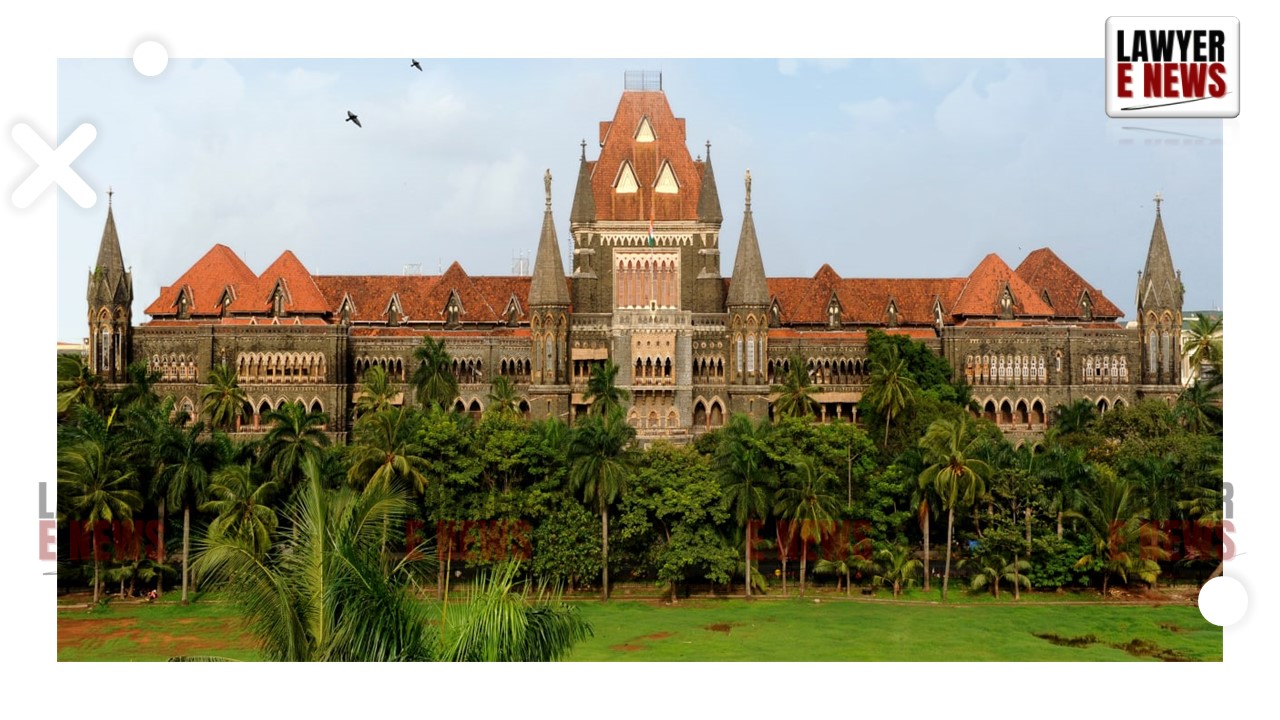
A Public Interest Litigation Must Be Pursued With Clean Hands, a Clean Heart, and a Clean Objective – Bombay High Court has ruled that a Public Interest Litigation (PIL) cannot be used as a weapon for private disputes or business rivalries. Dismissing a PIL that sought a CBI or SIT investigation into alleged fraudulent bank guarantees in an MMRDA contract, the Court held that the petitioner suppressed material facts, scandalized the Court, and violated procedural norms required for PILs.
Delivering the judgment in V. Ravi Prakash v. Mumbai Metropolitan Region Development Authority & Others, Chief Justice Alok Aradhe and Justice Bharati Dangre stated, "A PIL must be filed in good faith, not to advance personal grievances. The petitioner has not only concealed crucial details but also attempted to misuse judicial process for collateral purposes."
By rejecting the plea, the Court made it clear that PILs are meant to serve genuine public interest and cannot be misused for ulterior motives.
The petitioner, V. Ravi Prakash, who claimed to be an investigative journalist, alleged that the bank guarantees submitted by Megha Engineering & Infrastructure Ltd. (MEIL) for an MMRDA twin-tube road tunnel project were fraudulent, as they were issued by Euro Exim Bank, an entity not recognized by the Reserve Bank of India. He sought a CBI or SIT investigation into the alleged fraud and cancellation of the contract awarded to MEIL.
MMRDA and MEIL strongly opposed the petition, arguing that the petitioner had a history of disputes with MEIL, which indicated that the PIL was filed with personal motives rather than in the public interest.
"A PIL Cannot Be Used for a Private Agenda"
The Court, after scrutinizing the case, found that the petitioner’s conduct was questionable, as he had failed to disclose his past litigation history against MEIL and had made scandalous allegations against the judiciary in his social media posts.
Justice Dangre, dismissing the petition, observed, "A PIL is not a platform for individuals to settle private scores. When a petitioner conceals relevant facts, makes reckless allegations, and fails to comply with statutory rules, the petition loses credibility."
The Court held that the petitioner did not comply with the Bombay High Court Public Interest Litigation Rules, 2010, which mandate full disclosure of prior litigation, a declaration of no personal interest, and an undertaking to pay costs if the petition is found frivolous.
"A PIL Must Not Be an Instrument of Blackmail or Publicity-Seeking Litigation"
The High Court relied on Supreme Court rulings that caution against the misuse of PILs. Referring to State of Jharkhand v. Shivshankar Sharma, the Court emphasized that "the bona fides of a PIL petitioner must be examined at the threshold to prevent the abuse of judicial process."
Quoting Balwant Singh Chaufal v. State of Uttarakhand, the Court reiterated that "judicial intervention must not be misused for business or political rivalries under the guise of public interest."
Referring to Dattaraj Nathuji Thaware v. State of Maharashtra, the Court warned that "PILs should not become tools for blackmail or publicity-seeking litigation. The credibility of the judiciary must be protected from such misuse."
Dismissing the PIL, the High Court ruled that the petitioner had failed to establish a genuine public interest and that the allegations of fraud were not backed by substantial evidence. The Court noted that while the petitioner had removed his defamatory tweets within five days, his conduct in scandalizing the judiciary could not be ignored.
Justice Alok Aradhe, concurring with the ruling, observed, "The Court must act firmly against PILs filed with oblique motives. Public interest litigation should not become a weapon for mischief, personal vendetta, or corporate rivalry."
The Bombay High Court’s ruling in V. Ravi Prakash v. Mumbai Metropolitan Region Development Authority & Others reinforces that a PIL must be pursued in good faith and should not be used as a tool to settle personal disputes. The Court has sent a clear message that litigants who misuse PILs to further private interests, suppress material facts, or make scandalous allegations will face strict scrutiny and dismissal of their petitions.
Date of Decision: 18 March 2025