-
by sayum
04 August 2026 1:39 PM







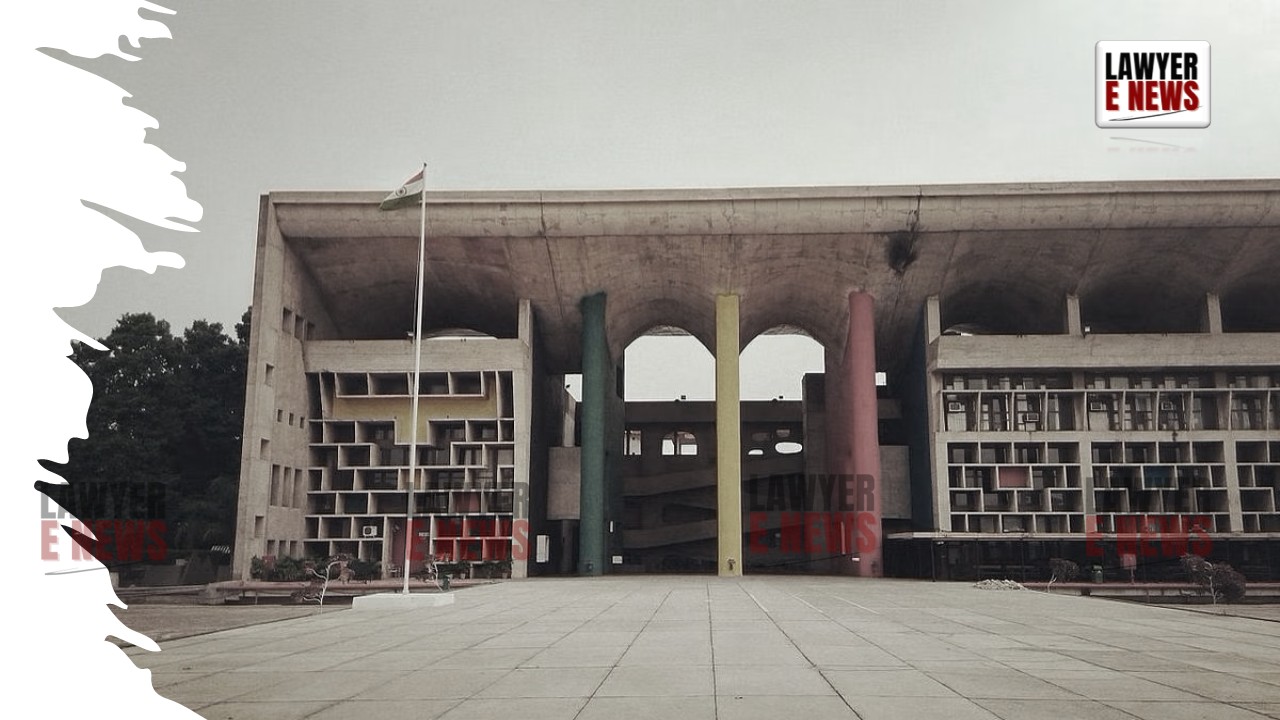
“There is no scope for inclusion of a copy of a document as an instrument for the purpose of the Stamp Act” – Punjab & Haryana High Court delivered a critical ruling under the Indian Stamp Act, 1899, addressing the legal limits of validating non-original documents. Justice Virinder Aggarwal, while allowing the revision, emphatically held that “a photocopy of a document, even if permitted as secondary evidence, cannot be validated by payment of deficient stamp duty and penalty under Sections 33 or 35 of the Stamp Act.” The impugned order of the Civil Judge (Junior Division), Tarn Taran, was accordingly set aside.
The case revolved around whether a photocopy of an agreement to sell—dated 05.03.2018—could be impounded and validated under the Stamp Act, in a suit for specific performance. The lower court had previously rejected the impounding of the document (Annexure P-5) but paradoxically allowed its validation in a subsequent order (Annexure P-6), by directing the plaintiff to pay deficient stamp duty along with a hefty penalty.
“Two Orders Cannot Stand: What Cannot Be Impounded Cannot Be Validated”
The High Court critically examined both orders and found an inherent contradiction. “While Annexure P-5 rightly holds that a photocopy cannot be impounded, Annexure P-6 erroneously proceeds to validate that very photocopy – this inconsistency is legally untenable,” observed Justice Aggarwal.
The Court clarified that the petitioner had rightly confined his challenge to the latter order alone, as it was the one offending settled law. “It was not incumbent upon the petitioner to challenge Annexure P-5 because that order upheld the correct legal position. The illegality lay solely in Annexure P-6,” the Court held.
“Law Is Well-Settled: Only Original Instruments Can Be Validated Under Stamp Act”
Relying on a catena of authoritative judgments, including the Supreme Court’s decisions in Hariom Agrawal v. Prakash Chand Malviya, State of Bihar v. Karam Chand Thapar, and Jupudi Kesava Rao v. Pulavarthi Venkata Subbarao, the Court reiterated that the Indian Stamp Act makes no provision for impounding or validating photocopies or secondary evidence of unstamped or insufficiently stamped documents.
Quoting the binding ratio in Hariom Agrawal, the Court noted: “Law is now no doubt well-settled that a copy of the instrument cannot be validated by impounding, and this cannot be admitted as secondary evidence under the Indian Stamp Act.” The Court also referred to the seminal holding in Rajah of Bobbili v. Inuganti China Sitaramasami Garu (26 IA 262) where it was unequivocally held: “The provisions of Section 35 have no application when the original document has not been produced, and secondary evidence thereof is inadmissible.”
The respondent’s reliance on Mattapalli Chelamayya v. Mattapalli Venkataratnam was distinguished on facts, as in that case the original document was indeed before the arbitrators, and stamping was duly completed by engrossing a copy on proper stamp paper—a fact situation absent in the current case.
“Partial Originals or Mixed Copies Don’t Qualify as Instruments Under the Stamp Act”
Addressing the argument that one page of the agreement was allegedly original while the rest was a photocopy, the Court found no merit in the contention. Justice Aggarwal categorically held: “Even if a portion of the document exists in its original form, the instrument as a whole cannot be deemed an original document. A composite document must necessarily be treated as a copy.” Consequently, validation under the Stamp Act was impermissible.
The Court held that the Civil Judge acted beyond jurisdiction in allowing the document to be validated, “exercising a power not vested under the Act, and thereby committing a material illegality.”
The High Court allowed the revision petition, setting aside the impugned order permitting validation of the photocopy. However, it cautiously clarified that its observations were strictly confined to the question of stamp duty and had no bearing on the merits of the civil suit for specific performance.
“Since the impugned order suffers from material illegality, the same is quashed. Observations herein shall not affect the merits of the underlying suit, which shall be decided independently,” concluded the Court.
Date of Decision: 20th November 2025