-
by sayum
10 October 2026 8:11 AM







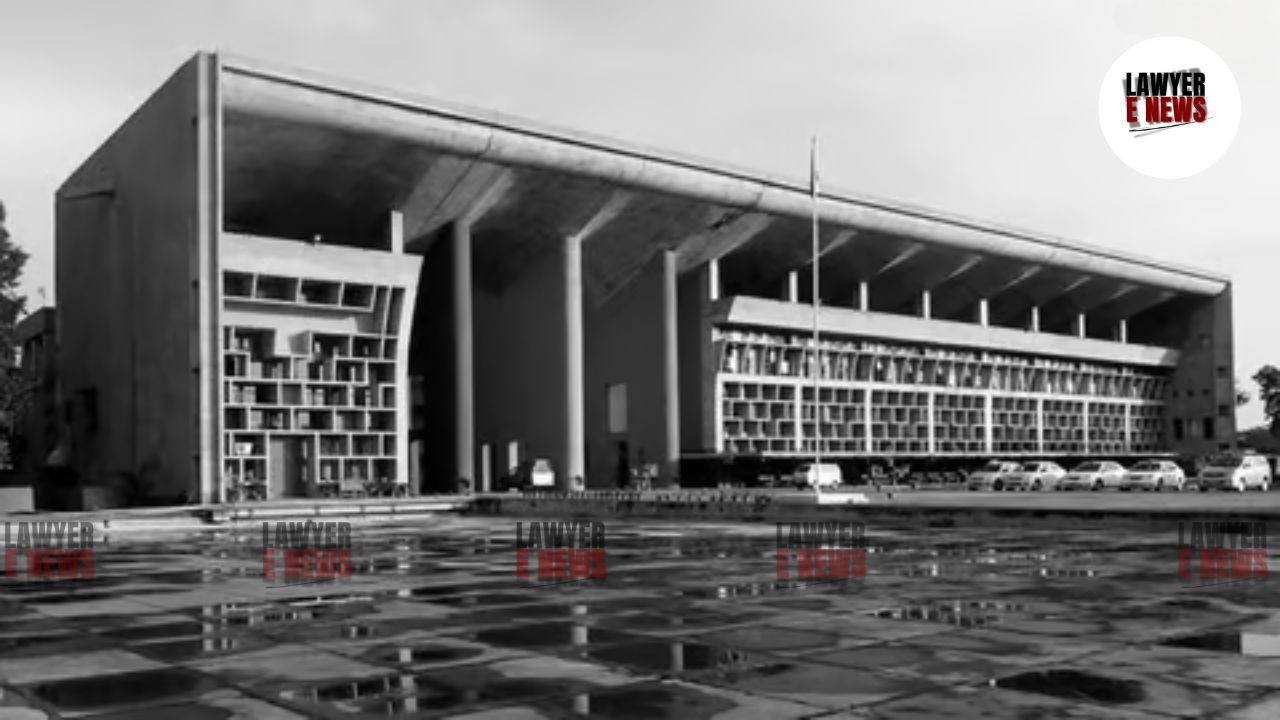
"A passenger who, under a bona fide apprehension that the train has caught fire, jumps out in order to save his life cannot be attributed any intention to cause injury to himself. His conduct is an instinctive act of self-preservation and not self-destruction." Punjab and Haryana High Court, in a significant ruling, held that a passenger deboarding a moving train in panic due to a fire rumor and subsequently getting struck by another train does not constitute a "self-inflicted injury" under the Railways Act, while setting aside a Railway Claims Tribunal order.
A bench of Justice Harkesh Manuja observed that the strict liability principle under Section 124-A of the Railways Act, 1989 covers such tragic incidents prompted by fear for one's safety, ruling out any notions of contributory negligence.
A Frightening Rumor Leads To Tragedy
The appellants, Meena and another, approached the High Court challenging an order of the Railway Claims Tribunal, Chandigarh Bench, which had dismissed their claim petition. Their son, Mayank, was returning from a Jagran at Aurangabad via Train No. 12715 Sachkhand Express on a valid ticket when a rumor of fire sparked panic inside the compartment near Harsana Kalan Railway Station. In the ensuing chaos, passengers jumped out of the train, and the deceased was struck by an oncoming train on an adjacent track, leading to his fatal injuries.
The primary question before the court was whether the circumstances leading to the death of the deceased fell within the ambit of an "untoward incident" under Section 123(c)(2) read with Section 124-A of the Railways Act. The court was also called upon to determine whether the statutory exceptions regarding self-inflicted injury or criminal acts could be invoked by the Railway Administration.
Contract Of Carriage Does Not Terminate Midway - Railways Act Is Beneficial Legislation
The court firmly rejected the Tribunal's premise that the deceased ceased to be a passenger the moment he stepped out of the train. Justice Manuja noted that such an interpretation defeats both the language and the object of the statute, as the contract of carriage does not terminate merely because a passenger is compelled to alight midway due to extraordinary circumstances beyond control.
Supreme Court Precedents On Strict Liability
Invoking the landmark ruling in Union of India v. Prabhakaran Vijaya Kumar and the principles reaffirmed in Union of India v. Rina Devi, the bench reiterated that Chapter XIII of the Act contains welfare provisions founded on strict liability. The court emphasized that pleas of contributory negligence cannot be imported into proceedings under Section 124-A, and the burden squarely lies upon the Railway Administration to establish statutory exceptions.
Instinctive Act Versus Self-Inflicted Injury - No Deliberate Intention To Cause Harm
The High Court underscored that the expression "self-inflicted injury" under clause (b) of the proviso contemplates a deliberate or intentional act resulting in injury to oneself. A person acting under a bona fide fear of fire is executing an instinctive act of self-preservation, not self-destruction.
Panic Cannot Be Terminated As A Criminal Act
Addressing the Tribunal's invocation of clause (c) regarding "his own criminal act", the bench held that mere deboarding in a state of panic cannot be elevated to a criminal offense. The statutory exclusion contemplates direct consequences of an unlawful act, not a reaction prompted by fear for one's life.
Evaluation Of Evidence And Co-Passenger Testimony - Overlooking Direct Eyewitness Account
The court criticized the Tribunal for discarding the unshaken testimony of AW-2 Tinku, a co-passenger who deposed about the panic and rumors inside the compartment. Conversely, the Tribunal had placed undue reliance on RW-1, the Loco Pilot of the hitting train, who had no occasion to witness events inside the Sachkhand Express.
Human Reaction To Perceived Emergency
Justice Manuja eloquently noted that human reaction to a perceived emergency is often instinctive, and the law cannot penalize a victim for trying to preserve life. The surrounding circumstances sufficiently probabilized the appellants' version that remaining inside posed a perceived mortal threat.
Persuasive Support From Bombay High Court
"The Railway is totally failed to establish that the incident is covered by the exception to Section 124-A. There is no case of suicide nor self-inflicted injury or criminal act for which intention is required to commit such act..."
Reliance On Dhaneshwar Rajak Judgment
The court found persuasive support in the Bombay High Court ruling in Dhaneshwar Rajak v. Union of India, where similar deboarding due to smoke and fire panic was held to constitute an untoward incident. The High Court reiterated that Section 124-A does not restrict compensation solely to falling from a train, but covers untoward incidents occurring in the course of railway operations.
Concluding that the Railways failed to establish any statutory exceptions, the High Court set aside the impugned judgment dated 14.11.2025. The claim petition was allowed, awarding statutory compensation of ₹8,00,000 along with 6% interest per annum from the date of filing till realization, payable by the Railways within eight weeks.
Date of Decision: 17 July 2026