Order Rejecting Impleadment Of Third Party Based On Jurisdictional Plea Is Appealable Under Section 37 Arbitration Act: Bombay High Court 21% Interest On Friendly Loan Is Unconscionable; Courts Must Exercise Discretion Judiciously Under Section 34 CPC: Delhi High Court Mere Execution Of Document Claiming Disputed Title Not 'Forgery'; False Claim Of Ownership Isn't 'False Document' U/S 464 IPC: Supreme Court Riding Triple On Motorcycle Does Not Per Se Amount To Contributory Negligence Without Evidence It Caused Accident: Uttarakhand High Court Absence Of Registration Of Sale Agreement Does Not Neutralize Allegations Of Fraud; Supreme Court Cancels Anticipatory Bail In Property Fraud Case Order 8 Rule 9 | Defendant Cannot Introduce Inconsistent Stand Via Additional Written Statement To Bypass Bar On Amending Pleadings After Trial: Supreme Court Constitutional Courts Can Impose Fixed-Term Sentence In Lieu Of Life Imprisonment If Period Exceeds 14 Years: Supreme Court Disciplinary Proceedings Are 'Pending' Only After Issuance Of Chargesheet; Rejection Of VRS Notice Requires Proper Application Of Mind: Supreme Court Section 304B IPC | Conviction Cannot Be Based On Unverified Letters Allegedly Written By Deceased Without Proof Of Handwriting: Supreme Court Investigating Agency Must Seek Magistrate’s Permission For Further Investigation Under Section 173(8) CrPC: Supreme Court Public Servant’s Act Of Disarming Victims During Mass Violence Amounts To Abetment; Supreme Court Affirms Conviction Of Circle Officer Every Member Of Unlawful Assembly Vicariously Liable For Acts Committed In Prosecution Of Common Object: Supreme Court NI Act | Office Bearers Who Signed MoUs Or Financial Docs Can Be Prosecuted Even If They Didn't Sign The Bounced Cheque: Supreme Court 138 NI Act | Mere Designation As Office Bearer Not Sufficient For Vicarious Liability, Specific Role Must Be Disclosed: Supreme Court Administrative Office Orders Cannot Override Express Terms Of Concluded Contracts: Allahabad High Court Long Possession Alone Not Enough For Adverse Possession; 'Animus Possidendi' To Hold Against True Owner Essential: Delhi High Court Major Earning Sons Entitled To Compensation For Parent’s Death Even If Not Financially Dependent: Punjab & Haryana High Court Advocates Running Office From Residence Not Liable To Pay Commercial Electricity Rates: Madhya Pradesh High Court Absence Of Magistrate's Signature Or Seal On Contraband Inventory Renders Seizure Doubtful: Kerala High Court Election Commission Empowered To Conduct SIR Of Electoral Rolls; Can Conduct Limited Enquiry Into Citizenship: Supreme Court

Order 41 Rule 23 CPC | Trial Court Cannot Decide Title Solely on a Vacated Judgment: Himachal Pradesh High Court

07 December 2025 12:47 PM

By: Admin


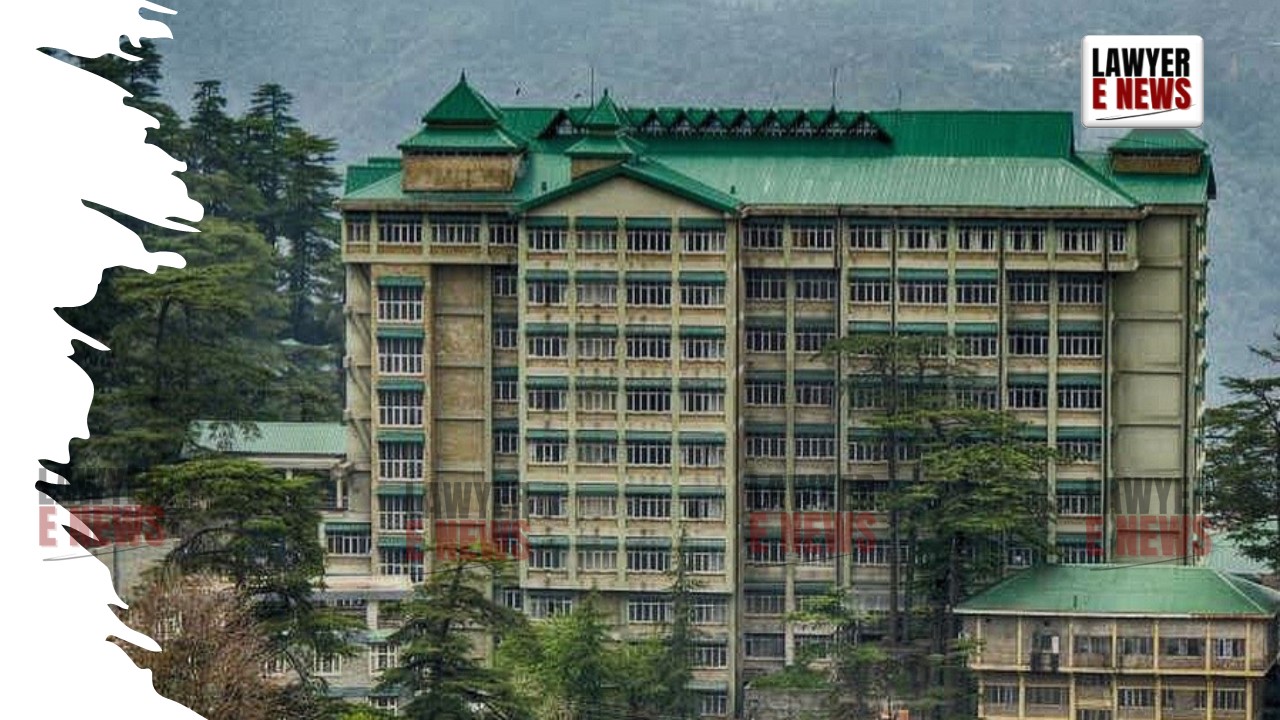
“The learned Trial Court had failed to give independent findings on issue No. 1... but simply decided the case on the basis of judgment, Ex. PX, which has been set-aside in appeal.”— In a seminal ruling the High Court of Himachal Pradesh, comprising Justice Sushil Kukreja, upheld a wholesale remand order, emphasizing that a Trial Court must record independent findings on title based on evidence, not merely on the outcome of a related case that was subsequently overturned.

The Appellants (Plaintiffs) filed a suit for possession of land in District Una, claiming that the Defendants were trespassers who had encroached upon the land and constructed a house. The Plaintiffs alleged that the Defendants fraudulently procured revenue entries as Gair Marusi tenants.

The Defendant countered that she purchased the land via an agreement to sell from one Chanan, who had acquired proprietary rights under the HP Tenancy and Land Reforms Act.

The Trial Court decreed the suit in favor of the Plaintiffs. However, the decree was based almost exclusively on a judgment from a previous case (Ex. PX), which had held that the Defendant’s vendor was a trespasser.

The Twist in Appeal When the matter reached the Lower Appellate Court, the Defendant filed an application under Order 41 Rule 27 CPC to place on record a new judgment. It was revealed that the judgment "Ex. PX"—the sole basis of the Trial Court's decree—had been set aside by the Additional District Judge in a separate appeal. Consequently, the Lower Appellate Court set aside the Trial Court's decree and remanded the case for a fresh decision. The Plaintiffs appealed this remand to the High Court.

Court’s Analysis: The Necessity of Independent Findings Justice Kukreja rejected the Appellant's argument that the Lower Appellate Court should have decided the matter itself instead of remanding it. The High Court noted that the Trial Court had "disposed of the suit without recording its independent findings on Issue No. 1 (Title)."

By ignoring the oral and documentary evidence and anchoring the verdict entirely on "Ex. PX" (which no longer held the field), the Trial Court had committed a fundamental error. Once the foundation (Ex. PX) collapsed, the judgment built upon it could not stand.

The High Court held that the remand was not mechanical but necessary to ensure the Trial Court applied its judicial mind to the actual evidence on record regarding the plea of tenancy and ownership. The appeal was dismissed, and the parties were directed to appear before the Trial Court for a fresh decision.

Date of Decision: 27th November, 2025

Latest Legal News