-
by sayum
11 August 2026 2:00 PM







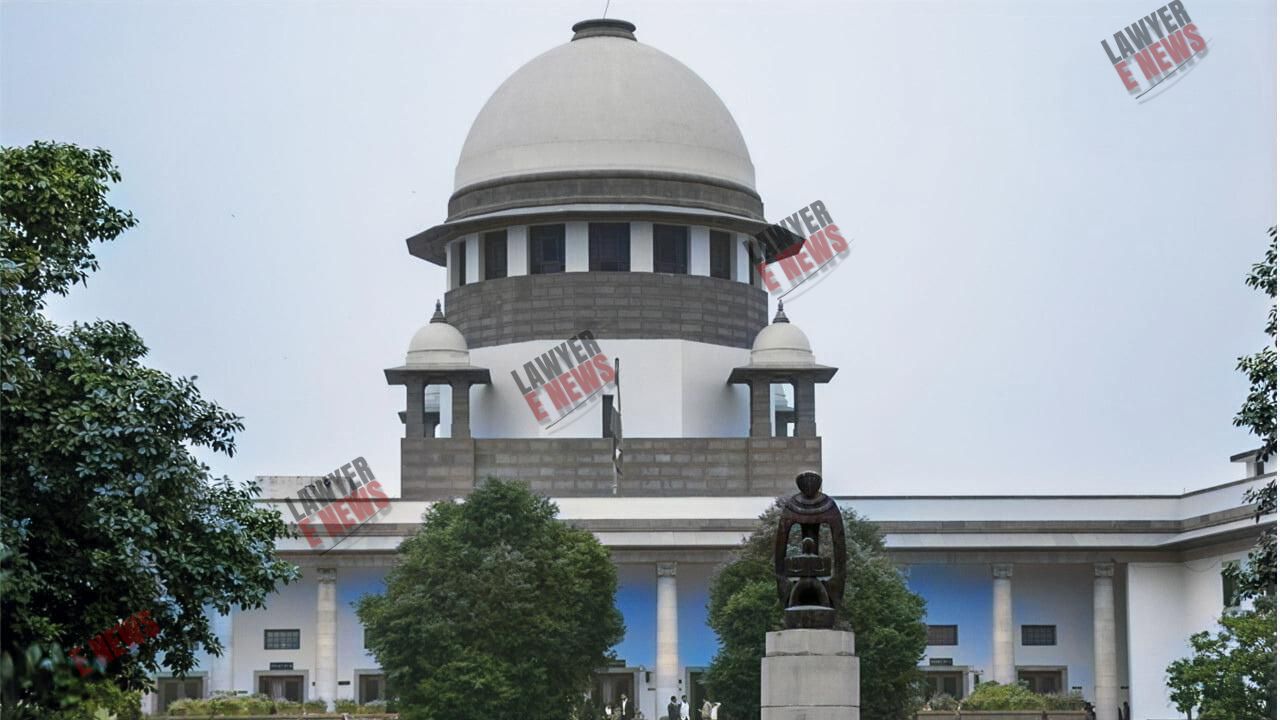
“Rule 36 Sanctions Leave Encashment Only Once on Retirement — Re-employment Doesn’t Create Fresh Entitlement” — Delivering a judgment with far-reaching implications on service benefits for re-employed government servants, the Supreme Court of India held that a retired government employee re-employed after superannuation is not entitled to a second round of leave encashment. The Court overturned the orders of both the Single Judge and Division Bench of the Sikkim High Court, which had upheld the benefit for the respondent, a re-employed medical advisor.
Justice J.K. Maheshwari, delivering the verdict, observed: “Rule 36 shall apply to those government servants who were in regular service prior to their retirement… After granting leave encashment once on retirement to a maximum of 300 days, the employee cannot get benefit of leave encashment second time merely because he is having leave in his credit during re-employment.”
Double Encashment and a Later Clarification
Dr. Mool Raj Kotwal retired on 31 January 2005 as Principal Medical Advisor in the Government of Sikkim. At retirement, he received leave encashment for 300 days, the maximum allowed under Rule 36 of the Sikkim Government Services (Leave) Rules, 1982.
He was re-employed on the same post the next day, and served until 28 May 2019. Upon this second exit, he was again granted cash equivalent to 300 days of earned leave, via an office order dated 31 May 2019.
However, the State soon realized that such double benefit was being granted erroneously and issued a clarificatory Office Memorandum on 27 February 2020, stating that 300 days was the maximum lifetime cap, inclusive of any re-employment period.
Consequently, Dr. Kotwal’s second leave encashment was cancelled via an order dated 21 May 2020, sparking litigation. The High Court sided with Dr. Kotwal, relying on Rule 32, which deems a re-employed officer as if entering service afresh, and held that Rule 36 must apply again.
Supreme Court’s Analysis: “Rules 32 and 36 Operate in Separate Spheres”
The Supreme Court rejected this reasoning as misplaced and doctrinally flawed. Justice Maheshwari explained:
“Mere applicability of Rule 32 would not ipso facto bring an employee within the connotation of ‘government servant’ under Rule 36… Rule 32 is procedural — it governs how leave accrues during re-employment, not how it’s encashed.”
The Court held that Rule 36’s benefit is available only to those retiring from regular service, and not to those merely exiting re-employment. Re-employment, it stressed, is discretionary — not an extension of regular service.
“By using the words ‘the government may sanction to a government servant who retires from service under the Sikkim Government Service Rules, 1974’, the legislative intent is clear. Leave encashment is permissible only once, not after re-employment.”
It found that leave accrued during re-employment cannot be monetized again, even if the employee didn’t cross the 300-day limit during initial retirement.
On Equity, Deferred Compensation, and Public Interest
Acknowledging the doctrinal basis of leave encashment as deferred wages and a welfare-oriented right, the Court stated:
“Leave encashment allows employees to receive a monetary benefit in exchange for leave they have earned but not taken. It is based on principles of equity and economic security — but must be bounded by the statutory cap of 300 days.”
“Courts must prevent employees from claiming leave encashment multiple times for the same accrual, which could lead to unjust enrichment and may go against the public interest of largesse.”
The Court cited State of Rajasthan v. Senior Higher Secondary School, Lacchmangarh (2005) 10 SCC 346, reinforcing that leave encashment is a form of deferred wage — not a recurring benefit upon every cessation of government engagement.
On Natural Justice: “No Opportunity Was Needed Where the Claim Was Baseless”
Dr. Kotwal had also challenged the cancellation on grounds of violation of natural justice, arguing he was not given notice before his benefit was withdrawn. The Supreme Court dismissed this contention:
“This argument appears attractive on first blush, but of no substance. When the respondent is unable to justify his claim of leave encashment, no prejudice is caused even if opportunity was not granted.”
The Court clarified that natural justice does not apply in a vacuum — it applies only when a person has a substantive legal right. Since no such right existed to second encashment, the cancellation did not require prior notice.
Leave Encashment Is One-Time, Even for Long Re-Employment
Setting aside the High Court’s orders, the Supreme Court ruled that:
“Re-employed government servants who have already availed leave encashment at the time of superannuation are not entitled to seek it again merely due to re-employment.”
The Court concluded that:
“Clarificatory order issued by the State is completely in consonance with the spirit of Rules 31, 32 and 36 of Leave Rules. It rightly corrected an administrative error.”
With this ruling, the Court closed the door on repeated monetization of earned leave, reiterating that public employment benefits must balance employee welfare with fiscal discipline.
Date of Decision: April 23, 2025