-
by sayum
25 August 2026 4:32 AM







“No Vested Right to Demand De-Notification Under Section 101-A…….A trespasser cannot dictate public purpose—State’s planning prerogative cannot be derailed by stale claims and disguised litigation,” P&H High Court
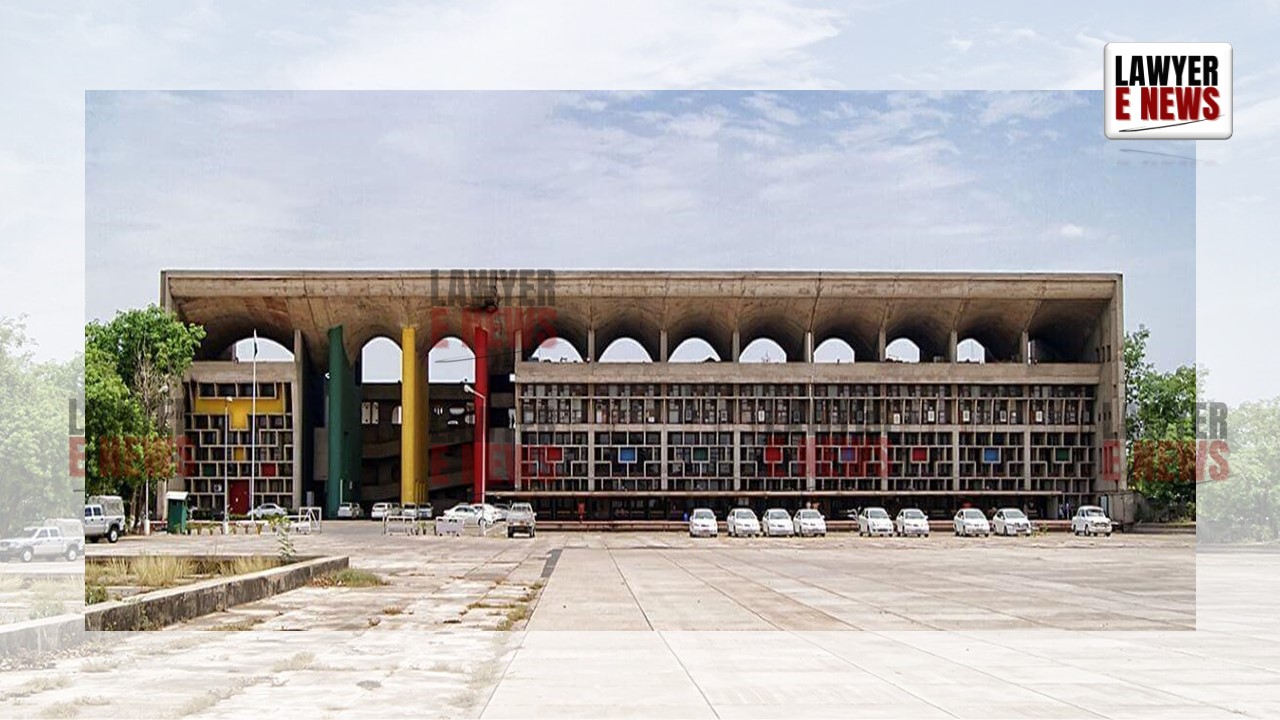
In a resounding rejection of belated and repeated litigation in land acquisition matters, the Punjab & Haryana High Court on November 20, 2025, dismissed three writ petitions filed by landowners including Deepak Kumar @ Deepak Jerath, seeking release of acquired land under Section 101-A of the Right to Fair Compensation and Transparency in Land Acquisition, Rehabilitation and Resettlement Act, 2013 (RFCTLARR Act).
The Division Bench comprising Justice Deepak Sibal and Justice Lapita Banerji held that the petitioners had no vested right to seek de-notification under Section 101-A and declared their continued possession as that of “unauthorised trespassers.” The petitions were further found barred by res judicata, laches, acquiescence, and judicially condemned as an abuse of process of law.
"Once Land is Acquired, Title Vests Absolutely in the State—Petitioners Retaining Possession are Trespassers"
The Court rejected the core argument that the land in question—acquired back in 2007 and awarded in 2008—remained unutilised and that the petitioners retained possession, having raised shops and occupied the area with electricity connections. Citing Rapat Roznamcha No.930 dated 28.03.2008, the Court held:
“Once possession is taken through a duly drawn Rapat Roznamcha, title vests in the State free from all encumbrances. Any continued possession thereafter is illegal trespass and cannot confer any rights.”
The Court relied on the Constitution Bench judgment in Indore Development Authority v. Manohar Lal, (2020) 8 SCC 129, reaffirming that a Rapat Roznamcha is a legally recognised mode of possession, and that even photographic evidence or unauthorized re-entry cannot undo the legal effects of a valid acquisition.
"Section 101-A is Not a Weapon for Landowners—It’s a Discretionary Power of the State Based on Public Planning"
The crux of the petitions was a demand for release of land under Section 101-A of the 2013 Act, on the ground that it had allegedly remained unused and had become “non-essential.” Rejecting this outright, the Court held:
“Section 101-A does not confer any enforceable right upon landowners to seek release. It merely empowers the State Government to exercise discretion if the acquired land becomes unviable or non-essential.”
The Court found that as per the approved layout plan for Sector-29, Pinjore, the land in question was earmarked for a 60-metre-wide National Highway, a 30-metre green belt, and a 24-metre internal service road—thus confirming its active utilisation in public interest.
In this regard, the Court followed the precedent set in Ram Swaroop v. State of Haryana (Civil Appeal No.16421 of 2021), where the Supreme Court held that:
“No landowner has a vested right to claim that the land acquired has become non-essential solely on the ground of continued possession or delay in development.”
"Petition is Barred by Constructive Res Judicata—Issues Already Adjudicated Cannot Be Reopened with New Labels"
The petitioner had earlier filed CWP No. 5392 of 2018, seeking similar relief under Section 24(2) of the 2013 Act. That petition was withdrawn with liberty only to approach authorities under Section 101-A. However, in the present petition, the same issues—non-utilisation, possession, lack of opportunity under Section 5-A—were raised all over again.
The Court held this repeated litigation to be squarely barred under res judicata and constructive res judicata, stating:
“Once a relief has been withdrawn or declined in prior proceedings, it cannot be revived in subsequent litigation on identical grounds. Courts of equity will not permit relitigation by mere change of statutory provision invoked.”
Citing Daryao v. State of UP, 1961 SCC OnLine SC 21, and Direct Recruit Class II Engineers’ Assn. v. State of Maharashtra, (1990) 2 SCC 715, the Bench reminded that:
“Constructive res judicata applies with full force to writ proceedings. A litigant must bring forth all claims in the first round or not at all.”
"17-Year Delay is Fatal—Laches and Acquiescence Defeat Equitable Remedies"
Another critical ground for rejection was the inordinate delay of over 17 years in challenging the acquisition. The petitioner sought relief under Section 24(2) ten years after the award, and then waited nearly three more years after the Court gave liberty to approach under Section 101-A, before filing a representation.
The Court cited Union of India v. N. Murugesan, (2022) 2 SCC 24, and Brijesh Kumar v. State of Haryana, (2014) 11 SCC 351, holding:
“Delay, laches and acquiescence are fatal to equitable relief. Courts cannot reward indolence and negligence in pursuit of rights.”
Further referring to Jahangir Byramji Jeejeebhoy, 2024 SCC OnLine SC 489, the Bench cautioned that:
“Litigants cannot fix their own timelines for filing claims. Judicial discretion is not available to salvage hopelessly delayed pleas.”
"Relitigation to Harass State is Abuse of Process"
In stinging remarks against forum-shopping and repeated writs, the Court concluded:
“This writ petition is a frivolous attempt to reopen issues already adjudicated. It is a classic abuse of judicial process and must be nipped in the bud.”
The petitions were dismissed not just on technical grounds, but also on merits, affirming that the land was essential and had already been utilised as per town planning requirements.
This judgment is a powerful reaffirmation of judicial discipline in land acquisition jurisprudence. It decisively settles that:
Section 101-A confers no enforceable right on landowners, and merely enables the State to exercise discretion;
Constructive res judicata bars relitigation, even under the guise of different legal provisions;
Delay, laches and continued possession post-acquisition do not revive extinguished rights;
Photographs and unauthorised structures cannot defeat documentary proof of possession by the State; and
Repeated litigation is not a strategy—it is an abuse, and Courts will not entertain it.
Date of Decision: 20 November 2025