
-
by sayum
25 August 2026 12:32 PM







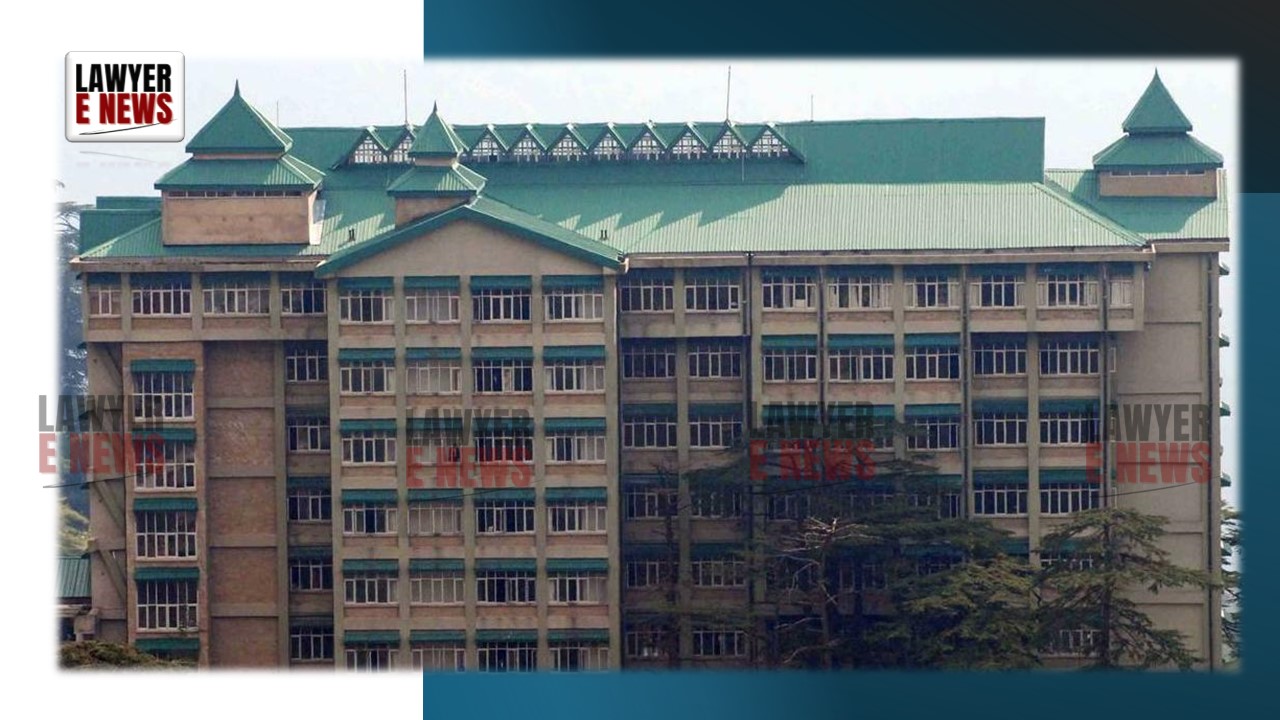
“After mutual settlement and divorce, no dispute survives – wife is estopped from continuing prosecution for stridhan” –High Court of Himachal Pradesh dismissed a criminal appeal filed by a woman seeking reversal of the acquittal of her former husband and in-laws in a stridhan recovery case. Delivering the judgment in Vibhuti v. Saurabh & Ors., Justice Rakesh Kainthla held that a wife cannot continue with criminal proceedings under Section 406 IPC for recovery of stridhan after a mutual consent divorce if she had not expressly reserved any liberty to prosecute such proceedings at the time of settlement.
The Court upheld the acquittal by the Chief Judicial Magistrate, Mandi, observing that the Trial Court’s findings were based on well-settled law and not perverse, and therefore no interference was warranted.
“Once the Matter Is Settled Through Mutual Divorce, No Dispute Survives” – Court Cites Shlok Bhardwaj Judgment
Justice Kainthla referred to the Supreme Court’s decision in Shlok Bhardwaj v. Runika Bhardwaj, (2015) 2 SCC 721, to emphasize that once a marriage is dissolved by mutual consent based on a settlement, the complainant cannot continue with prosecution under Section 406 IPC unless the right to do so is expressly preserved. The Court observed:
“Once the matter was settled between the parties and the said settlement was given effect to in the form of divorce by mutual consent, no further dispute survived between the parties. No liberty was reserved by the wife to continue further proceedings. Thus, the wife was, after settling the matter, estopped from continuing the proceedings.” [Para 16]
This principle was reaffirmed by the Court with reference to Ruchi Agarwal v. Amit Kumar Agarwal, (2004) 4 RCR (Cri) 949 and Mohd. Shamim v. Smt. Nahid Begum, (2005) 1 RCR (Cri) 697, where similar prosecutions were quashed post-divorce on the ground of abuse of process and lack of surviving dispute.
Acquittal Based on Reasonable Findings: High Court Declines to Interfere in Appeal Under Section 378 CrPC
Addressing the scope of interference in appeals against acquittal, the Court reiterated the well-established legal principles governing appellate review. Quoting extensively from the recent decision in Surendra Singh v. State of Uttarakhand, 2025 SCC OnLine SC 176, the Court held:
“It is a settled legal position that interference with the finding of acquittal recorded by the learned trial judge would be warranted only if the judgment of acquittal suffers from patent perversity; is based on misreading or omission to consider material evidence; and that no two reasonable views are possible.” [Para 12]
The High Court found that the Trial Court had rightly concluded that the marriage was dissolved through a mutual settlement, and that the complainant’s failure to reserve her right to prosecute meant she could not revive criminal proceedings later.
Trial Court Had Properly Appreciated Lack of Evidence and Contradictions
The complainant had alleged that her stridhan (bridal gifts) were not returned by her former husband and in-laws even after the mutual consent divorce decree was passed on 21.10.2020. The Trial Court, after taking pre-charge evidence and framing charges under Section 406 read with Section 34 IPC, found that:
The complainant and her mother failed to produce any bills, receipts, or list of the alleged stridhan.
Their statements contradicted each other.
The complainant had not reserved any liberty to prosecute criminal proceedings in the divorce settlement.
These findings, according to the High Court, were entirely reasonable and consistent with the law laid down by the Supreme Court.
Complaint Filed Only to Harass Respondents Post-Divorce: Court Notes Abuse of Process
Justice Kainthla noted that criminal complaints filed after mutual divorce, without any express reservation of rights, often amount to harassment, echoing the concerns raised in Ruchi Agarwal and Krishan Singh v. State of Punjab, 2020 SCC OnLine P&H 4879. The Court observed:
“The appellant, having received the relief she wanted without contest on the basis of the terms of the compromise, cannot now continue criminal proceedings. The conduct of the appellant indicates that the complaint was filed only to harass the respondents.” [Para 17]
The High Court held that even if the Trial Court was overly strict in insisting on formal proof of stridhan items, this issue became academic in view of the overriding effect of the mutual settlement.
No Right Reserved in Divorce Settlement – Criminal Complaint Unsustainable
The crux of the ruling rests on the legal principle that in the absence of express liberty to continue prosecution after a mutual divorce decree, criminal complaints regarding matrimonial disputes including stridhan do not survive. The Court held:
“The complainant/wife was estopped from proceeding further with the complaint filed by her when she had not reserved any right to proceed with the matter. This was a reasonable view based on the judgment of the Hon’ble Supreme Court, and no interference is required while deciding the appeal against acquittal.” [Para 18]
In dismissing the criminal appeal against acquittal, the High Court has reinforced a crucial jurisprudential safeguard: marital disputes resolved through mutual divorce settlements must bring finality, and the criminal justice system cannot be invoked later to reopen those matters absent express liberty. The judgment is a significant reaffirmation of the Supreme Court’s guidance on post-divorce prosecutions in matrimonial contexts.
“Even if the Trial Court erred in requiring strict proof of stridhan, the complaint is still liable to be dismissed in view of the Supreme Court’s binding judgment in Shlok Bhardwaj. This question becomes academic and need not be decided.” [Para 19]
Date of Decision: 27th November, 2025





