-
by sayum
11 August 2026 2:00 PM







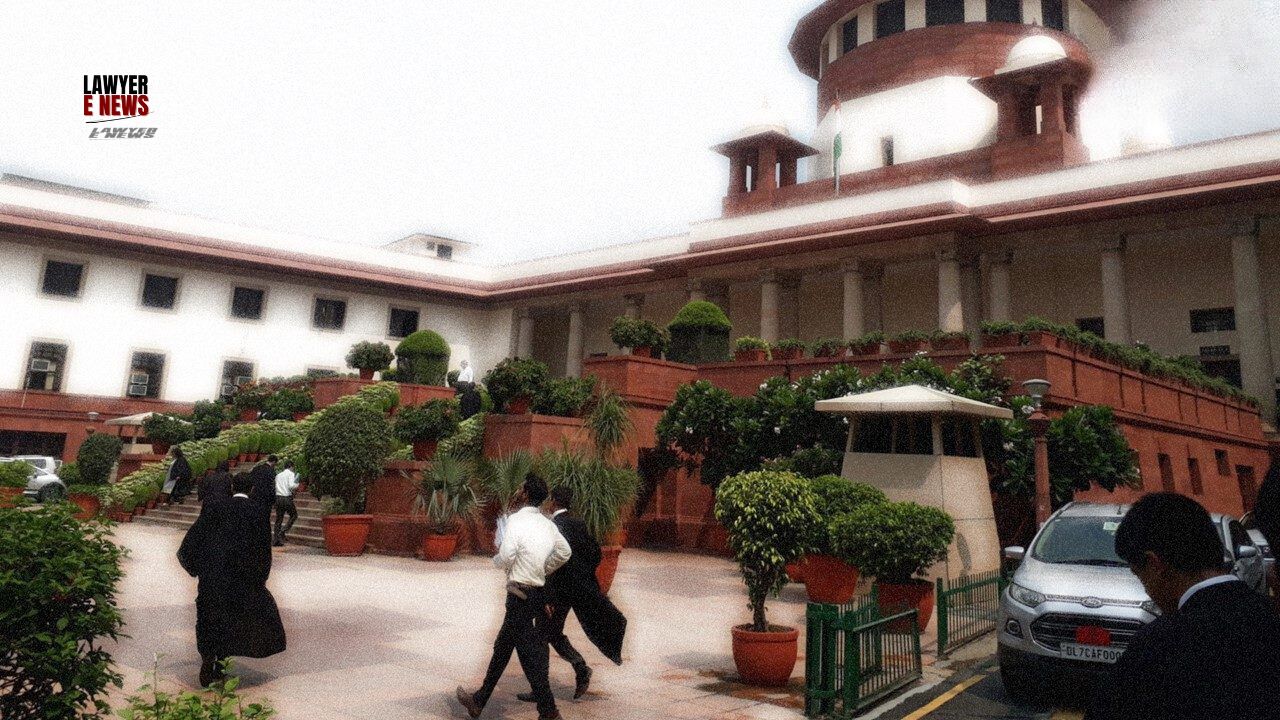
“High Court Cannot Act as an Appellate Forum in Writ Jurisdiction under Article 227” – Supreme Court of India delivered a strongly-worded judgment overturning an order of the Allahabad High Court which had allowed the recall of a 33-year-old ex parte decree. The Court criticized the High Court for acting beyond its jurisdiction under Article 227 of the Constitution and reiterated the strict boundaries of judicial discretion in recalling final decrees under Order IX Rule 13 of the Civil Procedure Code.
The Court emphasized that once a defendant is set ex parte, their rights are severely curtailed and mere allegations of lawyer negligence or vague explanations cannot form a sufficient cause to undo a long-concluded adjudication.
The appellant, Kanchhu, had instituted a civil suit in 1987 seeking cancellation of a sale deed dated September 5, 1984, alleging it was fraudulently obtained by his brothers—the respondents. The trial court proceeded ex parte against the respondents on April 24, 1991, after repeated adjournments sought by them. The suit was decreed on August 17, 1991.
The respondents filed an application under Order IX Rule 13 CPC for recall of the ex parte decree along with a plea under Section 5 of the Limitation Act. Their excuse: respondent no. 1 had allegedly fallen ill on August 15, 1991. The trial court dismissed the application, as did the appellate court. The respondents then filed a writ petition in the Allahabad High Court, which was dismissed as infructuous in 2011.
Shockingly, after nearly seven years, in 2018, the respondents sought recall of the dismissal, claiming their lawyer had not informed them of the High Court’s earlier order. The High Court not only condoned this delay but allowed the writ petition, set aside the 1991 ex parte decree, and directed a rehearing of the original suit.
The principal legal issue before the Supreme Court was whether the High Court was legally justified in setting aside the ex parte decree in a writ proceeding under Article 227, especially after multiple judicial forums had rejected the recall plea earlier.
The Court noted, “We are not so much dismayed by the outcome of the writ petition but rather the manner in which the learned Judge proceeded and also by the reasons assigned.” It held that the High Court acted outside the scope of its limited supervisory powers under Article 227 by reviewing the merits of the trial court's decree as if it were an appellate forum.
Rejecting the High Court’s interpretation, the Court observed, “The learned Judge appears to have set aside the ex parte decree passed by the trial judge as if he were sitting in appeal and exercising appellate jurisdiction over such decree.”
On the issue of delay, the Court expressed leniency but warned, “By no means should we be understood to lay down any law that whenever a litigant places the blame on the lawyer... the same has invariably to be accepted.”
The Supreme Court took particular exception to the High Court's remarks criticizing the trial court for not considering the written statement despite proceeding ex parte. Quashing this logic, the Court clarified, “Once the defendant is set ex parte, and such order has attained finality, the defendant’s rights suffer a curtailment… Generally speaking, the limited right that the defendant... would have is confined to cross-examining the plaintiff’s witnesses.”
The Court condemned the lack of diligence shown by the respondents, stating, “It is truism that vigilance and diligence go hand-in-hand... Not only vigilance and diligence on the part of the respondents are woefully lacking but such lack is glaringly apparent.”
In clear terms, the Court noted that the respondents' repeated absences from court between April and August 1991 were unexplained, and their claims of illness were never substantiated in evidence. No doctor was examined, no credible justification was provided, and the medical certificate was challenged as bogus by the appellant.
The Supreme Court found no fault with the trial or appellate court’s reasoning in rejecting the Order IX Rule 13 application. The High Court, in failing to examine these judicial findings and substituting its own assessment, committed a grave error of law.
“We are left to wonder how the judgment of the trial court could have been faulted and the decree set aside on the ground that the defence raised in the written statement was not considered while granting relief,” the Court remarked.
The Supreme Court decisively restored finality to a litigation that had been unsettled by procedural missteps and judicial overreach. In setting aside the High Court’s 2024 order, the Court reaffirmed that discretionary power under Article 227 must not transgress into appellate review, especially in matters already adjudicated through due legal process.
The appeal was allowed, and the original decree of 1991 was restored. The Court made it clear: “The impugned order… is clearly indefensible.”
Date of Decision: April 22, 2025