-
by sayum
25 August 2026 6:19 AM







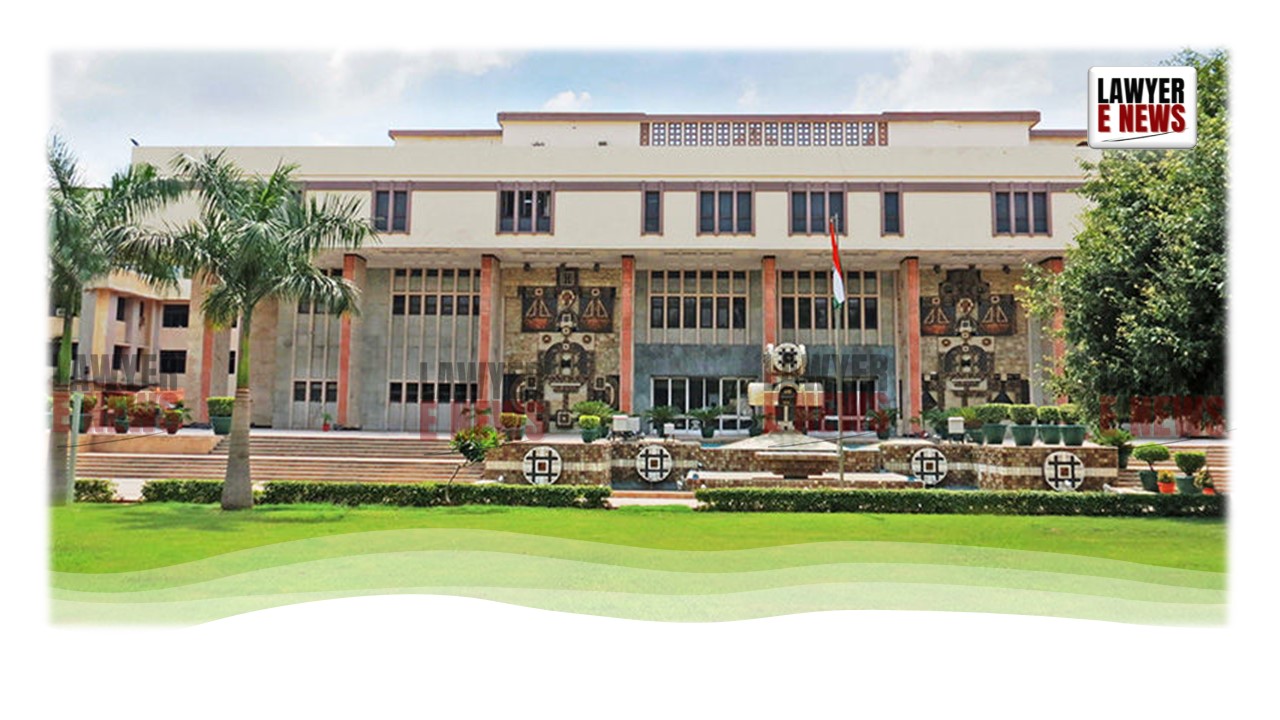
“Test Identification Parade is not a mere formality but a crucial safeguard against wrongful conviction in cases of stranger identification,” In a compelling reaffirmation of the evidentiary value of Test Identification Parades (TIP) in criminal trials, the Delhi High Court delivered a judgment acquitting a robbery accused who had been sentenced to seven years’ imprisonment under Section 397 IPC by a Sessions Court. The case—Pawan Soni v. State (Govt. of NCT of Delhi)—involved allegations of robbery and grievous hurt stemming from a stabbing incident in Okhla Phase-II. However, the conviction was primarily based on dock identification without a prior judicial TIP, a flaw the Court held to be fatal.
Justice Manoj Kumar Ohri, who authored the judgment, minced no words in criticising the investigative failure, stating:
“Dock identification, in a case where the accused is not previously known to the complainant, especially when it takes place after the accused has been shown to the witness in custody, is a weak piece of evidence that cannot form the sole basis of conviction.”
Failure to Conduct TIP in Stranger Identification Cases Is a “Fatal Flaw”: High Court Heavily Relies on Supreme Court Precedents
The Court expressed deep concern at the police having allowed the complainant to identify the accused inside the police station without first subjecting him to a judicial Test Identification Parade. The appellant, Pawan Soni, was admittedly a stranger to the complainant, and no effort was made to follow the established legal procedure for identification.
The Court observed: “Once the appellant was already shown to the complainant in the police station, his dock identification in Court became meaningless.”
Referring to the Supreme Court’s decisions in Nazim v. State of Uttarakhand, P. Sasikumar v. State, and Gireesan Nair v. State, the High Court reiterated the threefold purpose of TIPs: to help the witness confirm the identity of the accused, to assist the police in verifying the direction of investigation, and to test the memory of the witness. In the absence of a TIP, the Court stated:
“The trial court should be very cautious while accepting dock identification by such a witness. Doubt always belongs to the accused.”
Court Finds Complainant’s Testimony “Improved”, CCTV Footage Irrelevant, and Recovery of Stolen Items Questionable
Besides the flawed identification, the Court also pointed to serious inconsistencies in the complainant's testimony. While the original FIR mentioned only a mobile phone and cash, the complainant later claimed that a power bank and headphones were also robbed. These additions, the Court held, emerged only after the arrest of the accused, casting doubt on the credibility of the narrative.
“The power bank has been mentioned as one of the robbed properties after the appellant was arrested... Such post-arrest improvements affect the reliability of the prosecution’s case,” the Court stated, while noting that the complainant was called to the police station and allegedly identified both the accused and the items recovered—again without any procedural safeguards.
The CCTV footage that was relied upon by the prosecution also failed to help its case. While the footage established the presence of individuals in the area, it did not capture the incident of stabbing or robbery, making it circumstantial at best. The complainant’s assertion that he used his bag to defend himself and broke one knife before being stabbed with a second knife brought from a Jhuggi was also not mentioned in his initial complaint, further weakening the prosecution’s stand.
The Court concluded:“The complainant has shown a tendency to improvise... The case against the appellant has not been proven beyond reasonable doubt, and as such, the benefit must go to the appellant.”
Conviction under Section 397 IPC Also Set Aside for Lack of Proven Use of Deadly Weapon
The Sessions Court had sentenced the appellant under Section 394 IPC (robbery with hurt) and Section 397 IPC (robbery with use of deadly weapon), directing that he undergo three years’ rigorous imprisonment under Section 394 and seven years under Section 397, with both sentences to run concurrently. The High Court, however, held that with the credibility of the prosecution’s case in question and the weapon not recovered or linked conclusively, the ingredients of Section 397 IPC were not satisfied.
The judgment stated:“With identification found to be flawed and recovery of the weapon unsubstantiated, the conviction under Section 397 IPC is unsustainable in law.”
Conviction and Sentence Set Aside, Appellant Acquitted
Having found the identification process flawed, the testimony inconsistent, the recovery doubtful, and the incident unsupported by CCTV evidence, the Delhi High Court held that the prosecution had failed to prove the case beyond reasonable doubt, and the appellant was entitled to acquittal.
“The impugned judgment and the order on sentence are accordingly set aside. The appellant is held to be acquitted. He be released forthwith unless wanted in any other case,” the Court ordered.
With this ruling, the Delhi High Court has issued a strong reminder to law enforcement that shortcuts in investigation—particularly in cases involving strangers—can lead to injustice, and that courts must remain vigilant to ensure that criminal convictions are not based on mere suspicion or flawed procedures.
Date of Decision: December 1, 2025