-
by sayum
10 October 2026 8:11 AM







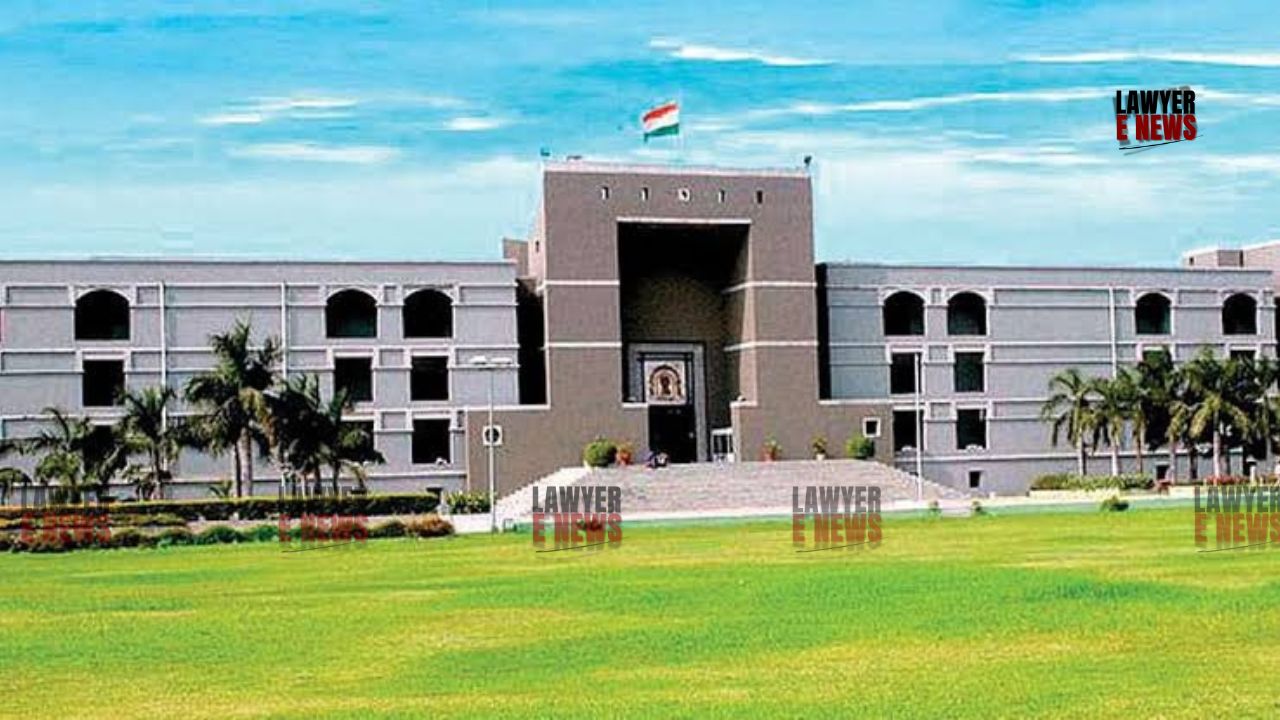
"Insurance company shall not be liable to pay any compensation to the heirs and legal representatives of deceased owners of the insured vehicle under the provisions of Motor Vehicles Act. By accepting any additional premium towards the coverage of own car damage or owner-driver of insured vehicle, the insurance company has agreed to indemnify the owner towards contractual liability which is beyond the scope of jurisdiction of the tribunal as being confined to third party damages." Gujarat High Court has firmly ruled that a tortfeasor who causes a motor accident through his own rashness or negligence, and consequently his legal heirs, are legally barred from claiming statutory compensation from the insurer under Section 166 of the Motor Vehicles Act, 1988.
A division bench comprising Justice A.Y. Kogje and Justice Nisha M. Thakore held that the statutory indemnity framework under Chapter XI of the Act is meant strictly to satisfy third-party risks, reiterating that a person cannot take advantage of their own self-inflicted wrong to secure third-party compensation from their own insurer.
The deceased was driving his unregistered Santro car on the Rajkot-Jamnagar Highway at night when he attempted to overtake another vehicle and collided head-on with a Swaraj Mazda Matador, succumbing to fatal injuries on the spot. The Motor Accident Claims Tribunal (Aux.), Gandhidham-Kachchh dismissed the claim petition filed by the deceased’s legal heirs under Section 166 of the Motor Vehicles Act, holding that the deceased was the sole tortfeasor responsible for the accident. Challenging the dismissal, the legal representatives filed a First Appeal before the High Court, contending that the insurer remained liable under a comprehensive package policy that included additional premium for owner-driver personal accident coverage.
The primary question before the court was whether a claim petition under Section 166 of the Motor Vehicles Act, 1988 is maintainable at the instance of a tortfeasor or his legal heirs seeking compensation for his own negligent wrong. The Court was also called upon to determine whether the Claims Tribunal has the statutory jurisdiction under Section 166 to enforce contractual personal accident insurance liabilities against an insurer.
Standard Of Proof In Motor Accident Claims Governed By Preponderance Of Probabilities
The bench first evaluated the claimants' challenge against the Tribunal's finding of negligence, noting that in proceedings under Section 166, the standard of proof is not proof beyond reasonable doubt, but the preponderance of probabilities. Relying on the Supreme Court's ruling in Anita Sharma v. The New India Assurance Co. Ltd. (2021), the Court noted that tribunals must assess the overall material on record rather than insisting on strict criminal-trial standards.
Deceased Was Sole Negligent Tortfeasor In Head-On Collision
Analyzing the panchnama and FIR, the Court observed that the deceased's vehicle was positioned in the middle of the road after attempting a reckless overtaking maneuver, while the oncoming matador had skidded toward the far edge to avert the crash. The bench also took note of the fact that the deceased was driving an unregistered car loaded with 201 bottles of illegal liquor, confirming that the deceased had solely authored the accident through his rash and negligent driving.
Tortfeasors Cannot Derive Advantage From Their Own Negligent Wrong
Addressing the fundamental legal doctrine governing tortious claims, the High Court emphasized that a tortfeasor cannot claim compensation against his own insurer for his own wrong. The bench underscored that Section 166 is an enabling provision that requires the claimant to prove fault and negligence on the part of an offending vehicle, and cannot be invoked by the wrongdoer who is the author of the accident.
Statutory Framework Under Section 147 Strictly Confined To Third-Party Risks
The Court meticulously examined the statutory scheme under Sections 147, 149, 165, and 166 of the Motor Vehicles Act, 1988, observing that the legislative mandate of compulsory insurance is designed solely to protect third parties who suffer injuries or loss of life due to the use of a motor vehicle. Citing the Supreme Court decisions in Oriental Insurance Co. Ltd. v. Meena Variyal (2007), New India Assurance Co. Ltd. v. Asha Rani (2003), and United India Insurance Co. Ltd. v. Tilak Singh (2006), the bench held that the words "any person" in Section 147 are contextually qualified and restricted exclusively to third parties.
Owner-Driver Does Not Qualify As A Statutory Third Party
The Court reaffirmed that an owner-driver or someone stepping into the shoes of the owner does not fall within the definition of a third party under the Motor Vehicles Act. Relying on Oriental Insurance Co. Ltd. v. Jhuma Saha (2007) and Dhanraj v. New India Assurance Co. Ltd. (2004), the bench observed that Section 147 does not mandate an insurance company to assume statutory risk for death or bodily injury sustained by the owner of the vehicle due to his own negligence.
"It is, thus, axiomatic that whereas an insurance company may be held to be liable to indemnify the owner for the purpose of meeting the object and purport of the provisions of the Motor Vehicles Act, the same may not be necessary in a case where an insurance company may refuse to compensate the owner of the vehicle towards his own loss."
Claims Tribunal Lacks Statutory Jurisdiction Over Purely Contractual Liabilities
The bench clarified that the Claims Tribunal constituted under Section 165 is invested with limited statutory jurisdiction to adjudicate third-party tort claims arising out of the use of motor vehicles. Referring to the Apex Court rulings in National Insurance Co. Ltd. v. Laxmi Narain Dhut (2007), New India Assurance Co. Ltd. v. Sadanand Mukhi (2009), and United India Insurance Co. Ltd. v. Davinder Singh (2007), the Court held that contractual liability arising out of additional premium paid for personal accident cover cannot be adjudicated by the Tribunal under Section 166.
Claims Tribunal And High Court Governed Strictly By Statute, Lack Article 142 Powers
The Court highlighted that the powers exercised by the Motor Accident Claims Tribunal under Section 166 and by the High Court under Section 173 are creature of statute and strictly circumscribed by law. The bench observed that these statutory forums are not vested with extraordinary powers analogous to Article 226 of the Constitution of India or the expansive equitable jurisdiction exercised by the Supreme Court under Article 142.
Personal Accident Claims Must Be Pursued Before Appropriate Consumer Forums
The bench noted that while the package policy contained a distinct clause for personal accident cover of the owner-driver up to Rs. 2 Lakhs, such claim represents a purely contractual dispute between the insured and insurer. The Court held that while the dismissal of the claim petition under Section 166 was entirely justified, the legal heirs are at liberty to agitate their contractual claim for personal accident cover before the appropriate consumer disputes redressal forum.
The High Court dismissed the appeal and upheld the Tribunal's order rejecting the claim petition, holding that legal heirs of a negligent tortfeasor cannot claim third-party compensation under Section 166 of the Motor Vehicles Act. The bench clarified that the claimants remain free to pursue their contractual personal accident cover claims against the insurer before the appropriate consumer forum.
Date of Decision: 03 August 2026