-
by sayum
25 August 2026 12:32 PM







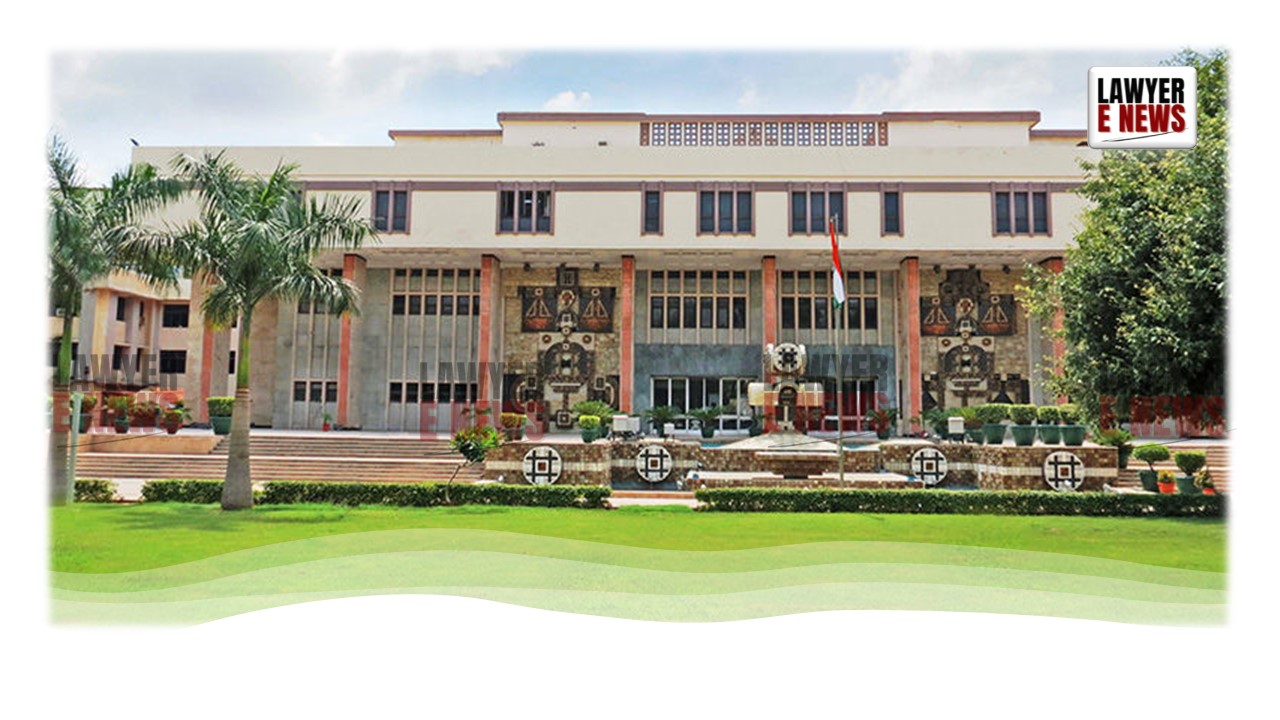
“Appellant Failed To Prove That Testator Had No Right To Execute The Will—Unregistered Sale Documents Confer No Title”, Delhi High Court concerning a probate appeal involving intra-family property disputes and the legal scrutiny of a registered Will executed amid alleged prior property transfers. Justice Chandrasekharan Sudha dismissed the appeal filed by Sunil Kant, son of the deceased testator, upholding the trial court's grant of probate in favour of respondent no. 1, another son, Samrat Chander.
The central issue revolved around the validity of a registered Will dated 14.09.1998, by which the testator, Ramji Dass, disinherited Sunil Kant and bequeathed his immovable assets exclusively to his other sons. The appellant objected, claiming that the property had already been transferred to him through an agreement to sell and supporting documents dated 30.04.1998. However, the Court found the Will legally valid and the objections “unsubstantiated and vague,” with no suspicious circumstances proven.
“Unregistered Sale Documents Do Not Confer Title Or Bar Execution Of A Will”
The dispute centred on whether the testator retained the authority to execute the Will dated 14.09.1998 when the appellant claimed to have already acquired title to the same property through unregistered sale-related documents executed months earlier. The appellant invoked Section 53-A of the Transfer of Property Act, 1882, seeking protection of possession, while challenging the Will on grounds of suspicious circumstances, alleged forgery, and infirm execution.
Rejecting these arguments, the Court held: “Even assuming that the documents relied on by [the appellant] were executed, the same would not confer any title on him. Admittedly, there is no registered sale deed in favour of [Sunil Kant]… Unregistered documents cannot override the effect of a registered Will executed in compliance with law.”
The Court found that the documents dated 30.04.1998—including a Will, GPA, SPA, and a possession letter—were never registered, and that the appellant failed to establish payment of the alleged ₹1,00,000 consideration. Moreover, the testator had cancelled those documents through a deed dated 27.10.1998 and issued a legal notice disinheriting the appellant, citing “fraud, legal harassment and misappropriation.”
“Disinheritance Alone Is Not Suspicious—A Testator Has The Right To Choose His Beneficiaries”
Justice Sudha underlined that strained family relationships do not automatically render a Will suspicious. The Court observed that the testator clearly recorded in his Will that Sunil Kant had: “falsely proclaimed himself to be the owner of the property… mischievously caused a false entry of ₹50,000 in his bank account… and had withdrawn the said amount by forged cheques.”
The Will also narrated that Sunil had refused to contribute maintenance despite a family arrangement, and had served a false legal notice on the testator. In light of these allegations, the Court held:
“It appears that the father was initially inclined to give the property in favour of respondent no. 4 [Sunil Kant]. But subsequently, relations became strained, and the father disowned his son and refused to give him any property.”
Significantly, the Court observed that the mother and sister of the appellant—who were not beneficiaries under the Will—raised no objections to the probate petition, further reinforcing the absence of any undue influence or coercion.
Attesting Witnesses Were Examined—Will Was Duly Executed And Registered
Addressing the statutory compliance under Section 63 of the Indian Succession Act, 1925 and Section 68 of the Indian Evidence Act, 1872, the Court found that:
The Will was duly registered before the Sub-Registrar, and was read over to the testator in his vernacular language.
The attesting witnesses—PW2 (daughter of the testator) and PW4 (a friend of the family)—testified to the testator’s sound mental condition and voluntary execution.
Inconsistencies in witness statements regarding travel arrangements or the petitioner’s presence during registration were found immaterial and did not raise any genuine suspicion.
The Court cited Meena Pradhan v. Kamla Pradhan [(2023) 9 SCC 734], reaffirming that:
“The Will need not be proved with mathematical certainty but must satisfy the prudent mind test… Where suspicious circumstances exist, they must be dispelled by cogent evidence.”
No such suspicious circumstances were proven in this case. The Court ruled that the propounder of the Will had fully discharged his burden of proof, while the appellant failed to establish any infirmity.
Family Litigation History Weighed Against the Appellant’s Claims
Justice Sudha carefully considered the history of legal proceedings between the testator and the appellant. The Court noted that:
The testator had filed a suit against Sunil Kant seeking recovery of possession of the property.
Sunil Kant had filed a suit for specific performance of the 30.04.1998 documents.
The testator had alleged that Sunil Kant “had taken his signatures on blank papers while he was bedridden and fabricated documents.”
The deed of cancellation dated 27.10.1998 nullified all such documents, including the alleged agreement to sell.
The Court found that these events were consistent with the testator’s express intent to disinherit the appellant and that:
“The materials brought on record affirm that the testator had knowingly and intentionally excluded respondent no. 4 from his last and final Will.”
In dismissing the appeal, the Delhi High Court reaffirmed core principles of testamentary law, particularly the sanctity of a registered Will executed in accordance with law, and the testator’s autonomy in deciding how and to whom his property should devolve. The Court also underscored that disinheritance, even of a child, is not a suspicious circumstance by itself, especially when backed by documentary evidence and family conduct.
“The discrepancies pointed out… relating to the mode of travel, time taken for drafting the will, or sequence of events are irrelevant in the facts and circumstances of the case,” the Court concluded, finding “no infirmity” in the trial court’s judgment.
Date of Decision: December 4, 2025