-
by sayum
24 August 2026 3:22 PM







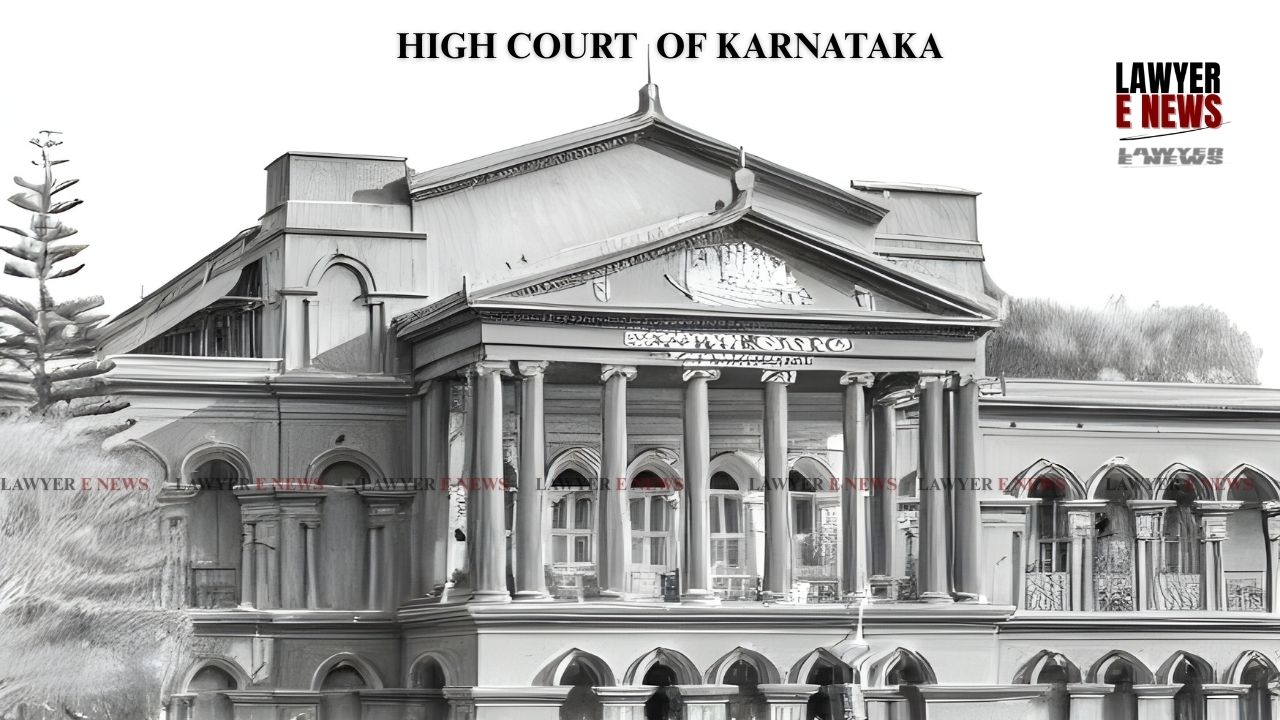
"The mere fact that the statute permits a maximum duration of two months, does not bestow upon the Authority a license to exercise such power in a cursory and cavalier manner." Opening with this stinging observation, the High Court of Karnataka, Dharwad Bench, has quashed a prohibitory order issued by the Deputy Commissioner of Dharwad that restrained Sri Adrushya Kadeshwara Swamiji from entering the district. Justice M. Nagaprasanna termed the administration's move "wholly indefensible," ruling that barring the Pontiff for two months to prevent his attendance at a mere three-day event was manifestly disproportionate and violative of Article 19 of the Constitution. The Court emphasized that the order was devoid of reasons and proceeded purely on conjectures to impose a restraint of excessive duration.
The legal controversy was ignited when the petitioner, the 49th Matadhipathi of Kaneri Mutt, was invited to a religious programme in Dharwad scheduled between November 5 and November 7, 2025. Opposition arose when the Jagathika Lingayat Mahasabha submitted a representation citing a previous prohibitory order from the Vijayapura District Administration and alleging that the Pontiff had made inflammatory speeches regarding the Lingayat community. Acting on this representation and a subsequent police report, the Deputy Commissioner invoked Section 163 of the Bharatiya Nagarik Suraksha Sanhita, 2023 (BNSS)—analogous to the erstwhile Section 144 Cr.P.C.—and issued an ex-parte order on November 4, 2025. This order banned the petitioner’s entry into the district not just for the duration of the event, but from November 5, 2025, to January 3, 2026.
IGNORING THE SUPREME COURT MANDATE
The petitioner, represented by Senior Counsel, mounted a strong challenge based on procedural impropriety and the violation of a specific Supreme Court directive. The counsel submitted that while the Supreme Court had previously declined to interfere with a ban in Vijayapura, it had explicitly clarified that the Vijayapura order "would not form the basis of externment of the petitioner from any other District." The petitioner contended that the Dharwad administration had blatantly ignored this safeguard by relying on the exact same material to justify the fresh ban. Furthermore, the defense argued that converting an apprehension regarding a three-day event into a two-month ban was irrational and violated the principles of natural justice, particularly as the administration had ample time to issue a notice but failed to do so.
THE DOCTRINE OF PROPORTIONALITY
Justice M. Nagaprasanna conducted a meticulous analysis of the scope of Section 163 BNSS, drawing upon established jurisprudence regarding Section 144 Cr.P.C., including the landmark judgments of Babulal Parate, Madhu Limaye, and Anuradha Bhasin. The Court underscored that while ex-parte orders are permissible, they are reserved for genuine emergencies where serving notice is an impossibility. The Bench noted that the representation against the Pontiff was received on October 30, 2025, affording the administration a 96-hour window to issue a show-cause notice. The failure to utilize this window, without recording any justification for the urgency, rendered the order illegal.
The Court was particularly critical of the duration of the restraint. It observed that imposing the maximum statutory period of two months for an event lasting only three days failed the test of proportionality. The Bench held that such a "blanket order" was excessive, reiterating that restraints on personal liberty must be minimal and commensurate with the object of the order.
The High Court concluded that the order failed the tests of constitutionality and legality. It held that the power under Section 163 BNSS is remedial and preventive, intended for urgent cases of nuisance, and cannot be weaponized to suppress legitimate expression or democratic rights based on mere surmises. Consequently, the writ petition was allowed, and the prohibitory order was quashed. The Court recorded the undertaking of the petitioner’s counsel that the Pontiff would conduct himself with restraint. This judgment serves as a critical precedent, clarifying that the maximum duration mentioned in the statute is a ceiling, not a default setting, and that ex-parte orders affecting fundamental rights require a demonstration of real, imminent emergency rather than administrative convenience.
DATE OF DECISION: 25/11/2025