-
by sayum
26 August 2026 10:38 AM







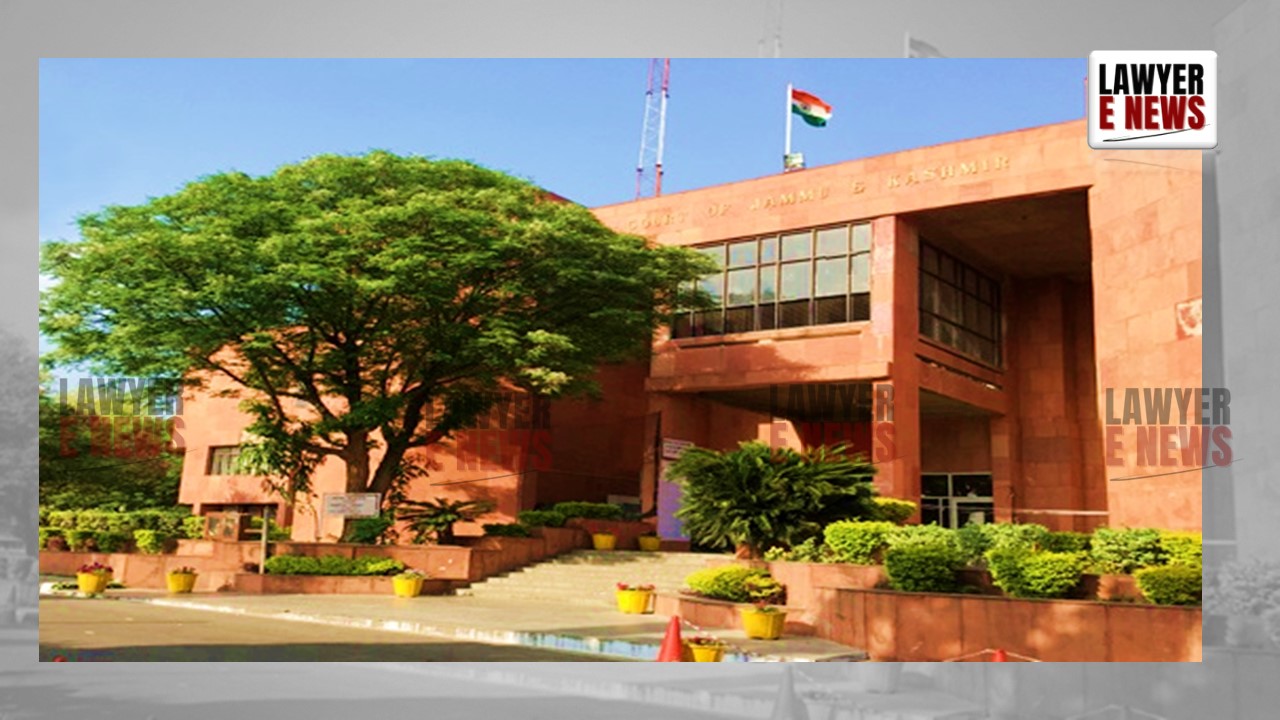
Once Magistrate Takes Cognizance Under Section 200 CrPC, FIR Under Section 156(3) CrPC Cannot Be Ordered - High Court of Jammu & Kashmir and Ladakh, in a significant ruling on March 3, 2025, quashed FIR No. 37/2022, registered at Police Station, Bakshi Nagar, Jammu, in a dispute between Renu Sharma (landlord) and her tenant. The Court held that a Magistrate cannot direct the police to register an FIR under Section 156(3) CrPC after having already taken cognizance of the case under Section 200 CrPC.
Setting aside the order dated March 29, 2022, passed by the Special Mobile Magistrate (Electricity), Jammu, the Court ruled, "Once a Magistrate records the preliminary statement of the complainant under Section 200 CrPC, the case moves to the post-cognizance stage, and it is impermissible to revert to pre-cognizance proceedings under Section 156(3) CrPC."
With this ruling, the FIR against Renu Sharma and her co-accused stands quashed, and the trial Magistrate has been directed to treat the complaint as a private complaint and proceed under Chapter XV of the CrPC.
"Tenant Alleges Landlord’s Trespass and Theft—Magistrate Orders FIR, High Court Intervenes"
The case arose from a dispute between Renu Sharma (landlord) and her tenant, who had been residing in Flat No.102, Block-D, Kamdhenu Homz, Toph Sherkhania, Jammu, since September 2015 under a rent agreement at ₹22,500 per month.
The tenant alleged that in April 2022, while he was away at his native place, his landlord unlawfully entered the flat, changed the locks, and removed his belongings, amounting to house trespass, theft, and burglary. Upon returning on March 9, 2022, the tenant claimed that he found his possessions missing and the lock on the main entrance changed. He approached the court, alleging that CCTV footage confirmed that the landlord had illegally occupied the premises.
The tenant filed a complaint under Section 156(3) CrPC before the Special Mobile Magistrate (Electricity), Jammu, seeking registration of an FIR for offenses under Sections 453, 454, 456, 457, 379, 380, and 120-B IPC. The Magistrate, after recording his preliminary statement under Section 200 CrPC on March 19, 2022, ordered an inquiry by SSP Jammu, who assigned Dy.SP HQ Jammu to conduct a preliminary investigation.
The inquiry report, submitted on March 28, 2022, concluded that both parties had acted improperly—the tenant had not been paying rent regularly, while the landlord had locked the premises without following legal eviction procedures. Despite this, on March 29, 2022, the Magistrate directed the SHO of Police Station Bakshi Nagar to register an FIR, which was subsequently challenged by the landlord in the High Court.
"Once Magistrate Takes Cognizance, FIR Cannot Be Ordered—Jurisdictional Overreach Struck Down"
The High Court, examining the case, ruled that the Magistrate had committed a jurisdictional error by ordering the registration of an FIR after taking cognizance under Section 200 CrPC. The Court clarified, "Section 156(3) CrPC applies at the pre-cognizance stage. Once the Magistrate records the complainant's statement under Section 200 CrPC, the case enters the post-cognizance stage, and ordering an FIR thereafter is legally impermissible."
Citing its own ruling in Mohd. Aijaz v. Sajad Ahmad Dar & Anr. (CRMC No.285/2017, decided on February 18, 2021), the Court reaffirmed: "Once a Magistrate has recorded the preliminary statement under Section 200 CrPC and initiated an inquiry under Section 202 CrPC, reverting back to pre-cognizance proceedings under Section 156(3) CrPC is a legal impossibility."
The judgment emphasized, "The Magistrate should have proceeded with the complaint as a private complaint under Chapter XV of CrPC instead of directing FIR registration."
"FIR Quashed—Case to Proceed as Private Complaint"
Setting aside the order dated March 29, 2022, and quashing FIR No. 37/2022, the Court ruled: "The order directing registration of FIR is legally unsustainable. Consequently, FIR No. 37/2022 registered at Police Station Bakshi Nagar, Jammu, is quashed. However, the trial Magistrate shall proceed with the complaint by treating it as a private complaint under Chapter XV of CrPC."
The Court sent a copy of the judgment to the trial Magistrate, directing that proceedings be conducted in accordance with Sections 200-203 CrPC.
This ruling reinforces a key procedural principle in criminal law:
• A Magistrate cannot order an FIR under Section 156(3) CrPC after taking cognizance under Section 200 CrPC.
• Once the complainant’s statement is recorded under Section 200 CrPC, the case must proceed as a private complaint under Chapter XV of CrPC.
• Illegal orders directing FIR registration can be quashed to prevent abuse of process.
With this judgment, the Jammu & Kashmir High Court has clarified the distinction between pre-cognizance and post-cognizance procedures, ensuring that Magistrates adhere to the correct legal framework when dealing with criminal complaints.
Date of Decision: 03 March 2025