-
by sayum
04 August 2026 1:39 PM







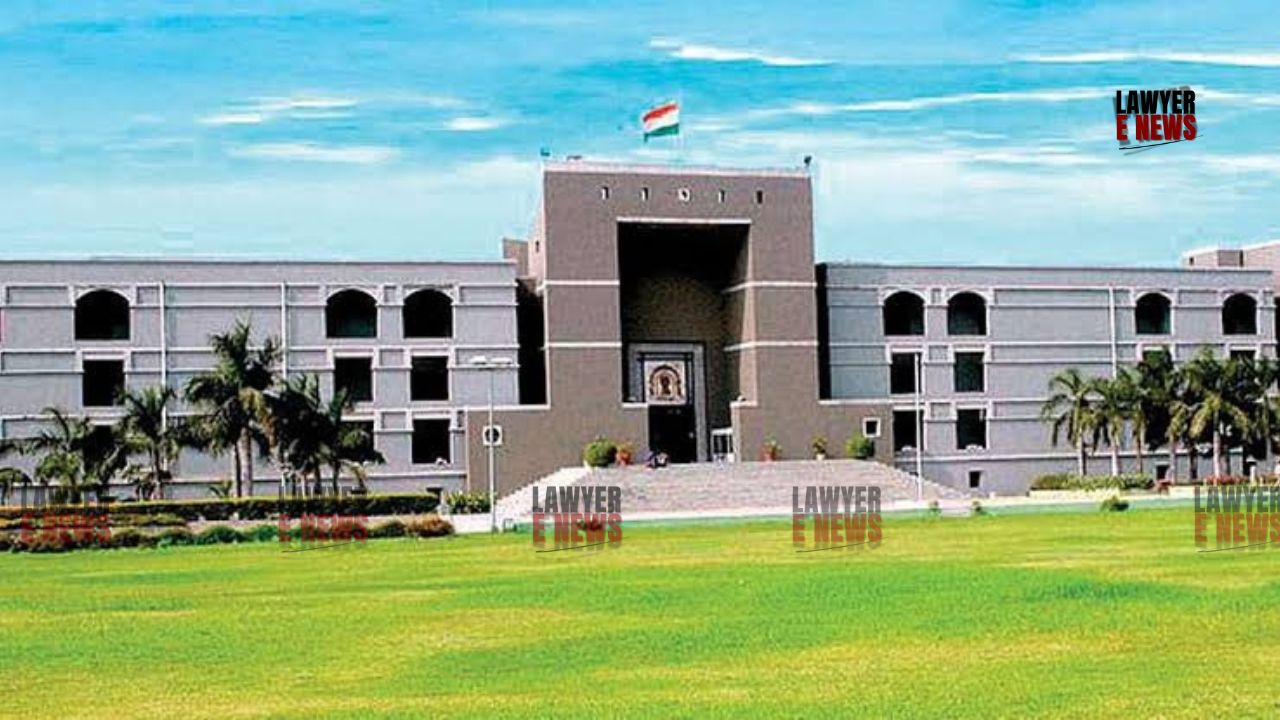
“Plea for Rejection Under Order 7 Rule 11 Must Accept Plaint As True—Mutation Entry Alone Doesn’t Conclude Partition”, In a significant ruling addressing the scope of Order 7 Rule 11 of the Code of Civil Procedure, 1908, the Gujarat High Court on 6 November 2025 dismissed Civil Revision Application, affirming the decision of the trial court to not reject a suit for partition and declaration as time-barred.
Justice J.C. Doshi ruled that the plaint raises triable issues requiring evidence, especially regarding the date of knowledge of alleged fraudulent acts and the validity of a mutation entry recorded in 1976, which purportedly reflected a partition of ancestral property.
“When the question of limitation involves disputed facts or hinges on the date of knowledge, such issues cannot be decided at the stage of Order VII Rule 11 CPC”, the Court held, relying on the Supreme Court’s ruling in P. Kumarakurubaran v. P. Narayanan.
“Partition Entry in Revenue Records Does Not Conclude Legal Partition—Only Civil Court Can Determine Title”
The dispute revolved around Entry No. 5376, mutated in 1976, which was claimed by the petitioners—Heirs and LRs of Vishvanath Morlidhar—as evidence that a partition of ancestral lands among three brothers had already occurred.
The plaintiffs—Heirs and LRs of Kantibhai Morlidhar—challenged the legitimacy of that entry in a civil suit filed in 2016, alleging fraud, lack of consent, and absence of any actual partition.
The petitioners sought rejection of the plaint under Order 7 Rule 11(d) CPC, arguing that the suit was filed decades after the alleged partition, and was thus hopelessly barred by limitation under Article 59 of the Limitation Act, 1963.
However, the High Court, affirming the trial court’s reasoning, noted that the plaintiffs had clearly pleaded lack of knowledge and alleged fraud, and the cause of action arose from a government order dated 21 May 2015—thus requiring factual adjudication.
“Revenue entry has no value to settle the title of the party; it is only the civil court which can settle the title of the disputed property,” observed Justice Doshi.
“Suit for Partition Involves Continuous Cause of Action—Limitation Cannot Be Determined Without Evidence”
The Court emphasized the doctrine of continuous cause of action in partition suits and reiterated that the claim of fraud and lack of consent by heirs in ancestral property matters cannot be summarily dismissed at the threshold.
Justice Doshi stated:
“Plaintiffs seek partition of the suit property disputing Entry No. 5376 on the ground that such entry has been mutated without real partition between the parties. Suit for partition is registered from the cause of action, as threat to the share of the plaintiffs arises. Suit for partition has continuous cause of action.”
“Only Averments in the Plaint Are Relevant at the Stage of Order 7 Rule 11—No Dissection or Cherry-Picking Allowed”
Invoking long-standing Supreme Court jurisprudence on Order 7 Rule 11, the High Court clarified that only the plaint can be looked at when deciding such applications, and defence pleas or earlier revenue proceedings are immaterial at this preliminary stage.
Quoting Saleem Bhai v. State of Maharashtra (2003) 1 SCC 557, the Court emphasized:
“For the purposes of deciding an application under clauses (a) and (d) of Rule 11 Order 7 CPC, the averments in the plaint are germane; the pleas taken by the defendant in the written statement would be wholly irrelevant at that stage.”
The Court rejected the petitioners' reliance on the date of the mutation entry as the definitive limitation trigger, holding that “date of knowledge” is a crucial triable issue, and cannot be presumed in favour of the defendants at the preliminary stage.
“Fraud Allegations and Challenge to 1976 Mutation Require Evidence—Cannot Be Shut Down at Threshold”
In paragraph 4 of the judgment, the Court quoted from the plaint where the plaintiffs stated that the mutation in 1976 was made without consent, and that fraudulent acts led to the mutation being recorded. The Court noted that such pleadings, read as a whole, disclose a cause of action, and the suit is not barred on the face of it.
Justice Doshi underlined:
“Whether partition pursuant to Entry No. 5376 took effect, and when, are questions of fact that require leading of evidence. The drastic order of rejection under Order 7 Rule 11 does not warrant presence of such disputed facts.”
“Supreme Court Consistently Holds That Limitation Based on Knowledge Is a Triable Issue”
The High Court relied on a catena of recent and authoritative judgments from the Supreme Court, including:
The Court reaffirmed:
“Rejection of plaint under Order 7 Rule 11 is a drastic power to terminate civil action at the threshold. It must be exercised only when there is no real cause of action and when limitation is apparent from plaint itself.”
In the present case, the High Court found that neither was the cause of action illusory, nor was the limitation question free from factual controversy.
Civil Revision Dismissed—Partition Suit Must Proceed to Trial
Ultimately, the High Court upheld the order of the Principal Senior Civil Judge, Visnagar and dismissed the civil revision. It also vacated interim relief and discharged the notice issued in the matter.
Justice Doshi concluded: “Sufficient reason has been granted by the learned trial court to reject the application. The contention raised by the petitioner on the principle of demurrer deserves leading of evidence. The petition fails and stands dismissed.”
Date of Decision: 6 November 2025