
-
by sayum
25 August 2026 9:55 AM







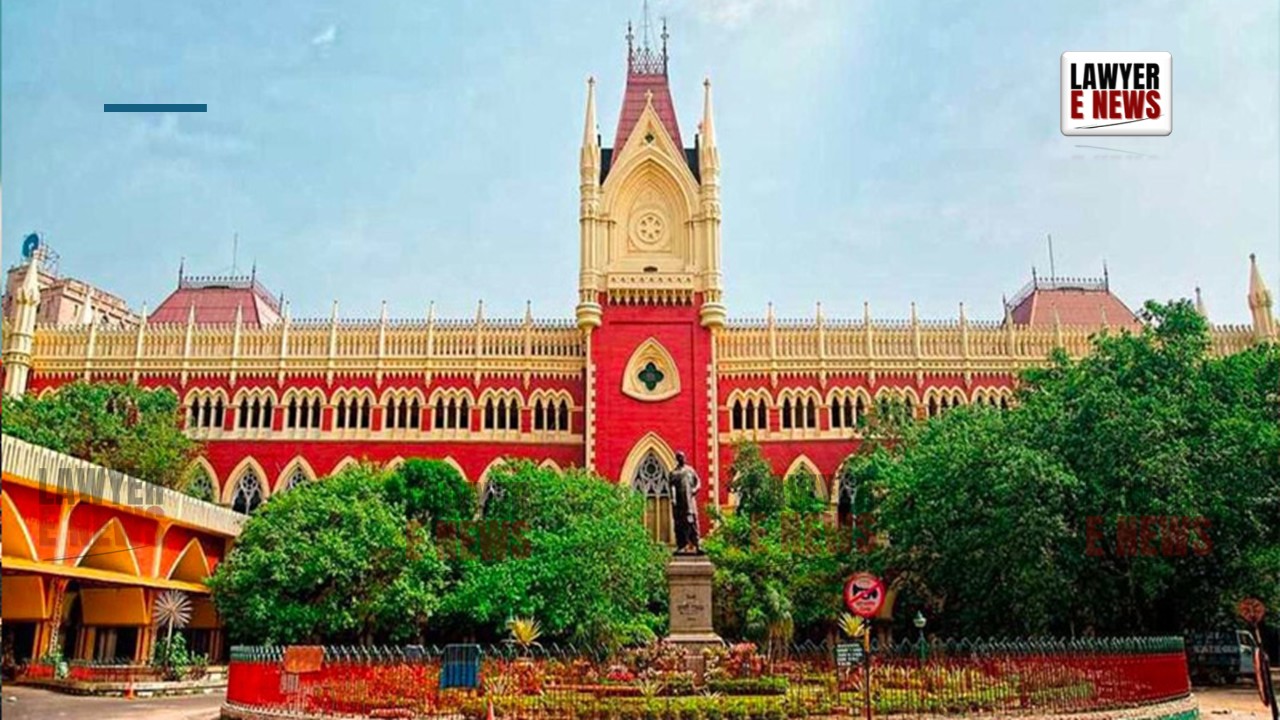
“Revocation Is Not Cancellation—It Is the Recall of an Illegal Act Committed at the Outset” — In a significant ruling Calcutta High Court held that a licence granted in violation of statutory eligibility criteria is void from the very inception, and the licensing authority is legally empowered to revoke such a licence, even if no express provision for revocation exists in the controlling legislation. The Division Bench comprising Justice Sabyasachi Bhattacharyya and Justice Supratim Bhattacharya allowed the State’s appeal in The State of West Bengal & Others v. Kandi Srijani, restoring the revocation of a Fair Price Shop (FPS) licence granted to an ineligible registered society.
“This is not a case of termination after grant of licence for post-facto irregularities, but one where the licence was illegal ab initio. The licensing authority had every right to revoke what was never validly issued in the first place,” the Court observed, setting aside the Single Judge’s April 2025 judgment that had quashed the revocation order.
The Court emphasized that revocation and cancellation are conceptually and legally distinct, holding:
“Revocation is a process of recalling what had been done; it is not the same as cancellation based on violations after grant. A licence granted contrary to eligibility norms carries a fatal defect and can be annulled at source.”
“Threshold Illegality Vitiates the Entire Licence”—Court Rejects Defence of Procedural Fairness When Foundation Is Void
The dispute arose from a licence granted to the respondent, a registered society under the Societies Registration Act, which was later revoked by the Sub-Divisional Controller on the ground that the entity was ineligible under the Vacancy Notification dated December 11, 2023. The Notification only permitted applications from individuals, registered partnership firms, registered cooperative societies, and federations of self-help groups. The respondent did not fall under any of these categories.
The Court held that the eligibility clause in the Vacancy Notification was mandatory and acted as a gatekeeping threshold, stating:
“Clause 8 of the Vacancy Notification begins with the words ‘applicant must fulfil the following eligibility criteria’. The use of ‘must’ and ‘shall’ leaves no room for discretion or dilution. Ordinary registered societies were consciously excluded.”
The respondent’s contention that it was not explicitly prohibited under Clause 9 of the Notification, which lists ineligible entities, was summarily rejected. The Court clarified that the eligibility criteria operate independently and in addition to disqualifications, not as a substitute:
“Only after an applicant crosses the mandatory eligibility threshold can the bar under Clause 9 even become relevant. The error lies at the root—there was no eligibility to apply in the first place.”
“No Vested Right Can Arise from an Act Done Without Authority”—Natural Justice Not a Shield Against Nullity
While the respondent relied heavily on the argument that no proper show cause notice was issued before the licence was revoked, the Court refused to invoke procedural fairness to save a legally void act.
“It is a settled principle that natural justice cannot be stretched to sustain what is fundamentally illegal,” the Court held. “Where the licence is void from inception due to ineligibility, the requirement of show cause does not override the authority's inherent power to correct illegality.”
Citing the Supreme Court’s decision in Ibrahim Bachu Bafan v. State of Gujarat, the Bench quoted with approval:
“Revocation is the undoing of a thing granted; a destroying or making void of some deed that had existence until the act of revocation made it void.”
The Court concluded that such revocation is not contingent on any subsequent misconduct but is rooted in the legal defect at the very moment of issuance.
“Recommendation by Higher Authority Cannot Cure Illegality”—Licensing Authority Not Bound by Administrative Endorsement
The respondent had also argued that its licence was granted after multiple layers of scrutiny and on the recommendation of a higher authority, implying that the revocation should have followed the same hierarchy. The Court decisively dismissed this argument:
“The recommendation of a higher authority is not binding on the licensing authority. The power to issue a licence includes the power to revoke it, especially when the issuance itself was flawed. The recommendation cannot override express eligibility criteria.”
Further, the Court clarified that even if other similar entities were mistakenly granted licences under the same Notification, such administrative errors cannot create a precedent or justify the respondent’s position.
“No person can seek negative equality under Article 14 of the Constitution. Two wrongs do not make a right.”
“2025 Amendment Does Not Apply Retrospectively”—Later Insertion of Revocation Clause Cannot Influence Earlier Vacancy Rules
The respondent had pointed to a 2025 amendment to the Control Order introducing a formal provision for revocation, arguing that the original 2013 Control Order lacked such a mechanism. The Court firmly rejected this reading:
“Subsequent amendments cannot be retroactively applied to interpret prior statutory silence. The absence of a formal clause in 2013 does not negate the inherent power of the licensing authority to revoke a licence granted illegally.”
Quoting from the judgment, the Court stated:
“The power to revoke stems from the very source of power which authorizes the licensing authority to grant the licence. It is implicit and inherent in the authority committing the error in the first place.”
Licence Revoked, Single Judge Overruled
In conclusion, the Division Bench restored the revocation of the FPS licence and upheld the legality of the Sub-Divisional Controller’s decision. The judgment underscored that substantive compliance with eligibility norms prevails over procedural errors, especially when the grant itself was contrary to law.
“The learned Single Judge failed to distinguish between cancellation for post-licence irregularities and revocation due to foundational ineligibility. The licence, being void ab initio, could not be allowed to subsist.”
Accordingly, the appeal was allowed, the Single Judge’s judgment was set aside, and the revocation order dated March 24, 2025 was reinstated.
Date of Decision: 02 December 2025