
-
by sayum
25 August 2026 12:32 PM







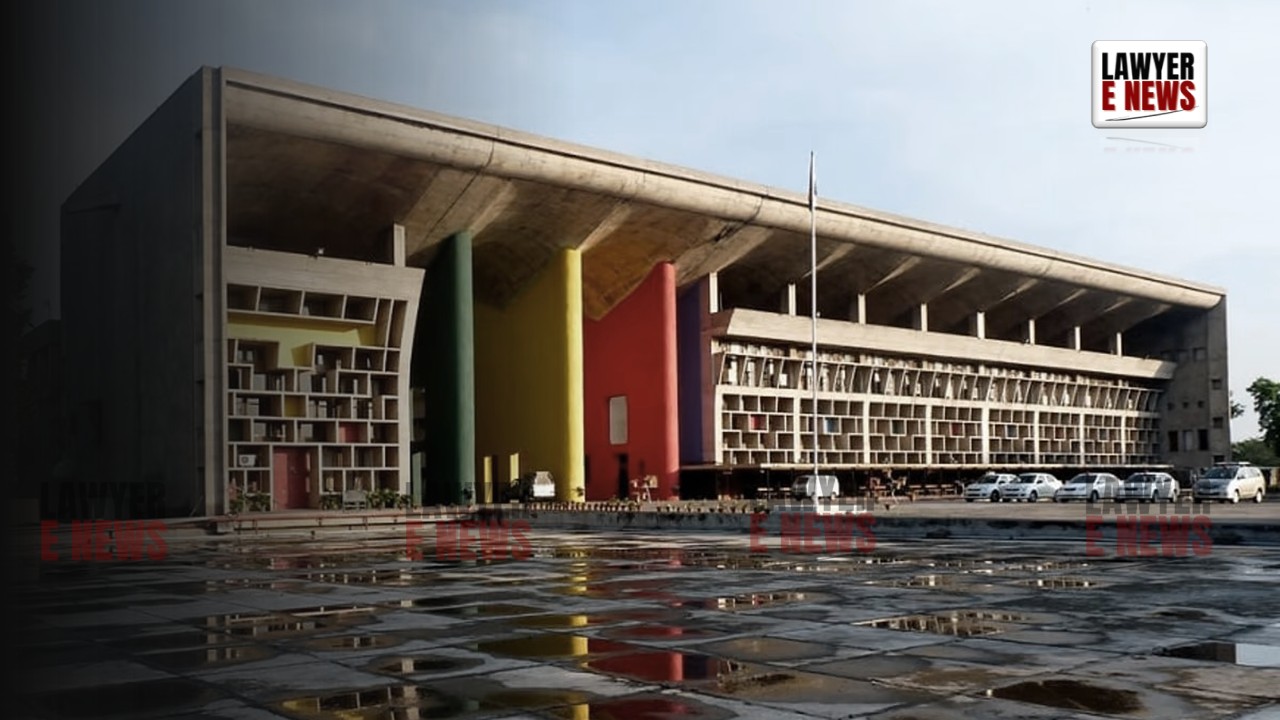
"A Tenant Cannot Dictate How a Landlord Utilizes His Property – Courts Must Respect the Landlord’s Bona Fide Intention", Punjab and Haryana High Court rejecting a tenant’s plea challenging concurrent eviction orders passed by the Rent Controller and the Appellate Authority under Section 13 of the Haryana Urban (Control of Rent and Eviction) Act, 1973. Justice Mandeep Pannu dismissed the revision petition in limine, upholding the eviction on the dual grounds of bona fide requirement and the dilapidated condition of the premises, marking a decisive affirmation of a landlord’s autonomy and a tenant’s limited right to challenge on speculative grounds.
A Longstanding Tenancy and a Proposed Hotel Plan
The eviction petition had its origins in a commercial tenancy dating back to 1992. The respondent-landlord sought eviction of tenants from a shop near the Old Bus Stand in Jind, citing the deteriorated state of the building and a proposed plan to reconstruct the entire block of five adjoining shops into a hotel and restaurant to be run by himself and his son, Rahul Mittal.
While the original claim also invoked arrears of rent, those dues were settled during the proceedings. The focus thus shifted entirely to the landlord's plea of personal necessity and structural unsafety.
"Landlord’s Son Trained in Hotel Business; Project Is a Bona Fide Need, Not Mere Desire"
Justice Pannu endorsed the Appellate Authority’s observation that the landlord’s intention was "not a mere desire but a genuine need." The court emphasized that Rahul Mittal, the landlord’s son, had undergone training with Hotel Pelican in Ghaziabad, and despite currently staying in Delhi, expressed clear intent to return and operate the proposed establishment in Jind.
The court reiterated settled law that “the landlord is the best judge of his requirement” and clarified that "neither the tenant nor the Court can dictate how or in what manner a landlord should use his property." It rejected the tenant’s claim that the son's residence in Delhi or social media activity showing him as “self-employed” negated the bona fides of the landlord’s plan.
Structural Dilapidation Proven Without Formal Testing – Court Relies on SDO Report
The High Court also endorsed findings that the building was over 50 years old and structurally unfit, based on a report submitted by a Local Commissioner who was an SDO of the PWD. Though not formally exhibited, the report was accepted as credible.
“The Local Commissioner’s visual inspection, though not supported by chemical analysis, remains unchallenged and stands strengthened by the absence of any rebuttal evidence from the tenant’s side,” the court observed. It further held that the lack of a formal notice from municipal authorities was not fatal when visual and expert inspections clearly pointed to unsafety.
Objection of Concealed Properties Dismissed – Ownership Alone Not Enough
The tenant’s argument that the landlord owned other commercial properties and had recently transferred some shops within his family was dismissed. The Court emphasized that "mere ownership of property does not defeat bona fide requirement unless the tenant can show that such property is vacant, suitable and available for the stated purpose."
Referring to documents such as jamabandis and municipal entries, the tenant had argued that the landlord was attempting to create artificial need. However, the court accepted the landlord’s explanation that the transfers were part of a family settlement, predating the eviction petition.
“The petitioners have failed to prove that any of these shops were vacant or suitable for the intended construction,” Justice Pannu observed.
Revisional Jurisdiction is Not for Reappreciation of Evidence
Rejecting the tenant’s plea for interference under revisional jurisdiction, the Court emphasized the limited scope available in such cases. “This Court finds that the impugned orders do not suffer from any perversity, illegality or jurisdictional error,” it stated, stressing that concurrent findings based on a sound appraisal of evidence cannot be interfered with merely because the tenant disagrees with the factual conclusions.
Precedents Cited by Tenant Held Inapplicable
The tenant had relied upon Ajit Singh v. Jit Ram (2008) and Harbans Singh v. Balwinder Singh (2020) to argue concealment of alternative premises defeats bona fide requirement. However, the High Court distinguished both cases, noting that unlike those situations, “no vacant alternative premises has been proved here,” and the present case involved an integrated demolition plan not considered in those judgments.
Tenant’s Defence Speculative, Landlord’s Intent Genuine
Justice Pannu ultimately held that both limbs of eviction — personal requirement and building unsafety — stood fully proved. “The tenant’s entire defence was speculative, unsupported by evidence and based largely on conjectures,” the Court noted.
It reaffirmed the settled legal principle that “what matters is not whether the son is presently employed elsewhere, but whether there is a genuine intention to use the premises.” On this touchstone, the landlord's case was found unimpeachable.
The revision petition was thus dismissed in limine, and the orders of the Rent Controller and Appellate Authority were upheld.
Date of Decision: December 04, 2025