-
by sayum
10 August 2026 1:57 PM







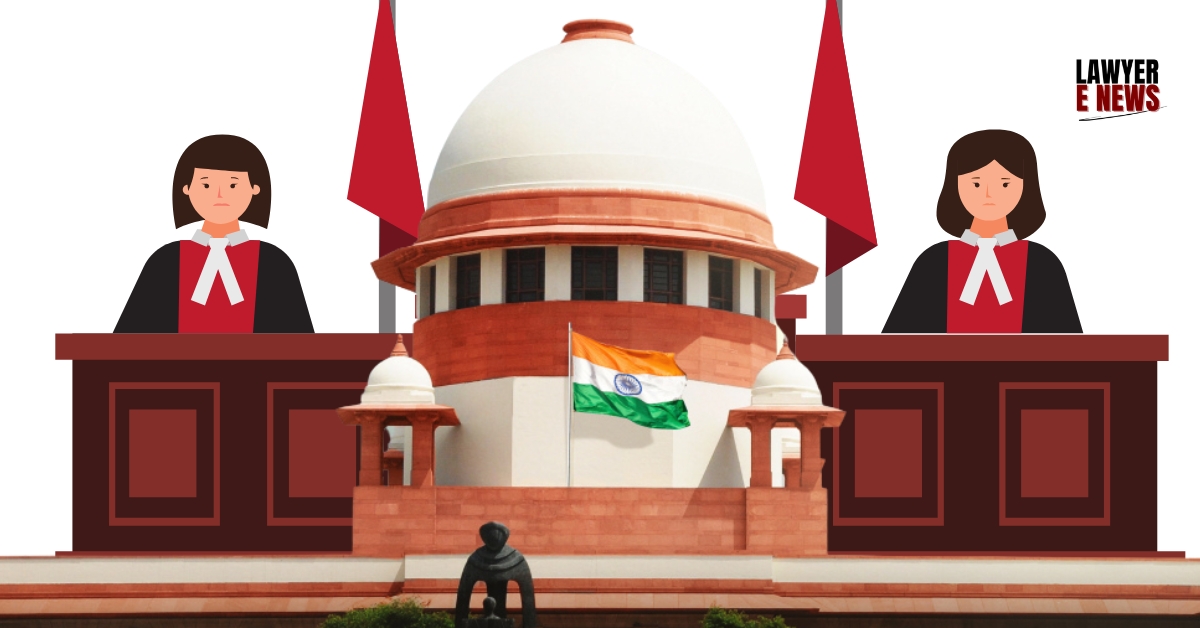
“Capital punishment for a minor omission… A judicial career cannot be ended for an incomplete checklist”, Supreme Court Quashes Discharge of RJS Probationer Over Non-Disclosure of Past Job, Calls Inquiry Stigmatic and Unfair. In a deeply consequential ruling for service jurisprudence and gender representation in the judiciary, the Supreme Court of India, on 22 May 2025, set aside the discharge of a woman judicial officer from the Rajasthan Judicial Services (RJS).
The Court held that a minor procedural omission regarding disclosure of prior government service—especially after resignation—could not be treated as misconduct warranting termination. Emphasizing that the inquiry was conducted behind her back, the Court found the action stigmatic, disproportionate, and violative of principles of natural justice.
“The appellant has been awarded capital punishment for a minor irregularity (omission)… This is not a case where she has suppressed criminal antecedents.”
“Discharge Based on Anonymous Complaint and One-Sided Inquiry Cannot Stand”—Court Finds Violation of Article 311 and Natural Justice
The appellant, a Scheduled Tribe candidate and former teacher, had resigned from her government post before appearing for her judicial service interview in 2018. Though she successfully completed training and probation, a complaint by a third party triggered a vigilance inquiry, resulting in a discharge order dated 29.05.2020, passed by the Full Court of the Rajasthan High Court.
However, the Supreme Court noted that the inquiry was held ex parte without a Presenting Officer, without sharing the inquiry report with the appellant, and without granting an effective opportunity to be heard.
“The appellant was not provided an opportunity to be heard during the inquiry… The order discharging her violates principles of natural justice.”
Citing the landmark ruling in Shamsher Singh v. State of Punjab (1974), the Court reiterated that: “Where the services of a probationer are terminated on the ground of misconduct, without proper inquiry or hearing, it amounts to removal under Article 311(2) of the Constitution.”
“Checklist Omission Is Not Misconduct”—Court Differentiates Between Non-Disclosure and Suppression
The Rajasthan High Court had upheld the discharge citing the appellant’s failure to disclose her prior government service in a checklist submitted at the interview stage. But the apex court decisively rejected this reasoning: “On the date of the interview, she was no longer a government servant as she had already submitted her resignation.”
“At the best, it can be held there was an omission… not a suppression or falsification of credentials.”
The Court also noted that the omission was not a basis for any criminal or civil disqualification and held that the discharge could not be justified merely under Rule 14 of the RJS Rules, which addresses irregular appointments by fraud or misrepresentation.
“Performance, Not Paperwork, Defines Probation”—Court Acknowledges Merit and Successful Training
The appellant had completed her full training and was never found lacking in performance. Relying on Rules 44 to 46 of the Rajasthan Judicial Service Rules, which govern probation and confirmation, the Court observed:
“It is nobody’s case that her performance was unsatisfactory… she completed training with flying colours.”
“The employer cannot bypass performance evaluation and invoke misconduct to justify termination of a probationer without due process.”
“India Needs a Diverse Judiciary”—Court Recognizes Gender Justice and Representation
Striking a broader note on judicial diversity, the Court explicitly recognized the systemic challenges faced by women in the legal profession, especially those from marginalised backgrounds:
“The country will greatly benefit from a judicial force that is competent, committed and most importantly, diverse.”
“The appellant has shown great perseverance by fighting societal stigmas and gaining a rich education that will ultimately benefit the judicial system and the democratic project.”
Supreme Court Orders Reinstatement with Confirmation and Seniority
The Court quashed both the show cause notice dated 17.02.2020 and the discharge order dated 29.05.2020, and directed the appellant’s reinstatement in service with full consequential benefits, except for back wages: “The appellant shall be treated as to have successfully completed her probation period… and shall be treated as a confirmed employee.”
“She shall be entitled to fixation of seniority as per merit in the examination, and notional pay fixation.”
This landmark ruling sets a clear precedent that probationers cannot be terminated under the guise of discretion if the action is rooted in stigma or inquiry-based punishment without due process. It also elevates the discourse on judicial diversity and systemic equity, especially for women from disadvantaged communities seeking to enter and remain in judicial service.
“Termination cloaked as a discretionary act cannot override fairness. Procedural omissions cannot eclipse a judicial career built on merit.”
Date of Decision: 22 May 2025