-
by sayum
11 August 2026 11:29 AM







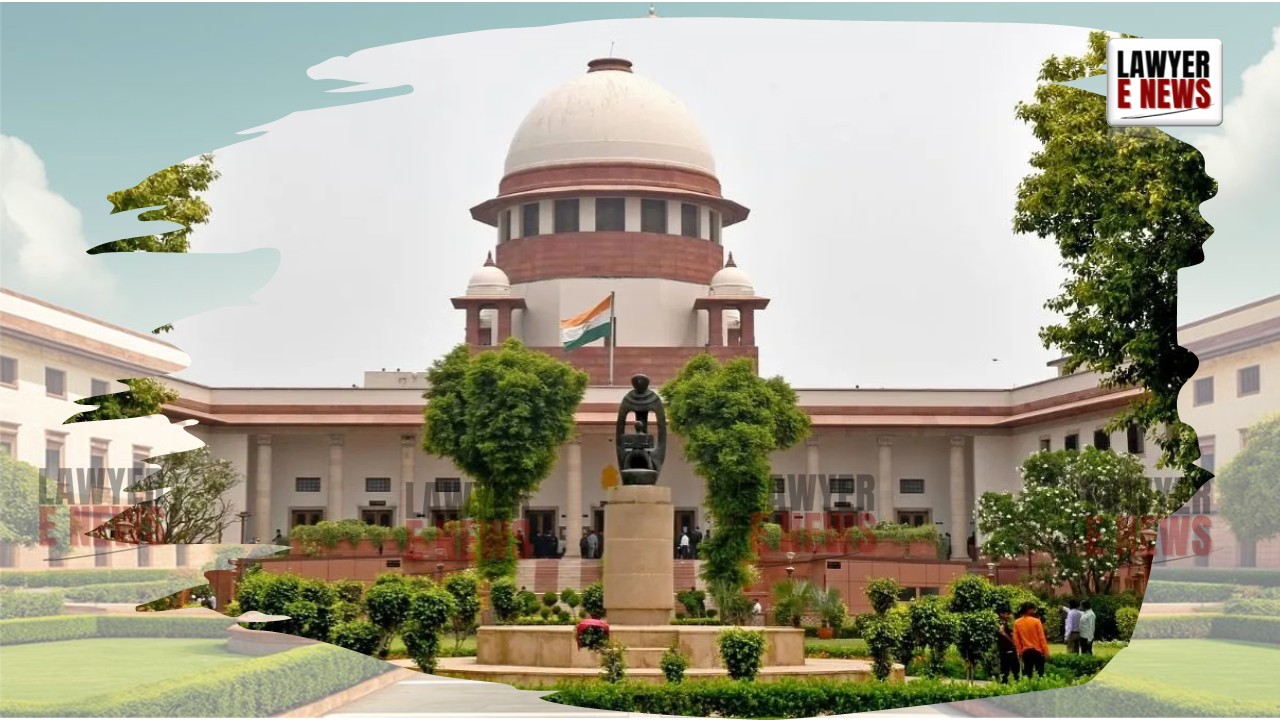
“The Appellant Had No Role in the Transaction — He Was Neither the Signatory Nor the Authorized Officer. The Prosecution Is Baseless and an Abuse of Process” — In a striking judgment that exposes the danger of criminalizing civil disputes and punishing individuals for acts done before they held office, the Supreme Court of India quashed a cheating case against an HDFC Bank officer. The Court held that the accused, who joined office two years after the disputed property auction, could not be made to face prosecution based on baseless and retrospective allegations.
Justice Vikram Nath, delivering the judgment along with Justice Sandeep Mehta, observed: “The appellant had no role to play in the transaction leading to the FIR... He was not the signatory to the sale certificate, and the continuation of the criminal proceedings against him shall lead to abuse of process of law.”
The ruling sets a precedent on limiting the misuse of criminal law in commercial disputes, especially where the accused neither participated in the act nor held the office at the relevant time.
The case began with a public auction conducted by HDFC Ltd. in 2012 under the SARFAESI Act, where a woman purchased a property in Tirunelveli for ₹7.25 lakh. She later discovered the land had already been acquired by the Tamil Nadu Housing Board in 2003, and filed complaints — first in a consumer forum and then under criminal law.
The twist was that Sivakumar, the appellant, had not even become a Manager at the Head Office when the auction took place. He joined in November 2014, while the auction and sale certificate were finalized two years earlier.
Still, he was named the second accused in an FIR registered in 2014 and dragged into CC No. 308 of 2016, facing allegations of cheating, forgery, and misrepresentation under Sections 420, 467, 468, and 417 IPC.
The Supreme Court examined the facts and concluded that the entire transaction was over before the appellant assumed charge as Manager, and he was in no position to influence or authorize the auction process.
The Bench noted: “The appellant was not the authorized officer at the relevant time… The sale certificate was issued by his predecessor… The allegations against him are not only vague but utterly misplaced.”
The Court sharply criticized the conversion of a civil dispute into a criminal complaint after the consumer forum rejected the complainant's claim in 2022. It held that such criminalisation amounts to harassment and legal intimidation, observing: “This gives a civil dispute an unjustified criminal colour… The complainant, having failed in the consumer forum, has now resorted to arm-twisting through criminal process.”
The Court cited K. Virupaksha v. State of Karnataka (2020) 4 SCC 440, to underline that criminal proceedings cannot run parallel to SARFAESI-based civil enforcement, particularly when statutory procedures have been followed in good faith.
On Legal Immunity and Absence of Mens Rea
The appellant had invoked Section 32 of the SARFAESI Act, which protects bank officials from liability for actions done in good faith. However, the Court found it unnecessary to even consider immunity, stating:
“The appellant had not even taken charge when the sale occurred. He cannot be blamed for something he did not do and could not have done.”
There was no act, no knowledge, no authorization, and no participation. And without mens rea or direct involvement, the continuation of the criminal proceedings was declared a miscarriage of justice.
“The prosecution of the appellant causes nothing but harassment... It has no legal foundation and cannot be allowed to continue.”
Setting aside the High Court’s refusal to quash the FIR, the Supreme Court allowed the appeal and quashed all criminal proceedings against the appellant. The Court sent a clear message that criminal law is not a tool for vengeance, and responsibility must align with time, role, and authority.
“Since the appellant was neither the authorized officer at the relevant time nor responsible for the auction process or issuance of the sale certificate, the allegations against him are baseless and do not attract criminal liability.”
This judgment is a timely reminder that legal process must not become legal persecution, and that accountability must be rooted in factual responsibility — not retroactive guilt by association.
Date of Decision: April 23, 2025