-
by sayum
04 August 2026 1:39 PM







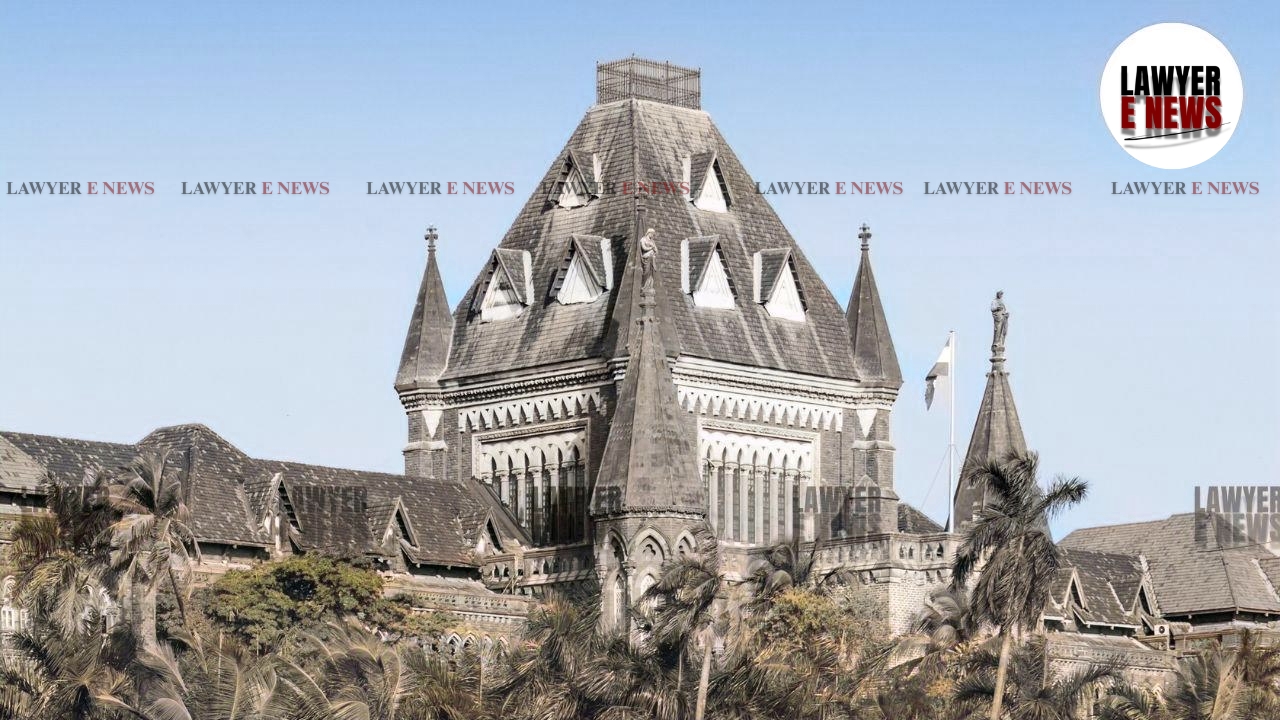
“Even if we accept the allegations of misconduct, they occurred after cessation of employment – Section 4(6)(b)(ii) cannot be invoked” – In a decisive judgment that reiterates the limits of employer power under labour welfare statutes, the Bombay High refused to interfere with concurrent orders directing Aidem Ventures Pvt. Ltd. to pay gratuity with interest to its two former employees, Darshan Pitale and Deepak Sharma, rejecting the company’s attempt to forfeit gratuity on grounds of alleged post-resignation misconduct.
Delivering the verdict in Writ Petition No. 14900 of 2025 and Writ Petition No. 15266 of 2025, Justice Manish Pitale firmly held that Section 4(6)(b)(ii) of the Payment of Gratuity Act, 1972 applies only when an act constituting moral turpitude is committed during the course of employment and leads to termination. A forfeiture of gratuity based on alleged acts committed after resignation, without even issuing a show cause notice, was declared wholly unsustainable in law.
“The drastic power of forfeiting gratuity, which is property rightly owned by the employee, can be undertaken strictly within the statutory framework,” the Court observed, adding that the employer’s action in the present case failed on both statutory and constitutional touchstones.
“No termination, no notice, and no in-service misconduct – the attempt to forfeit gratuity is contrary to law and due process”
The petitioner-company alleged that the respondents, after resigning, violated post-exit non-compete and confidentiality clauses by joining a rival firm and allegedly disclosing trade secrets, leading to client poaching. Based on this, gratuity was unilaterally withheld. However, the Court drew attention to a fundamental flaw in the employer’s case.
Justice Pitale noted, “Even if the allegation made against the respondents is to be accepted as it is, it clearly does not concern an act committed by the respondents in the course of their employment.” He added that the last portion of Section 4(6)(b)(ii) is crucial, as it confines forfeiture to offences committed during employment. Without that, the power to forfeit gratuity is not available.
Further, the Court underscored the complete lack of procedural fairness, pointing out that no notice was issued to the employees before the forfeiture was effected. “The least that was expected was that the petitioner-company would issue notice to the respondents before taking the drastic action of forfeiting their gratuity, which has civil consequences,” the Court emphasized.
“Gratuity is not a bounty, it is a constitutional property right under Article 300A” – Supreme Court’s ruling in Jitendra Kumar Srivastava cited to protect employee entitlements
The Court placed strong reliance on the Supreme Court’s judgment in State of Jharkhand v. Jitendra Kumar Srivastava [(2013) 12 SCC 210], which categorically held that gratuity is a property right protected under Article 300A of the Constitution. Any deprivation must be strictly in accordance with law and fair procedure.
Justice Pitale echoed this sentiment in clear terms: “The absence of any notice being issued to the respondents is another ground showing that the impugned orders passed by the two authorities below do not deserve interference.”
While the company cited the Supreme Court’s 2025 ruling in Western Coal Fields Ltd. v. Manohar Govinda Fulzele to argue that forfeiture does not require a criminal conviction, the Court distinguished the present case by highlighting that the statutory precondition of “in the course of employment” was not satisfied here.
“Civil suits for damages are unaffected – but statutory gratuity cannot be withheld through executive discretion”
Addressing the company’s concern that findings in the gratuity proceedings may prejudice its ongoing civil suits seeking ₹40 lakhs in damages from each respondent, the Court issued a clarification.
“Observations made in this order and the findings rendered by the Controlling as well as Appellate Authority would not prejudice the petitioner-company in pursuing the civil suits filed against the respondents on their own merits,” the Court noted, providing a limited comfort while maintaining the central legal principle.
The Court, however, did not allow this concern to justify the illegality in denying gratuity. It maintained that statutory rights under the Gratuity Act must be upheld, and employers cannot substitute civil litigation with unilateral forfeiture of protected employee entitlements.
“Labour law protections are not optional – employers must act within the confines of statute, not beyond it”
The judgment reinforces a critical boundary between contractual remedies available in civil law and statutory benefits protected by welfare legislation. The attempt to convert a contractual breach into a ground for denying gratuity – a terminal benefit statutorily due – was declared legally impermissible.
Justice Pitale observed, “Forfeiture under Section 4(6)(b)(ii) must be preceded by termination for an act involving moral turpitude committed during the course of employment. In this case, there is no such termination or allegation at the relevant time.”
In essence, the High Court has signalled to employers that post-employment disputes about confidentiality and competition must be addressed through civil suits, not by withholding gratuity through backdoor mechanisms.
With the writ petitions dismissed and the Labour and Industrial Court orders upheld in full, Aidem Ventures Pvt. Ltd. has now been directed to pay the withheld gratuity with 10% interest to both former employees.
The ruling is expected to serve as a precedent for safeguarding gratuity rights from arbitrary employer action, particularly in the private sector where post-resignation restrictions are frequently imposed but rarely enforced in compliance with statutory frameworks.
Date of Decision: 21 November 2025