-
by sayum
10 August 2026 1:57 PM







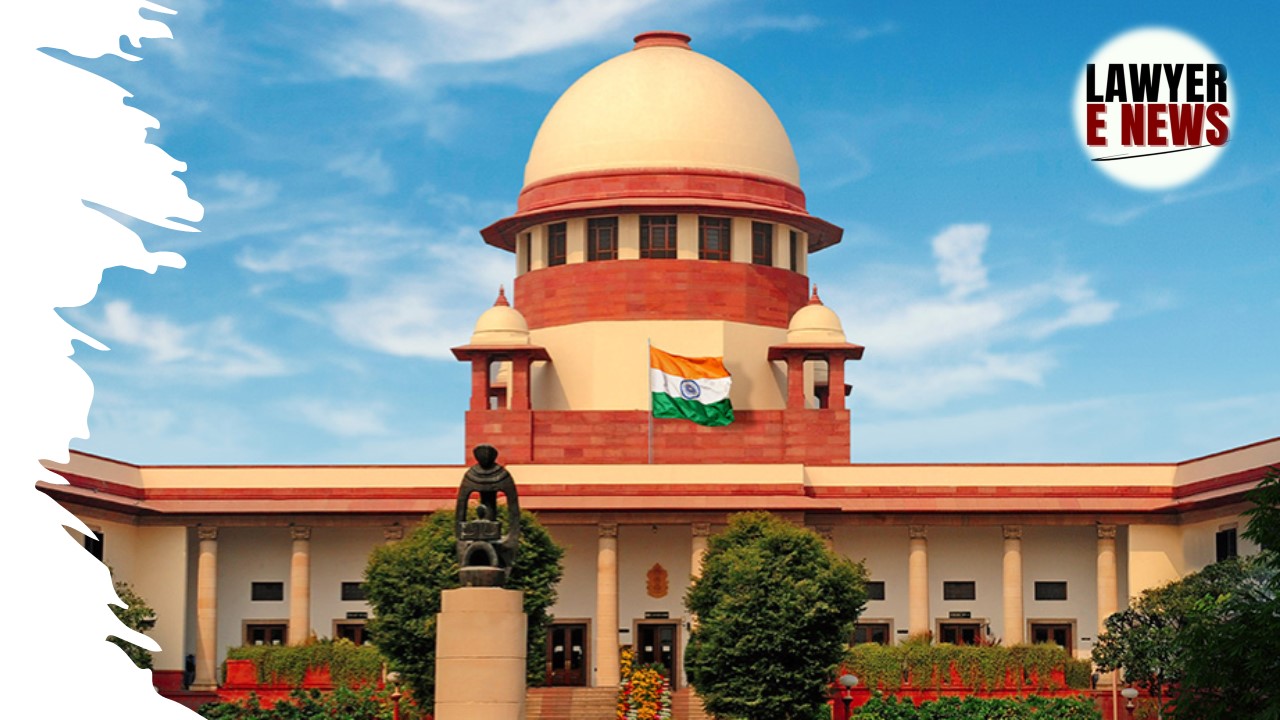
"Merely Because Rates Might Lower, It Cannot Justify Endless Tendering" - Supreme Court of India decisively ruled that government authorities possess the right to cancel tenders if such action serves the financial interests of the State. The Court set aside the judgment of the Kerala High Court, which had invalidated a cancellation of an e-tender for tree-felling works in the Konni Forest Division.
The Court reaffirmed that "The Government is the guardian of the finances of the State", and interventions into tendering processes are only justified if mala fides, arbitrariness, or unfairness are proven. Otherwise, courts must exercise judicial restraint.
The dispute arose when the Divisional Forest Officer (DFO), Konni, cancelled an earlier e-tender dated 25.05.2020 for timber felling, citing grievances from contractors who claimed they could not participate due to COVID-19 travel restrictions. A fresh tender was floated on 31.10.2020.
Aggrieved by the cancellation, the original tender participants challenged the re-tender before the Kerala High Court. The Single Judge, and later the Division Bench, held the cancellation to be arbitrary and illegal, directing authorities to finalize the earlier tender.
Key to the High Court’s reasoning was the view that: "Merely because there is a likelihood of the rates being lowered, if successive tenders are invited, it cannot be a justifiable ground for cancellation."
The Supreme Court framed the issue as whether the DFO’s decision to cancel the tender in light of grievances and the broader financial interests of the State could be deemed arbitrary, warranting judicial interference.
In a powerful rebuke to the High Court’s approach, the Supreme Court emphasized: "The Government is expected to protect the financial interests of the State. It is for the Government to decide whether the price offered in an auction sale is adequate. While accepting or rejecting a bid, it is merely performing an executive function. The correctness of its conclusion is not open to judicial review." (State of Orissa v. Harinarayan Jaiswal)
The Court reiterated the principles laid down in Jagdish Mandal v. State of Orissa, emphasizing that: "If the decision relating to award of contract is bona fide and in public interest, courts will not, in exercise of power of judicial review, interfere even if a procedural aberration or error in assessment or prejudice to a tenderer is made out."
It noted that unless a decision is mala fide, arbitrary, or irrational, the judiciary must refrain from substituting its own opinion in matters of tender evaluation or cancellation.
The Court further observed that the DFO’s cancellation was supported by grievances received regarding participation difficulties and was covered by clauses in the tender document permitting unconditional cancellation without assigning reasons.
Analyzing the facts, the Supreme Court found no mala fide intention behind the cancellation. It categorically stated: "The decision taken by the authority is not affecting the public interest, on the contrary, it furthers the cause of the public interest and fair play."
The Court noted that by allowing fresh tenders, the government created an equal opportunity for all bidders, thus upholding transparency and competition.
Moreover, addressing the High Court's concern over potential delays, the Bench clarified: "We are at a loss to understand how a situation of emergency could be achieved by cancelling the e-tender and inviting fresh tenders, but such an administrative decision aimed at ensuring fairness cannot be lightly interfered with."
The Supreme Court, therefore, allowed the appeal, setting aside the judgments of both the Single Judge and Division Bench of the Kerala High Court. It restored the DFO's authority to proceed with fresh tendering.
The judgment in Principal Chief Conservator of Forests v. Suresh Mathew reinforces an essential principle in public contracting: State authorities have broad discretion to manage tenders in the public interest, and judicial review is permissible only on narrow grounds of illegality, mala fides, or manifest arbitrariness.
The ruling resonates through the Court’s crisp reminder: "Judicial review of administrative action is intended to prevent arbitrariness, irrationality, unreasonableness, bias and mala fides — not to re-evaluate commercial wisdom or second-guess bona fide executive decisions."
This decision ensures that public interest and financial prudence remain paramount while maintaining judicial respect for executive discretion.
Date of Decision: 25/04/2025