-
by sayum
25 August 2026 12:32 PM







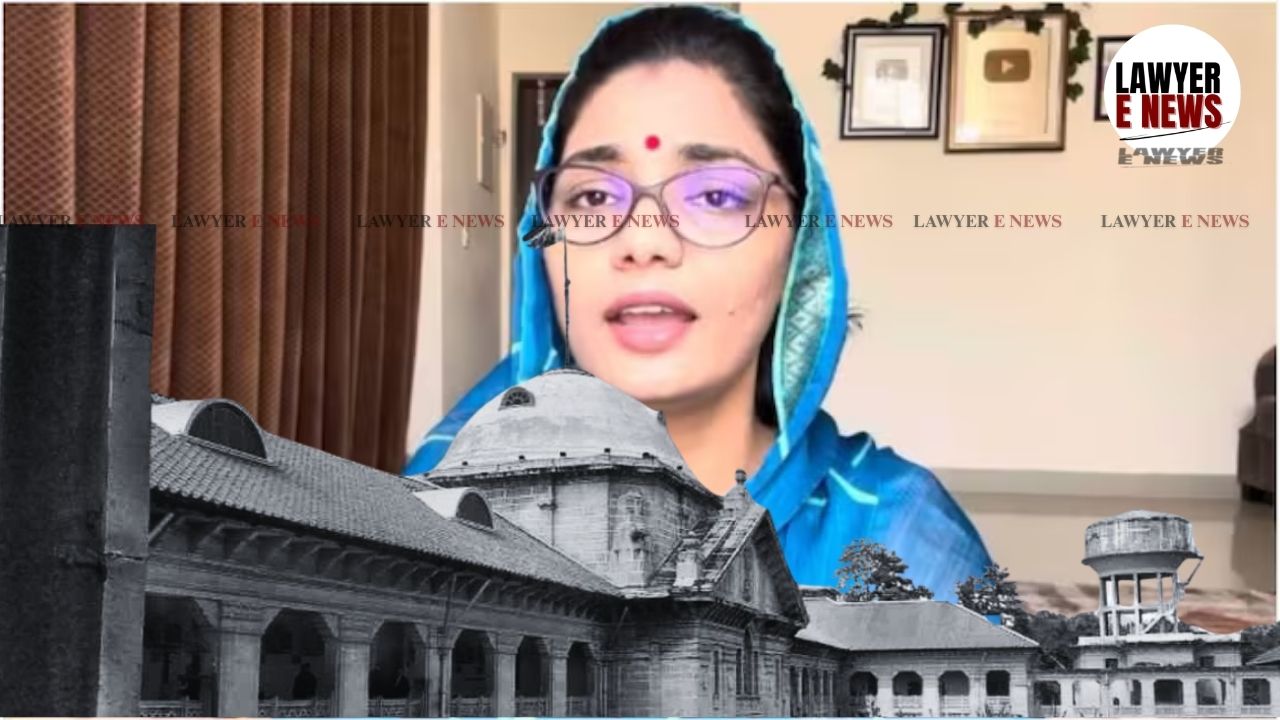
“Twitter Is Not a Battlefield for Subversion”, In a hard-hitting judgment Allahabad High Court (Lucknow Bench) denied anticipatory bail to Neha Singh Rathore, a well-known folk singer and social media figure, who was booked under multiple serious provisions of the Bharatiya Nyaya Sanhita, 2023, for allegedly inciting hatred, questioning the sovereignty of India, and making inflammatory remarks on social media in the aftermath of the Pahalgam terror attack.
Justice Brij Raj Singh remarked: “No case for anticipatory bail is made out. It is accordingly rejected.”
“This Is Not Dissent, But Deliberate Disturbance”: Court Calls Out Rathore’s Tweets Post Pahalgam Attack
Referring to her controversial social media activity, the Court observed:
“The tweets posted by the applicant are not mere expressions of dissent, but appear to be calculated attempts to exploit a moment of national grief and communal sensitivity.”
The FIR, lodged on April 27, 2025, alleged that Rathore had used her Twitter handle @nehafolksinger to publish a series of posts immediately after the terrorist attack in Pahalgam, Kashmir, where 26 Hindu tourists were killed by Pakistan-backed terrorists. According to the prosecution, Rathore’s posts:
“Adversely affected national integrity, incited communal divisions, and were applauded in Pakistan, where her statements were amplified by foreign media.”
The Court noted with concern:
“Timing is crucial. Her posts came at a time when the nation was mourning and its security forces were responding. Such statements cannot be clothed in the garb of artistic freedom or poetic license.”
“Don’t Use Free Speech as a Weapon Against the State”: HC Draws the Line on Article 19(1)(a)
Rathore’s counsel had argued that her posts were protected by the freedom of speech under Article 19(1)(a) of the Constitution. Citing judgments like S.G. Vombatkere v. Union of India and Imaran Pratapgarhi v. State of Gujarat, it was urged that criticism of the government, however harsh, should not be treated as sedition.
But the Court strongly disagreed. It held:
“Freedom of expression is not absolute. It cannot be allowed to become a weapon to spread hatred, disrespect constitutional authorities, or incite unrest between communities.”
The Court emphasized that Section 152 of the Bharatiya Nyaya Sanhita, which replaces Section 124A IPC (sedition), requires mens rea — a deliberate or knowing act of subversion. On this point, the Court remarked:
“The nature, timing, and language of the tweets show the applicant was not merely expressing an opinion, but engaging in a systematic provocation during a national crisis.”
“She Evaded Law, Flouted Orders, and Hid From Investigators”: HC Slams Non-Cooperation
What appeared to seal the fate of Rathore’s bail plea was her persistent refusal to appear before investigating authorities, despite clear directions from both the High Court and Supreme Court.
The Court recalled that her earlier writ petition challenging the FIR had already been dismissed by a Division Bench on September 19, 2025, with a direction to cooperate with the investigation. A Special Leave Petition (SLP) against that order was also dismissed by the Supreme Court on October 13, 2025, which granted her liberty only to raise her arguments at the charge framing stage.
Quoting from the police’s written update dated November 27, 2025, the Court highlighted:
“She has been deliberately avoiding arrest by changing residences, ignoring notices, and disobeying court orders. This conduct shows clear non-cooperation with the investigation.”
“Courts Cannot Reopen What the Supreme Court Has Closed”: Article 141 Prevails
The High Court noted that the Supreme Court had already considered the same set of arguments and refused to interfere, stating:
“We grant liberty to the petitioner to raise all these issues at the stage of framing of the charge or by applying before the Court seeking discharge.”
Citing Article 141 of the Constitution, the High Court observed:
“This Court is bound by the observations made by the Hon’ble Supreme Court. We cannot give an opinion on whether charges like mutiny, sedition under Section 152 BNS, or others are made out — that question now lies with the trial court.”
“Patriotism Is Not Political”: Court Dismisses Allegation of Bias Against the Ruling Party
Rathore had argued that her tweets were critical of the ruling political party, not the nation, and that “criticism of the BJP cannot be equated with sedition.”
But the Court drew a clear distinction:
“There is a difference between political criticism and national defamation. The applicant’s statements go beyond political satire. They attack the State’s institutions and question its sovereignty at a time when the nation was under external threat.”
“The Bail Gate Remains Closed for Those Who Shun Responsibility”: Final Verdict
Summing up, the Court concluded that anticipatory bail was not a matter of right and must be denied in cases where:
“The applicant has failed to show cooperation, has been evasive, and is facing serious charges under the Bharatiya Nyaya Sanhita and IT Act.”
In a final note, Justice Brij Raj Singh observed:
“The legal remedy of discharge or challenge to charges is available — but anticipatory bail, under these facts and circumstances, is not.”
The application was rejected, but the Court left open the door for the applicant to approach the trial court at the appropriate stage.
Date of Decision: 5 December 2025