-
by sayum
23 August 2026 2:56 PM







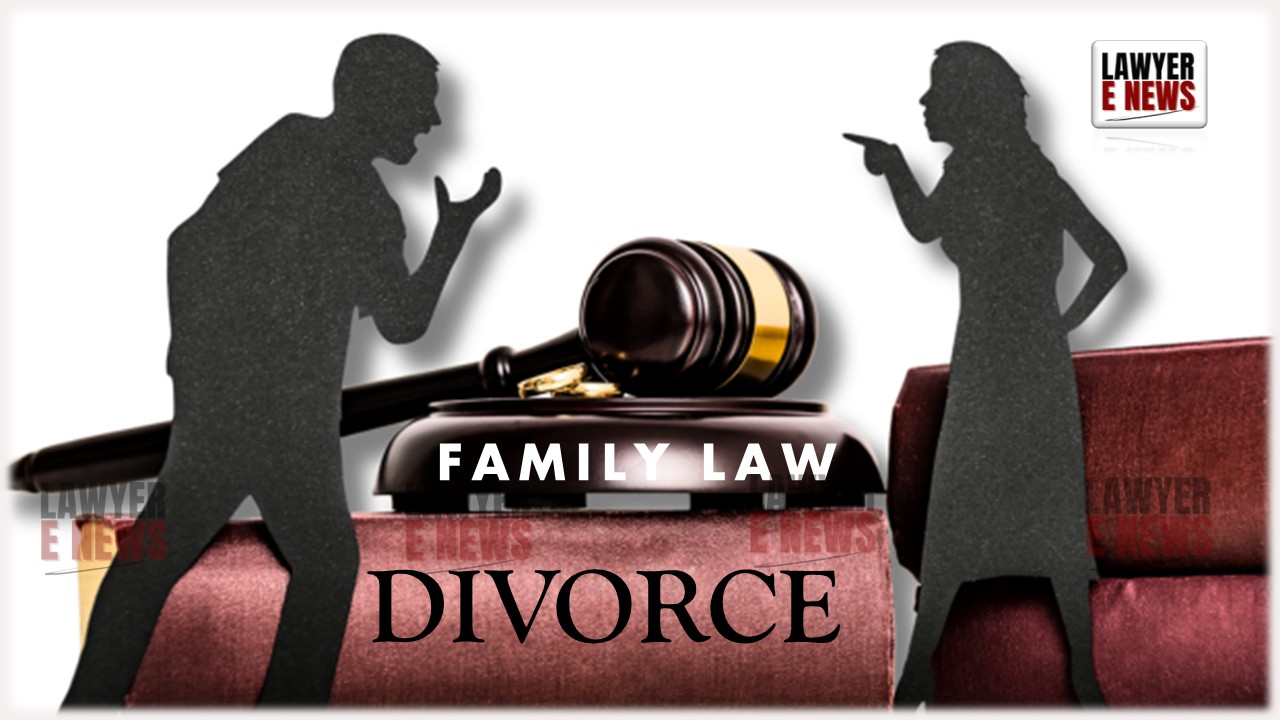
Acquittal in Section 498A IPC Case a Ground for Granting Divorce on Cruelty: Gujarat High Court upheld the divorce granted to a husband on grounds of cruelty, rejecting the wife's appeal against the judgment of the Family Court, Vadodara. The division bench of Justice Biren Vaishnav and Justice Devan M. Desai held that false allegations of cruelty, coupled with prolonged separation, amounted to mental cruelty and justified the dissolution of marriage under Section 13(1)(ia) of the Hindu Marriage Act, 1955.
The Court categorically observed, "When allegations of cruelty are found to be false and baseless, they amount to mental cruelty, which itself is a valid ground for divorce. Matrimonial litigation should not be weaponized to harass the spouse."
Wife's Allegations of Cruelty Rejected as Unfounded, High Court Finds No Reason to Overturn Divorce Decree
The case originated from an application filed by the respondent-husband before the Family Court, Vadodara, seeking divorce under Section 13(1)(ia) of the Hindu Marriage Act, 1955, alleging cruelty by his wife. The Family Court granted divorce on November 27, 2013, finding that the wife had engaged in "unruly behavior, threats of suicide, and disturbances in the matrimonial home."
In her defense, the appellant-wife denied these allegations and counterclaimed that she was physically abused, confined, and even forced to consume poison by her husband’s family. However, the Family Court found these claims to be unsubstantiated and granted the divorce.
The wife appealed to the Gujarat High Court, arguing that the allegations against her were insufficient to constitute cruelty under Section 13(1)(ia) of the Hindu Marriage Act. She contended that "a wife merely asserting herself in the matrimonial home cannot be considered an act of cruelty", and that her grievances should not have led to a divorce.
The High Court, however, dismissed these arguments, stating that cruelty in matrimonial cases is not limited to physical abuse but also includes mental harassment, false accusations, and conduct that causes agony to the spouse.
"False Criminal Complaints Amount to Mental Cruelty and Justify Divorce": Court Relies on Supreme Court Precedents
The respondent-husband argued that the appellant had filed a criminal complaint under Section 498A IPC against him and his family members two years after the divorce petition was filed, and that they were all acquitted by the criminal court. Relying on Rakesh Raman v. Kavita (2023 SC), K. Srinivas Rao v. D.A. Deepa (2013 SC), and Rani Narasimha Sastry v. Rani Suneela Rani (2019 SC), the Court observed:
"Filing a false case under Section 498A IPC and causing undue harassment to the husband and his family constitutes mental cruelty. An acquittal in such a case strengthens the husband's claim for divorce."
The judgment emphasized that "allegations made in a written statement or a criminal complaint, if found to be false, can themselves be grounds for divorce", as they inflict mental distress and humiliation upon the spouse.
"23 Years of Separation Further Confirms Irretrievable Breakdown of Marriage"
The Court noted that the couple had been separated since 2001, and for over 23 years, there was no cohabitation or reconciliation. Citing Savitri Pandey v. Prem Chandra Pandey (2003 SC) and Jorden Diengdeh v. S.S. Chopra (1985 SC), the Court reiterated that prolonged separation is a clear indicator of an irretrievably broken marriage.
Referring to previous Supreme Court rulings, the High Court observed: "A marriage that has existed only in legal form but not in substance for more than two decades serves no purpose. Courts must acknowledge the ground reality and not mechanically insist on continuance of a dead marriage."
Divorce Decree Upheld, Wife Allowed to Withdraw Alimony Deposited in Family Court
Upholding the Family Court’s findings, the Gujarat High Court dismissed the wife's appeal and reaffirmed that the husband was entitled to a decree of divorce. The Court, however, ensured that the wife's right to alimony remained intact, directing that she "shall be permitted to withdraw the alimony amount deposited by the respondent before the Family Court, Vadodara."
Conclusion: Legal System Cannot Be Used as a Tool of Harassment in Matrimonial Disputes
This ruling reinforces the principle that false allegations, particularly in criminal cases, constitute mental cruelty and serve as a valid ground for divorce. The judgment also underscores the need for courts to recognize prolonged separation as an irretrievable breakdown of marriage, ensuring that the law does not force parties into an empty and dysfunctional relationship.
With this decision, the Gujarat High Court has once again reaffirmed that marriage is not merely a legal bond but an emotional and social institution, and where it ceases to exist in reality, courts must step in to grant relief to the aggrieved party.
Date of Decision: 22 January 2025