-
by sayum
23 August 2026 2:56 PM







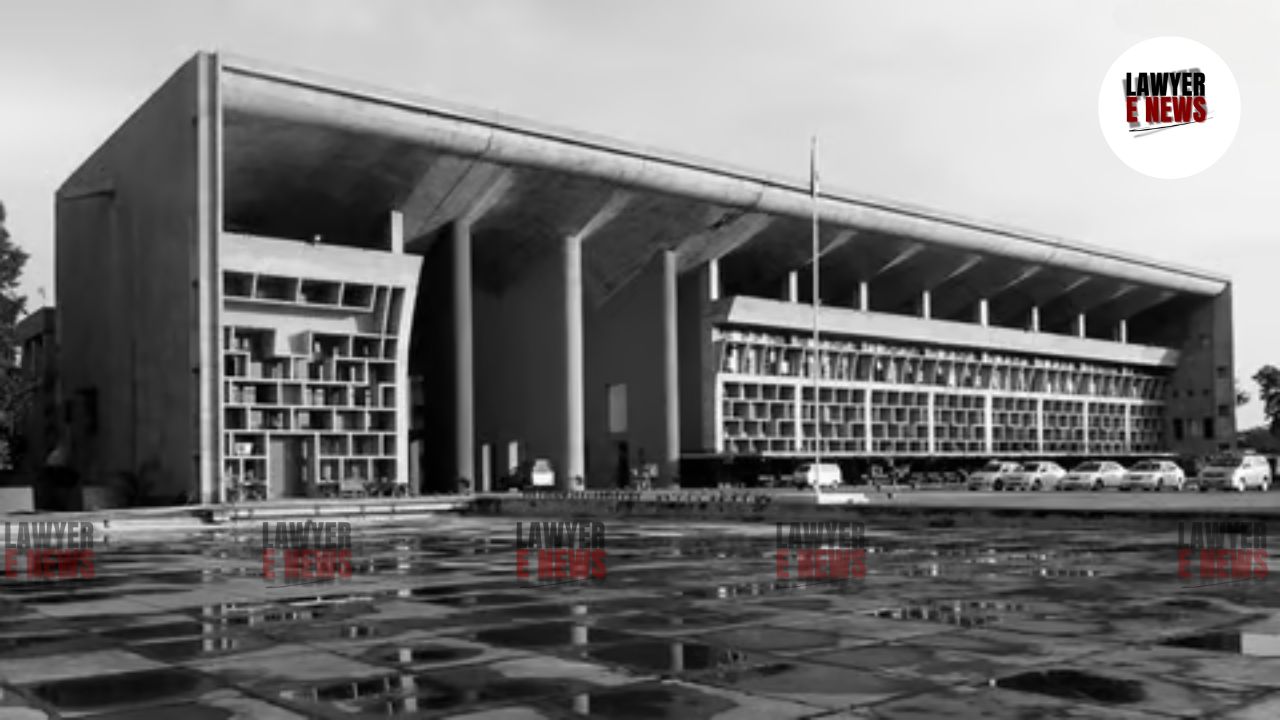
Punjab and Haryana High Court dismissed a petition challenging the order of the Consumer Grievances Redressal Forum (CGRF), upholding the Forum's directions mandating compliance with the Haryana Electricity Regulatory Commission (HERC) Single Point Supply Regulations, 2013. Justice Kuldeep Tiwari ruled that the petitioner could not misuse the principle of natural justice to bypass mandatory regulatory obligations, especially when it deliberately chose to avoid active participation in the proceedings.
The Court reiterated the necessity of transparent electricity billing practices in strict adherence to the prescribed format under the Sales Circular No. U-01/2021. It also upheld the Forum’s directions to refund excess charges unlawfully levied on residents, underscoring that such charges were in direct violation of the HERC regulations.
"Electricity Charges Cannot Be Clubbed with Other Fees or Misrepresented": Court on Regulatory Compliance
The case arose out of a complaint by a resident, Baljinder Singh, who alleged that M/s Brahma Maintenance Pvt. Ltd. and M/s Max Heights Metro View Apartments were overcharging residents by unlawfully including common area electricity costs and other unrelated charges in individual bills. The petitioner was also accused of failing to submit timely payments to the Uttar Haryana Bijli Vitran Nigam Limited (UHBVNL), causing additional surcharges to be passed on to residents.
The Consumer Forum had earlier directed the petitioner to strictly comply with Regulation 5.5 of the HERC Single Point Supply Regulations and ensure billing transparency. The Forum had found that the petitioner violated the norms by adding:
Common area electricity charges into individual bills, instead of including them in maintenance costs.
Unauthorized power backup fees of Rs. 26/unit.
Fixed charges unrelated to electricity consumption, including Rs. 200 plus GST per resident.
The Forum had also noted that these actions not only breached the HERC regulations but also placed an undue financial burden on residents.
Justice Tiwari upheld these findings, stating: “The petitioner-firm is unable to point out any regulation authorizing it to add such charges into the electricity bill. Transparent billing, as mandated under Regulation 5.5 and Sales Circular No. U-01/2021, is not optional but obligatory.”
Court Rejects Claim of Natural Justice Violation: "Petitioner Was Fully Aware of Proceedings"
The petitioner’s primary argument before the High Court was that the Consumer Forum’s order was passed in violation of the principles of audi alteram partem, as the petitioner was not directly served notice during the proceedings. However, the Court rejected this claim, pointing out that the petitioner was fully aware of the ongoing case as its principal, M/s Max Heights Metro View Apartments, had actively participated in the proceedings.
The Court noted that the petitioner’s attempt to raise this procedural objection was an afterthought, intended to evade compliance with the Forum’s directions. Justice Tiwari observed:
“The doctrine of audi alteram partem cannot be used to cure a self-suffered wound, especially by those sitting on the fence. From the facts, it is vividly postulated that the petitioner-firm was very much aware of the proceedings… However, with an oblique motive, it now raises a hue and cry about violation of natural justice at the appellate stage.”
ourt Highlights Importance of Transparent and Lawful Billing Practices
The High Court also strongly emphasized the need for lawful and transparent billing practices under the HERC regulations, stating that electricity charges must be clearly itemized and cannot be arbitrarily clubbed with other charges. Referring to the Forum’s findings, Justice Tiwari remarked:
“As per the directions of Hon’ble HERC, the electricity charges cannot be clubbed with any other charges. Bills must show energy consumed, applicable tariffs, and all other details such as Electricity Duty, Municipal Tax, and FSA. Compliance with these requirements is not merely procedural but integral to protecting consumer rights.”
The Court upheld the Forum’s directive that any overcharged amounts collected by the petitioner must be refunded to residents within one month.
The Forum’s order also directed the petitioner and its principal to maintain accurate billing records and submit them to the UHBVNL for review. The records were required to include details of energy consumed by individual residents, units consumed in common areas, and total amounts billed.
High Court Dismisses Petition, Upholds Consumer Rights
Justice Tiwari dismissed the petitioner’s arguments in their entirety, upholding the Forum’s order for compliance with HERC regulations and refund of excess charges. The Court remarked that the petitioner’s conduct demonstrated a clear intent to avoid compliance, and its attempt to use procedural defenses was unfounded.
“The submissions made by the petitioner-firm are totally bereft of merit. Transparent billing and adherence to HERC regulations are non-negotiable, and no procedural defense can justify non-compliance.”
The case sets a strong precedent for regulatory compliance in electricity supply and underscores the judiciary’s commitment to safeguarding consumer rights against arbitrary and unlawful practices by service providers.
Date of Decision - January 13, 2025