-
by sayum
23 August 2026 2:56 PM







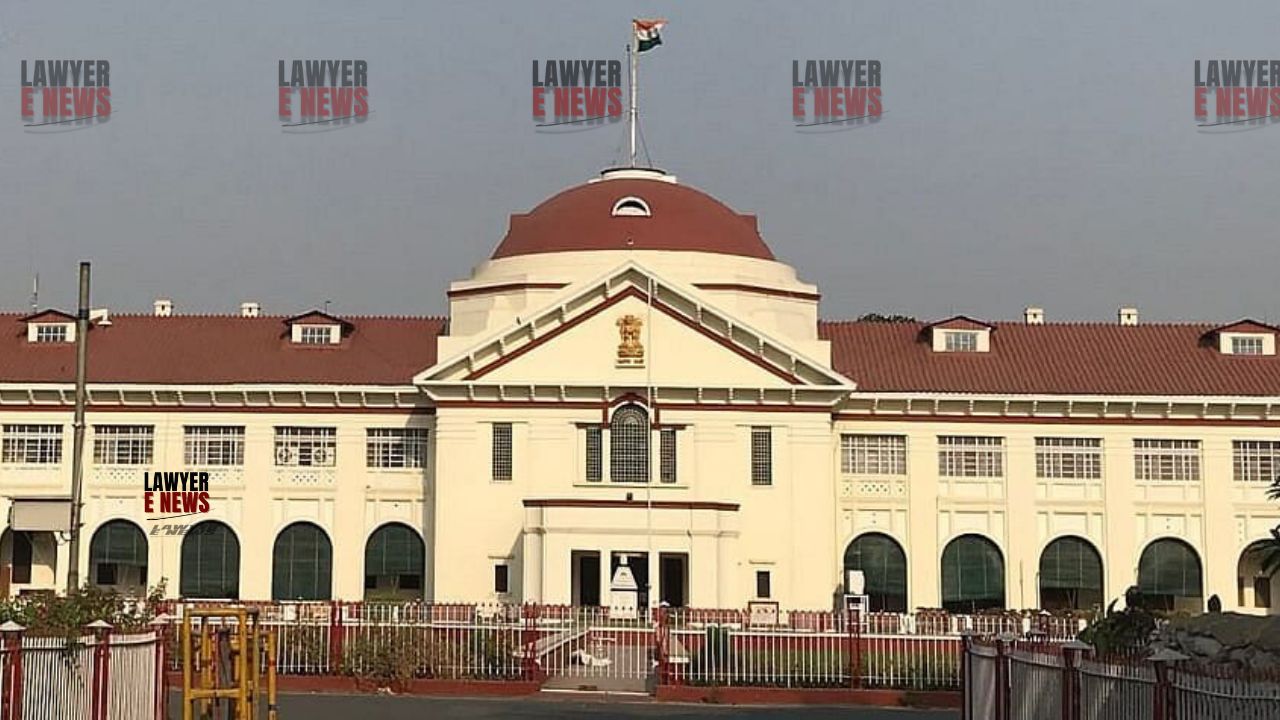
In a significant ruling on January 24, 2025, the Patna High Court partially overturned the acquittal of respondents in Mahendra Singh v. State of Bihar, arising out of Bakhtiyarpur P.S. Case No. 147 of 2005. The Division Bench of Honourable Justice Rajeev Ranjan Prasad and Honourable Justice Ashok Kumar Pandey convicted respondent No. 2 (Dilip Singh) under Section 324 of the Indian Penal Code (IPC) for causing hurt by using a firearm, while respondents Nos. 3 to 6 were convicted under Section 324/149 IPC for unlawful assembly with a common object to commit the offence.
The Court held that the trial court erred in dismissing the charge under Section 324 IPC, despite clear medical evidence confirming the presence of metallic foreign bodies in the injured persons' X-rays.
The case originated from an altercation over land construction on June 9, 2005. The informant, Mahendra Singh (PW-4), was erecting a boundary wall and placing iron rods for a balcony (chhajja) on his house. A dispute arose when the accused, including Dilip Singh and Sone Lal Singh, objected, claiming encroachment.
The situation escalated when Dilip Singh and Mundrika Singh allegedly retrieved double-barrel guns and fired at Mahendra Singh and his son, Rakesh Kumar (PW-3). As a result, Mahendra Singh sustained multiple injuries on his forehead, chest, and leg, while Rakesh Kumar was injured in the left shoulder.
The FIR was registered under Sections 147, 148, 149, 324, 307 IPC, and Section 27 of the Arms Act. After investigation, the trial court convicted the accused only under Sections 148 and 323/149 IPC while acquitting them of the more serious charges under Sections 307 and 324 IPC.
1. Reliability of Witness Testimonies
The Court analyzed the credibility of the prosecution witnesses, particularly the injured witnesses Mahendra Singh (PW-4) and Rakesh Kumar (PW-3). Their depositions were consistent and corroborated by independent witness PW-1 (Jaibind Kumar) and Mukesh Kumar (PW-2).
The Court noted:
"Testimonies of injured witnesses and corroborative accounts of other witnesses prove the prosecution case beyond reasonable doubt." [Paras 22-27, 35]
The defense failed to discredit these witnesses during cross-examination.
2. Medical Evidence: Presence of Firearm Injuries
Medical reports and X-rays played a crucial role in establishing firearm injuries.
Dr. Vinay Kumar (PW-8) of PMCH confirmed the presence of metallic foreign bodies in the X-rays of Mahendra Singh and Rakesh Kumar.
Dr. Vijay Kumar Verma (PW-5) of PHC Bakhtiyarpur documented multiple lacerated injuries on Mahendra Singh and Rakesh Kumar but suspiciously withheld an opinion on the cause of injuries.
The Court held:
"The learned trial court seems to have committed gross error in appreciating the medical evidence. The rejection of prosecution's case merely because no pellet was extracted is perverse." [Paras 30-34]
3. Unlawful Assembly and Common Object (Section 149 IPC)
The Court observed that respondents Nos. 3 to 6 were present at the crime scene and armed with weapons. Their participation in the unlawful assembly made them liable under Section 149 IPC.
The Court relied on Yunis @ Kariya v. State of Madhya Pradesh (AIR 2003 SC 539), which held that individual overt acts are unnecessary for conviction under Section 149 IPC if the common object is established.
"Presence of the accused as part of an unlawful assembly is sufficient for conviction under Section 149 IPC." [Para 38]
Dilip Singh (Respondent No. 2) convicted under Section 324 IPC for firing from a double-barrel gun and causing injuries.
Respondents Nos. 3 to 6 convicted under Section 324/149 IPC for being part of the unlawful assembly.
Trial Court's acquittal under Sections 324 and 307 IPC reversed for Respondent No. 2.
Trial Court's findings on Sections 148 and 323/149 IPC upheld.
Respondents Nos. 2 to 6 taken into custody immediately.
The Court, however, upheld the acquittal under Section 307 IPC, noting that only one shot was fired from a distance, causing simple injuries that were not life-threatening.
Conclusion
The Patna High Court’s decision reinforces the importance of medical evidence in criminal cases and corrects the trial court’s erroneous reasoning. By reinstating the conviction under Section 324 IPC, the Court emphasized that even in the absence of extracted bullets, firearm injuries can be established through X-rays and medical reports.
This ruling serves as a precedent on:
Evaluating injured witness testimonies in criminal trials.
Reliance on medical evidence in cases of firearm injuries.
The doctrine of common object under Section 149 IPC.
The judgment upholds the rule of law and sends a strong message against unlawful assemblies resorting to violence.
Date of Decision: January 24, 2025