-
by sayum
13 August 2026 1:48 PM







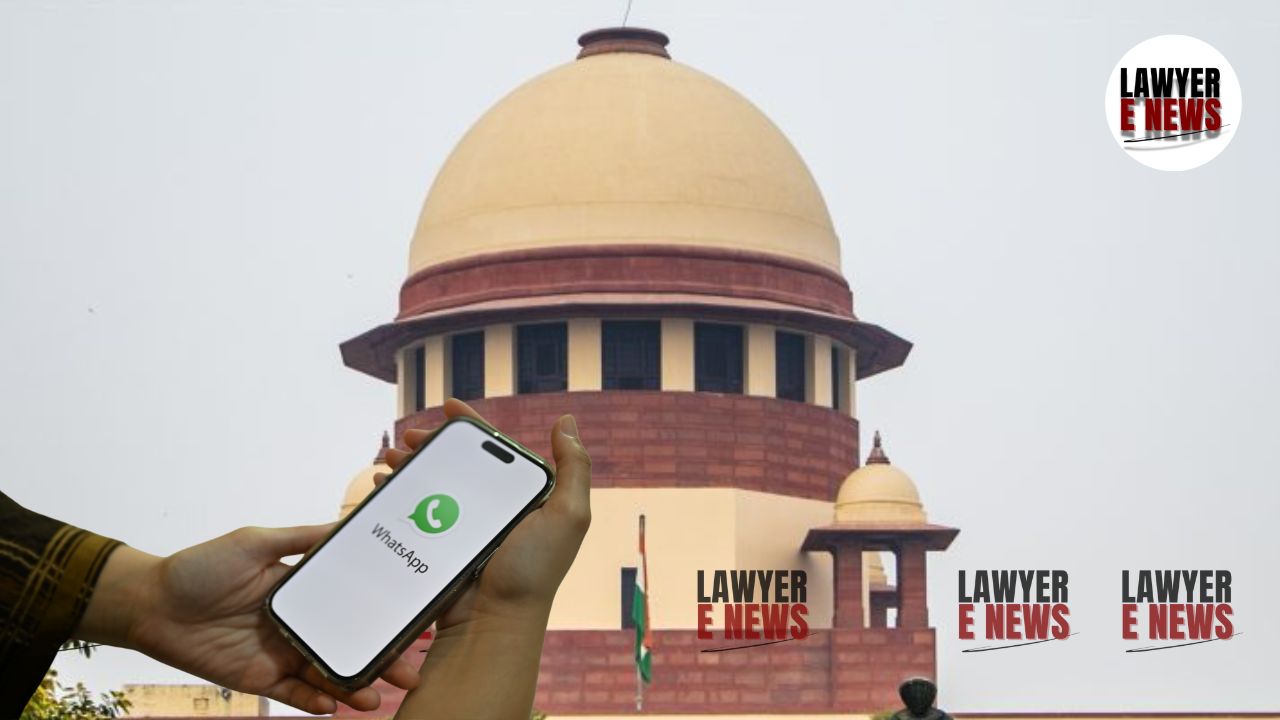
Supreme Court took significant steps to ensure compliance with procedural laws under the Criminal Procedure Code (CrPC), 1973, and the newly enacted Bharatiya Nagarik Suraksha Sanhita (BNSS), 2023. Addressing widespread procedural violations, the Court strictly prohibited the use of WhatsApp and other electronic modes for serving notices under Section 41-A of CrPC and its corresponding provision, Section 35 of BNSS.
The Court stated: "Notices served through WhatsApp or other electronic modes circumvent the prescribed procedure under the CrPC and BNSS, undermining the statutory safeguards. Such notices are invalid and must be served in person or through modes specifically outlined in Chapter VI of these laws."
"Personal Service of Notices Made Mandatory to Protect Procedural Integrity"
The bench, comprising Justice M.M. Sundresh and Justice Rajesh Bindal, reiterated that procedural integrity cannot be compromised. The Court referred to the precedent set in Rakesh Kumar v. Vijayanta Arya (2021 SCC Online Del 5629) and Satender Kumar Antil v. CBI (2022), both of which held that electronic service of notices under Section 41-A CrPC or Section 35 BNSS is invalid.
The Court emphasized: "The police machinery must strictly adhere to the prescribed procedures for serving notices under Section 41-A of CrPC/Section 35 of BNSS. Circumventing these provisions by using WhatsApp or other electronic modes cannot be recognized or permitted."
"Release of Undertrial Prisoners on Personal Bonds Based on Aadhaar Verification to Be Examined Further"
A related issue raised by Amicus Curiae Siddharth Luthra pertained to the release of undertrial prisoners (UTPs) on personal bonds following Aadhaar card verification. The Amicus noted that many UTPs remain in custody despite being eligible for bail.
The Court deferred this issue for further deliberation, stating: "The feasibility of releasing undertrial prisoners on personal bonds after Aadhaar verification requires consultation with NALSA and other stakeholders. This issue will be considered comprehensively on the next date of hearing."
"Institutional Monitoring Mechanism for High Courts Ordered"
To ensure sustained compliance with its orders, the Supreme Court directed High Courts to implement robust institutional monitoring mechanisms. The Court mandated that High Courts hold monthly meetings of their Committees for "Ensuring the Implementation of Decisions of the Apex Court."
"Full and continuous compliance with the Court's directives requires institutional oversight. High Courts must ensure that compliance reports are submitted monthly to the relevant authorities," the bench observed.
"States and UTs Ordered to Comply with Directions on Police Procedures"
The Court expressed concern over delayed compliance by certain States and Union Territories, singling out the State of Mizoram and UT of Lakshadweep. The bench issued a final warning to the UT of Lakshadweep, stating:
"If the UT of Lakshadweep fails to file a fresh compliance affidavit within two weeks, the Chief Secretary will be required to appear in person before this Court on the next date of hearing."
Key Directions Issued by the Supreme Court
The Court issued comprehensive directives aimed at ensuring compliance with its earlier rulings and procedural laws:
Proper Service of Notices:
Notices under Section 41-A CrPC/Section 35 BNSS must only be served through prescribed modes, not via WhatsApp or electronic methods.
New Standing Orders for Police:
All States and UTs must issue standing orders mandating strict adherence to procedural norms under CrPC and BNSS.
Compliance by High Courts:
High Courts must convene monthly meetings of their Committees for implementing Supreme Court decisions and submit compliance reports to designated authorities.
Final Deadline for Lakshadweep:
The UT of Lakshadweep was given two weeks to file a fresh compliance affidavit. Non-compliance will result in the Chief Secretary’s personal appearance before the Court.
"Ensuring Procedural Safeguards in Criminal Justice System"
The Court underscored the importance of procedural safeguards in criminal justice, particularly concerning the service of notices and the treatment of undertrial prisoners. Referring to Satender Kumar Antil (2022), the bench noted:
"The procedures laid down in CrPC and BNSS serve to protect individual liberty and ensure a fair process. Any deviation, such as improper service of notices, undermines these objectives and erodes public confidence in the justice system."
Next Hearing Scheduled for March 18, 2025
The Court directed all compliance affidavits to be filed by States, UTs, and High Courts within four weeks, with the next hearing scheduled for March 18, 2025. The bench stated:
"Non-compliance will invite appropriate consequences, including necessary orders to enforce adherence."
Satender Kumar Antil v. Central Bureau of Investigation & Anr.
Date of Order: January 21, 2025