-
by sayum
23 August 2026 2:56 PM








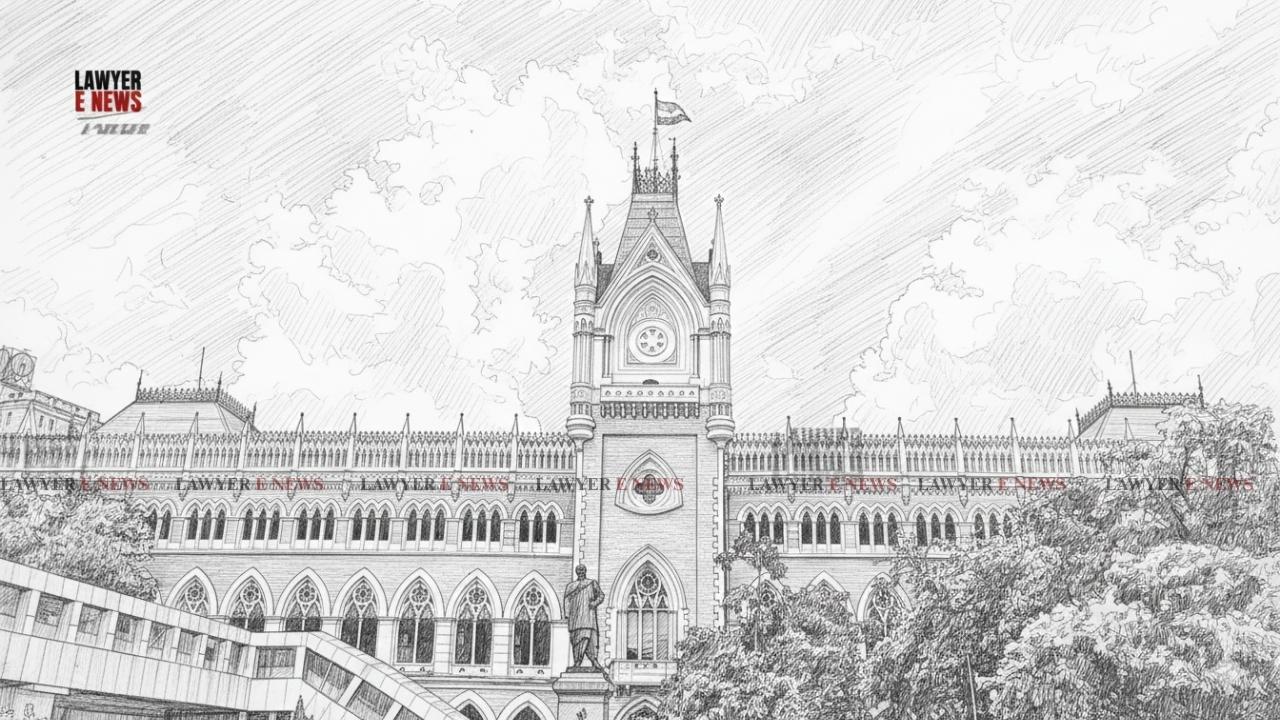
Trial Court Misinterpreted Section 146 NI Act—Cheque Return Memo With Bank Code, Branch Name, and Reason for Dishonour Is Valid Evidence - Calcutta High Court reversed the acquittal of an accused in a cheque bounce case under Section 138 of the Negotiable Instruments Act, 1881 (NI Act), holding that the absence of a bank seal or signature on a system-generated cheque return memo does not invalidate its evidentiary value. The court ruled that the trial court had erroneously equated "official mark" with "official seal and signature," leading to a wrongful acquittal.
A bench of Justice Dr. Ajoy Kumar Mukherjee, allowing the appeal, convicted Ajit Chandra Mondal, directing him to pay a fine of ₹12,00,000/- within three months, failing which he would undergo six months of simple imprisonment. The court also emphasized that the fine amount, if paid, would be disbursed as compensation to the complainant.
Cheque Bounce Case—Trial Court Erred in Rejecting System-Generated Dishonour Memo
The complainant, Pravin Kumar Tiwari, had presented a cheque of ₹6,00,000/-, issued by the accused, for encashment. However, the cheque was dishonoured due to "exceeds arrangement", and a cheque return memo (Exhibit-2) was issued by the bank. The complainant then sent a statutory demand notice, which was refused by the accused, leading to the filing of a complaint under Section 138 NI Act.
The trial court, however, acquitted the accused, holding that the cheque return memo did not bear an official seal or signature from the bank, thereby failing to meet the evidentiary requirement under Section 146 of the NI Act. The trial court stated, “The cheque return memo must bear an official mark, and in the absence of a bank seal, the dishonour is not proved.”
Disagreeing with this interpretation, the High Court ruled that the trial court had adopted a narrow and incorrect reading of Section 146 NI Act, which presumes a cheque return memo to be prima facie evidence of dishonour unless disproved by the accused.
"System-Generated Cheque Return Memo Is Sufficient Proof of Dishonour"—High Court Overrules Trial Court
Justice Mukherjee, overturning the acquittal, held that a system-generated return memo containing the bank code, branch name, user ID, and reason for dishonour constitutes valid evidence under Section 146 of the NI Act.
"The cheque return memo clearly indicates the bank code, branch name, user ID, details of the dishonoured cheque, and the reason for dishonour—this is sufficient proof of dishonour under Section 146. The absence of a bank seal or signature does not render the document invalid," the court stated.
Referring to the Delhi High Court’s judgment in Guneet Bhasin v. State of NCT of Delhi, 2022 SCC OnLine Del 3967, the court reiterated that neither Section 138 nor Section 146 of the NI Act mandates a specific form of cheque return memo. The court observed:
"The cheque return memo is merely an intimation from the bank that a cheque has been returned unpaid. As long as it contains necessary details proving dishonour, it is valid evidence under law. The trial court's insistence on a bank seal was misplaced."
Accused Did Not Dispute Dishonour—Presumption Under Section 146 NI Act Applies
The High Court further noted that the accused never disputed the dishonour of the cheque at any stage of the proceedings.
The accused did not respond to the statutory demand notice.
During his examination under Section 313 Cr.P.C., he did not deny dishonour of the cheque.
Even during his testimony as DW-1, the accused never claimed that the cheque had not been dishonoured.
Given these circumstances, the High Court ruled that the statutory presumption under Section 146 NI Act stood unrebutted, and the accused had failed to discharge his burden to prove otherwise.
High Court Sentences Accused to ₹12 Lakh Fine or Six Months' Imprisonment
Holding the accused guilty under Section 138 of the NI Act, the court convicted and sentenced him to pay a fine of ₹12,00,000/- within three months, failing which he would undergo simple imprisonment for six months.
The court directed that if the fine amount is deposited, it shall be paid as compensation to the complainant. However, if the accused fails to pay and does not appear in court, the trial court shall take steps, including issuing a warrant, to ensure compliance.
Key Takeaways from the Judgment
• Cheque return memos are valid even without a bank seal or signature, provided they contain identifying details of dishonour.
• Trial courts must not insist on formalistic technicalities to defeat the purpose of the NI Act, which aims to uphold the credibility of cheques.
• The presumption under Section 146 NI Act applies unless rebutted by the accused—mere silence or non-denial does not discharge this burden.
• Conviction under Section 138 NI Act can be sustained even on a system-generated cheque return memo if it meets statutory requirements.
With this decision, the Calcutta High Court has reinforced the principle that technical objections cannot be used to frustrate cheque bounce proceedings under the NI Act. The ruling serves as a clear precedent against unnecessary formalistic requirements in dishonour cases, ensuring that defaulters cannot escape liability on flimsy procedural grounds.
Date of Decision: 28 January 2025