-
by sayum
10 August 2026 1:57 PM







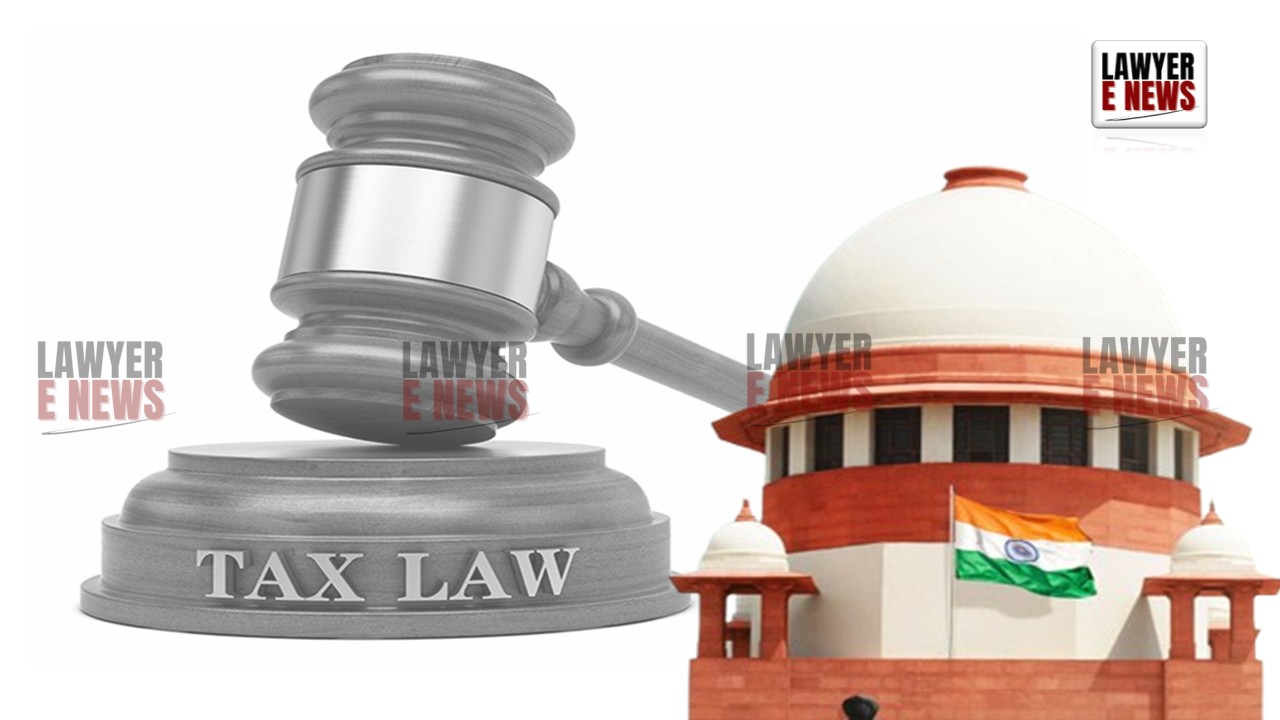
“Purchase Tax Is a Self-Contained Levy on the Act of Purchase, Not on Subsequent Use or Dispatch” — In a landmark ruling Supreme Court of India, through a Full Bench led by Chief Justice Sanjiv Khanna, settled a long-standing constitutional and statutory controversy surrounding the imposition of purchase tax on exempt transactions under Section 5A of the Kerala General Sales Tax Act, 1963 and Section 7A of the Tamil Nadu General Sales Tax Act, 1959. In C.T. Kochouseph v. State of Kerala and Another etc., the Court upheld the constitutional validity and legislative competence of these provisions, ruling that purchase tax can be validly imposed even when the seller is exempt from collecting sales tax.
The Court declared emphatically: “Exemption from payment of tax at the time of sale is a pre-condition for attracting Sections 5A and 7A respectively… Purchase tax is not levied in addition to sales tax, but only where no sales tax was payable on the sale.”
This judgment dismisses over a dozen connected civil appeals, reasserting the distinction between exemption and non-liability and preserving the State's fiscal authority.
The dispute arose in the context of purchase transactions where the selling dealer was either exempt under notification or fell below the taxable threshold. The Revenue imposed purchase tax under Section 5A or 7A on such transactions, when the buyer used the goods in manufacturing, disposed of them otherwise than by sale within the State, or dispatched them out of the State.
The appellants, including manufacturers and traders such as Britannia Industries, contended that once the seller was exempt, the goods were not “liable to tax” and hence, no purchase tax could be levied. They further argued that the levy, in effect, became a tax on consumption or consignment, violating constitutional limitations on State taxing powers.
Chief Justice Sanjiv Khanna, writing for the Bench, held that: “Sections 5A and 7A are self-contained charging provisions, constitutionally valid and intended to prevent tax leakage when sales tax is not payable at the point of sale.”
The Court firmly rejected the argument that only goods on which sales tax was paid could be subjected to purchase tax, clarifying: “What is taxable under Sections 5A and 7A are ‘taxable goods’—not taxable transactions. These provisions apply when tax is not paid at the seller’s end but the goods themselves fall within the class of goods generally liable to tax.”
The Court extensively relied on its earlier rulings in State of Tamil Nadu v. M.K. Kandaswami, Hotel Balaji v. State of Andhra Pradesh, and Devi Dass Gopal Krishan Pvt. Ltd., while overruling the ratio in Goodyear India Ltd., which had previously cast doubt on such levies.
It reiterated: “The decision in Goodyear does not lay down the correct law. Section 7A creates a separate and independent charge, intended to bring to tax goods which, under normal circumstances, would have been taxed at some point in the State.”
On the legislative competence, the Court categorically observed: “The levy is on the purchase—neither on the dispatch nor on the consumption of manufactured goods. It does not offend constitutional limits under List II or the provisions of the Central Sales Tax Act.”
On the Nature of the Levy and Timing of Taxability
The appellants had relied on the decision in Peekay Re-Rolling Mills, arguing that no liability could arise where declared goods (under Section 14 of the CST Act) had already been taxed at a single point. The Court distinguished this case and rejected the argument: “Peekay Re-Rolling Mills relates to declared goods and the bar under Section 15 of the Central Act. That ratio is inapplicable to the present case. Here, the goods are not exempt from tax absolutely—they are exempted only at the point of sale.”
The Court clarified the distinction between levy, assessment, and collection: “Levy refers to the imposition of tax liability; assessment quantifies it; collection is the administrative act. The nature of the levy remains a tax on purchase, even if its enforceability is triggered by post-purchase events like inter-State dispatch or non-sale disposal.”
Exemption from Sales Tax Does Not Include Purchase Tax
In response to arguments that Government Notifications under Section 17 of the Tamil Nadu Act exempted transactions altogether, the Court explained: “The GO pertains solely to tax payable on sales, not purchase tax. It would defeat the very object of Section 7A to suggest that exemption from sales tax nullifies purchase tax.”
Specifically addressing Britannia’s argument that the rate of purchase tax should be treated as nil due to exemption at the sales end, the Court held: “If we accept that no rate applies because of exemption at the sale, it would render Section 7A otiose. Purchase tax is designed precisely for such transactions—where the sale escapes tax.”
The Supreme Court concluded: “Purchase tax under Sections 5A and 7A is validly imposed on the buyer when the goods—though exempt at the seller’s end—are used or dispatched in the manner stipulated under the statute.”
All appeals were dismissed and the stay orders were vacated. The Court decisively held: “Sections 5A and 7A impose purchase tax only when tax is not otherwise payable on the sale—this does not amount to double taxation but rather a complementary measure to preserve revenue.”
By resolving the conflict between prior precedents and affirming the ratio in Hotel Balaji and Kandaswami, this judgment restores certainty and coherence in the structure of pre-GST purchase tax law and reasserts the State’s power to safeguard fiscal interests against tax leakage.
Date of Decision: May 09, 2025