-
by sayum
10 August 2026 1:57 PM







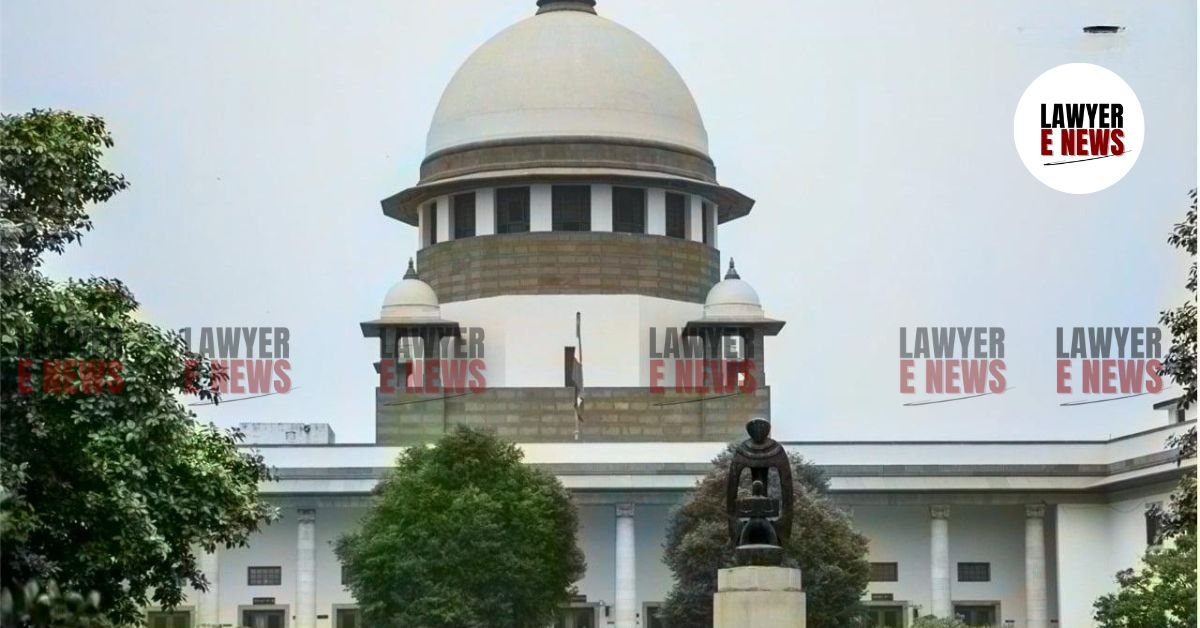
“Despite Visible Injuries, No Cause of Death Stated — Omission Seems Deliberate”, Supreme Court of India delivered a stinging indictment of police misconduct and institutional failure, Court ordered the Central Bureau of Investigation (CBI) to take over the investigation into the custodial death of Deva Pardhi, after holding that the local police—who were themselves accused—had "influenced the investigation right from the beginning."
Calling the conduct of the authorities “a textbook case of conflict of interest,” the Court observed that the principle of “nemo judex in causa sua”—that no one should be a judge in his own cause—stood grossly violated, making the CBI's intervention not just necessary, but inevitable.
The case arose from a June 2024 FIR lodged by one Bhagwan Singh reporting theft and house trespass. During a family wedding on July 13, 2024, police officials stormed the event and forcibly took away Deva Pardhi and his uncle, Gangaram Pardhi, allegedly subjecting them to brutal third-degree torture at an old police station that lacked CCTV coverage.
According to the appellants, “Deva Pardhi was hung upside down, doused with water, beaten with ropes, and had salt and hot water poured on his wounds.” The torture ended only when Pardhi lost consciousness after falling from a height. He was declared dead upon arrival at the hospital.
Despite the horrific injuries on the body, doctors gave a reserved opinion. Later, the cause of death was curiously recorded as “vasovagal shock leading to heart attack”—a finding the Court termed “deliberate rather than unintentional.”
The FIR pertaining to his death—FIR No. 341/2024—was only registered after a magisterial inquiry, and even then, did not include charges of murder. No arrests were made even eight months after registration.
The appellants—Deva Pardhi’s mother and aunt—approached the Supreme Court seeking two main reliefs:
Transfer of investigation to the CBI, and
Bail for Gangaram Pardhi, the sole eyewitness, who has been imprisoned and implicated in several allegedly false FIRs.
The Supreme Court underlined the dangerous precedent of allowing accused authorities to conduct their own investigation. It held: “The local police is adjudging its own cause, which is causing grave prejudice to the appellants.”
Referring to earlier precedents like Narmada Bai v. State of Gujarat, the Court stressed: “No matter how faithfully and honestly the local police may carry out the investigation, the same will lack credibility as allegations were directed against them.”
The Court also remarked that the post-mortem report was compromised: “Despite taking note of the large number of injuries... the members of the Medical Board failed to express any opinion regarding the cause of his death. This omission seems to be deliberate rather than unintentional and appears to be a direct result of influence being exercised by the local police officials.”
Citing glaring irregularities and ongoing threats to the only witness, the Court made the following critical observations: “Not a single police official responsible for the death of a young man in custody has been arrested.”
“This is a classic case warranting invocation of the Latin maxim ‘nemo judex in causa sua’.”
“The fact that even the doctors seem to have been pressurised... lends further weight to the allegation of police shielding.”
Accordingly, the Court transferred the investigation to the CBI, stating: “The jurisdictional Superintendent of Police, CBI, shall forthwith direct registration of the RC and ensure fair, transparent and expeditious investigation.”
The Court set a firm timeline: arrests must be made within one month, and investigation concluded within 90 days from the date of arrest.
On Bail for the Eyewitness and Witness Protection:
On the issue of bail for Gangaram Pardhi, the Court was scathing in its remarks: “A deliberate attempt is being made to implicate him in multiple cases... to keep him behind bars indefinitely and break his spirit.”
While refraining from granting bail directly, the Court gave liberty to Gangaram to approach the Madhya Pradesh High Court, directing it to consider the application in light of these findings.
The Court also invoked the Witness Protection Scheme, holding: “It is the duty of the State to provide him protection... either in prison or after being released on bail.”
Responsibility for his security has been placed on the Principal Secretary (Home) and the Director General of Police, Madhya Pradesh.
This landmark ruling reaffirms the Constitutional promise of impartial justice and holds a mirror to the systemic abuse of power within law enforcement. In castigating the manipulation of medical evidence and persistent efforts to silence the eyewitness, the Supreme Court has set a precedent for transparency, accountability, and the protection of truth in custodial death cases.
Date of Decision: May 15, 2025