-
by sayum
10 August 2026 1:57 PM







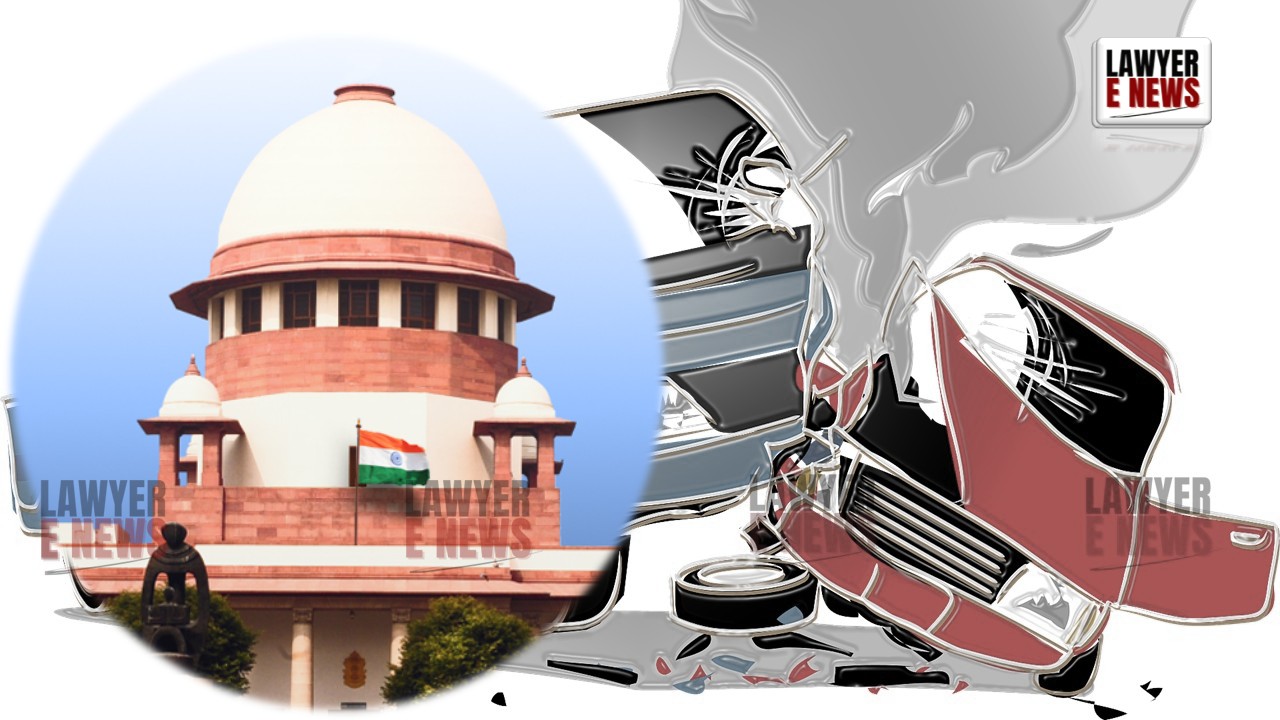
"The obligation of a child to maintain their parent in old age is as much of a duty as the obligation of a parent to maintain their child during minority", - Supreme Court of India pronounced a significant ruling on the scope of dependency under the Motor Vehicles Act, 1988. The bench comprising Justices Sudhanshu Dhulia and K. Vinod Chandran allowed the appeal in part, restoring and enhancing compensation to the mother of the deceased, while affirming the High Court’s limitation on the claim of the deceased’s married daughter. The Court clarified the meaning of "dependent" and held that even prospective dependency of a parent must be considered in fatal motor accident claims.
The appeal arose from a tragic accident that occurred on January 26, 2008, when Paras Sharma, riding a two-wheeler, was fatally crushed by a Rajasthan Roadways bus that took a sudden negligent right turn. A claim petition was filed under the Motor Vehicles Act by the deceased’s mother and married daughter seeking ₹54,30,740/- as compensation.
The Motor Accident Claims Tribunal awarded ₹15,97,000/- to the claimants, recognizing both as legal heirs and computing compensation on the assumption of 50% dependency. However, the Rajasthan High Court reduced the award drastically—allowing only ₹50,000/- to the daughter and dismissing the mother’s claim altogether, relying on Manjuri Bera v. Oriental Insurance Co. Ltd. (2007) 10 SCC 634.
The central question before the Supreme Court was whether the appellants were eligible for compensation based on dependency and whether the High Court had correctly interpreted the law in reducing the award.
The Supreme Court agreed with the High Court that the married daughter (Appellant No. 1) failed to prove financial dependency. “Once a daughter is married, logical presumption is that she now has rights on her matrimonial household... unless proven otherwise,” the Court held. It cited Manjuri Bera to reiterate that legal representatives may receive compensation under Section 140 of the Act, but not on the ground of dependency unless proved.
However, the Court categorically held that the High Court erred in denying compensation to Appellant No. 2—the 70-year-old mother of the deceased—on the ground of lack of dependency.
“The obligation of a child to maintain their parent in old age is as much of a duty as the obligation of a parent to maintain their child during minority,” the Court observed. It emphasized that “even if it is assumed that Appellant No. 2 was not dependent on the deceased at the time of the accident, the possibility of future dependency cannot be disregarded.”
The Court distinguished the mother's claim from that of the daughter and rejected the High Court’s application of Manjuri Bera to her case.
Applying the principles from Pranay Sethi v. National Insurance Co. Ltd. (2017) 16 SCC 680 and Sarla Verma v. DTC (2009) 6 SCC 121, the Supreme Court reassessed the compensation. Noting the deceased’s monthly income at ₹24,406 and applying a 15% future prospects addition, 50% deduction for personal expenses, and a multiplier of 11 (for age group 51–55), the Court calculated the following:
• Loss of future income: ₹18,52,356
• Funeral expenses: ₹15,000
• Loss of estate: ₹15,000
• Loss of filial consortium: ₹40,000
• Total compensation: ₹19,22,356
The Court accordingly directed payment of ₹19,22,356 to Appellant No. 2 (mother), setting aside the High Court’s rejection of her claim.
The Supreme Court’s judgment reinforces the broader and humane interpretation of “dependency” under the Motor Vehicles Act. It recognizes not just present but potential future dependency, especially in the case of elderly parents. The ruling brings clarity to the application of precedents like Manjuri Bera, emphasizing factual distinctions and the obligation of adult children towards aged parents.
Date of Decision: May 13, 2025