-
by sayum
04 August 2026 1:39 PM







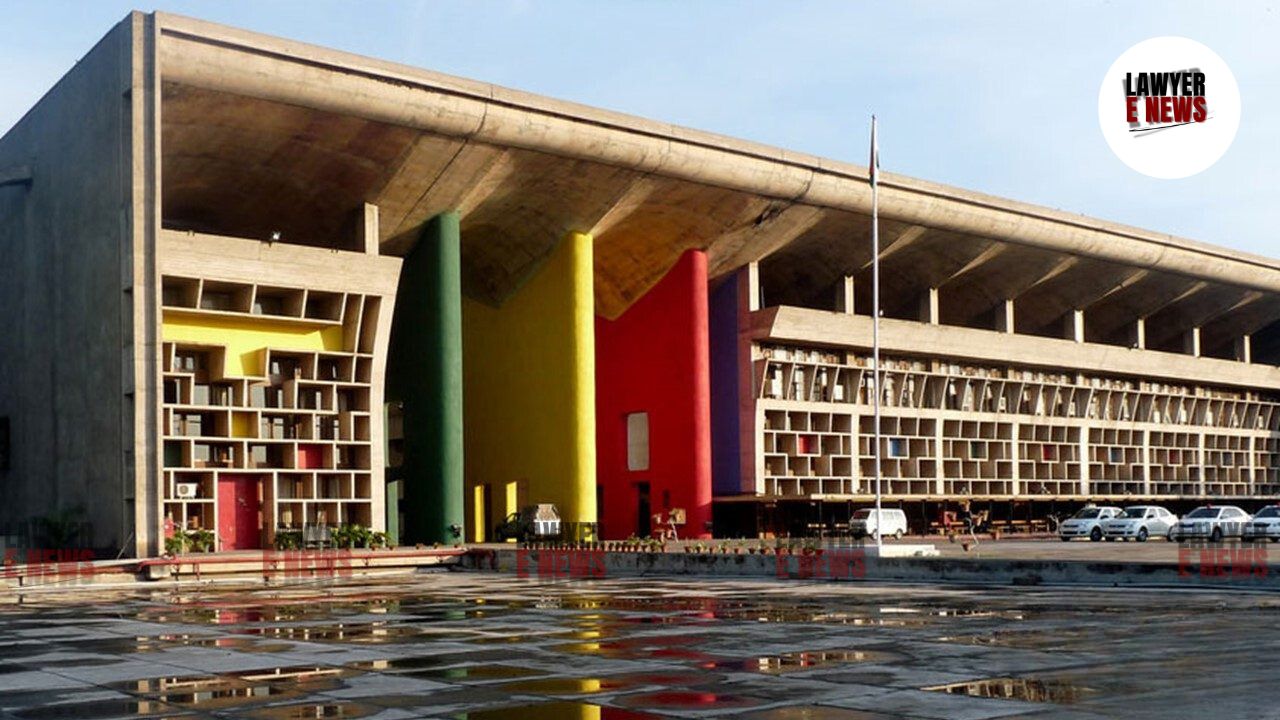
"In the case of judicial officers, the yardsticks are necessarily different and more strict" — Punjab and Haryana High Court rejecting a constitutional challenge by a judicial couple against their premature retirement and holding that integrity-related adverse remarks in Annual Confidential Reports (ACRs) can independently form the basis for such action. The Division Bench comprising Justice Ashwani Kumar Mishra and Justice Rohit Kapoor quashing the recovery of ₹23,85,664 from his subsistence allowance but upholding his compulsory retirement.
The decision, delivered in the exercise of writ jurisdiction under Article 226 of the Constitution, is a clear reiteration of the narrow grounds available to challenge a premature retirement, especially in the judicial service, and affirms the doctrine that even a single entry doubting integrity may justify such administrative action in public interest.
Judicial Officers Not Immune from Early Retirement Based on Integrity Concerns: Entire Record Holds the Key
The case concerned two judicial officers—husband and wife—who had been compulsorily retired under Rule 3 of the Punjab Civil Services (Premature Retirement) Rules, 1975, following the recommendations of the High Court’s Full Court. Mr. Ravinder Kumar Condal was retired with effect from October 5, 2015, and Ms. Asha Condal with effect from November 29, 2017. While both challenged the legality of their premature retirement, Mr. Ravinder Kumar Condal additionally challenged the decision to treat his suspension period as “leave of the kind due” and the resultant recovery of nearly ₹24 lakhs from the subsistence allowance paid to him.
Rejecting the petitioners’ claim of having an "unblemished" record, the High Court observed, “There were repeated observations/remarks including those pertaining to honesty/integrity of the petitioners starting from the year 2009 onwards itself”. These adverse observations included "needs to be kept under watch" and "whispers in the bar and official circles about reputation"—remarks that, while advisory in tone, held considerable weight in judicial service assessment.
The Court referred extensively to past judgments including Pyare Mohan Lal v. State of Jharkhand, Rajendra Singh Verma v. Lt. Governor (NCT Delhi), and Ram Murti Yadav v. State of UP, noting that:
“The standard or yardstick for judging conduct of judicial officers necessarily has to be strict in order to maintain complete faith in the minds of the ordinary litigant.”
Reiterating the legal position, the Court held that the exercise of premature retirement is a non-punitive administrative action intended to ensure that only officers with unimpeachable integrity remain in service. Citing the Supreme Court’s authoritative judgment in Baikuntha Nath Das v. Chief District Medical Officer, the Bench reiterated that such retirement does not attract Article 311 protections and cannot be interfered with unless there is a clear case of mala fides, perversity, or lack of any material.
Suspension Period Cannot Be Converted into Leave in Absence of Final Disciplinary Finding: Recovery Quashed for Husband
While the Court upheld the compulsory retirement of both officers, it found merit in Mr. Ravinder Kumar Condal’s separate challenge to the treatment of his suspension period as leave of the kind due, which had led to the issuance of recovery orders amounting to ₹23,85,664.
The Court observed that the disciplinary proceedings against him had not been concluded and were, in fact, kept in abeyance by the Full Court. In such a scenario, the conversion of suspension into “leave due” and subsequent financial recovery was held to be arbitrary and contrary to the law laid down by the Supreme Court in State of Punjab v. Rafiq Masih.
The Court held:
“The decision to order recovery, after the premature retirement and keeping the disciplinary proceedings in abeyance, would be unwarranted, iniquitous and against the basic tenets enshrined under Article 21 of the Constitution.”
Accordingly, orders dated 07/12.02.2018, 13.06.2018, 04.04.2019, and 27.08.2019 were set aside to the extent they directed recovery from the petitioner, granting partial relief in CWP 16022 of 2021.
However, since Ms. Asha Condal had not raised any challenge to the treatment of her suspension period or related recoveries, the relief was confined to Mr. Ravinder Kumar Condal alone.
High Court Rejects Allegations of Bias, Upholds Full Court’s Collective Decision
The petitioners also attempted to invoke bias, alleging animus from one of the Administrative Judges who had recorded adverse remarks. The Court, however, categorically rejected this contention, noting that:
“The concerned Administrative Judge stood retired in the year 2013, while the orders of premature retirement were passed subsequently... Cyclostyled allegations have been levelled... and it is clear that the same are an afterthought.”
The Bench emphasized that the Full Court’s decision was based on the collective application of mind, following review of the entire service records by multiple functionaries including the Administrative Committee and Vigilance/Disciplinary Committee. Hence, any plea of bias was ruled out.
Further, the Court dismissed arguments regarding violation of guidelines issued in 1979 or 2011 and clarified that:
“The 2007 Rules pertain to promotion and have no applicability whatsoever in the cases of premature retirement, which is governed by Rule 3 of the said Rules.”
The judgment underscores the sanctity and credibility expected of judicial officers, reiterating that even unproven allegations or general adverse reputation—if reflected in service records—may suffice for ordering premature retirement.
Significantly, it also reinforces the principle that premature retirement is a non-stigmatic administrative tool, not a punitive measure, and hence judicial review is severely limited.
With this ruling, the High Court has once again drawn a firm boundary between judicial independence and judicial accountability, invoking the higher ethical threshold applicable to the Bench.
Date of Decision: 21 November 2025