-
by sayum
11 August 2026 7:51 AM







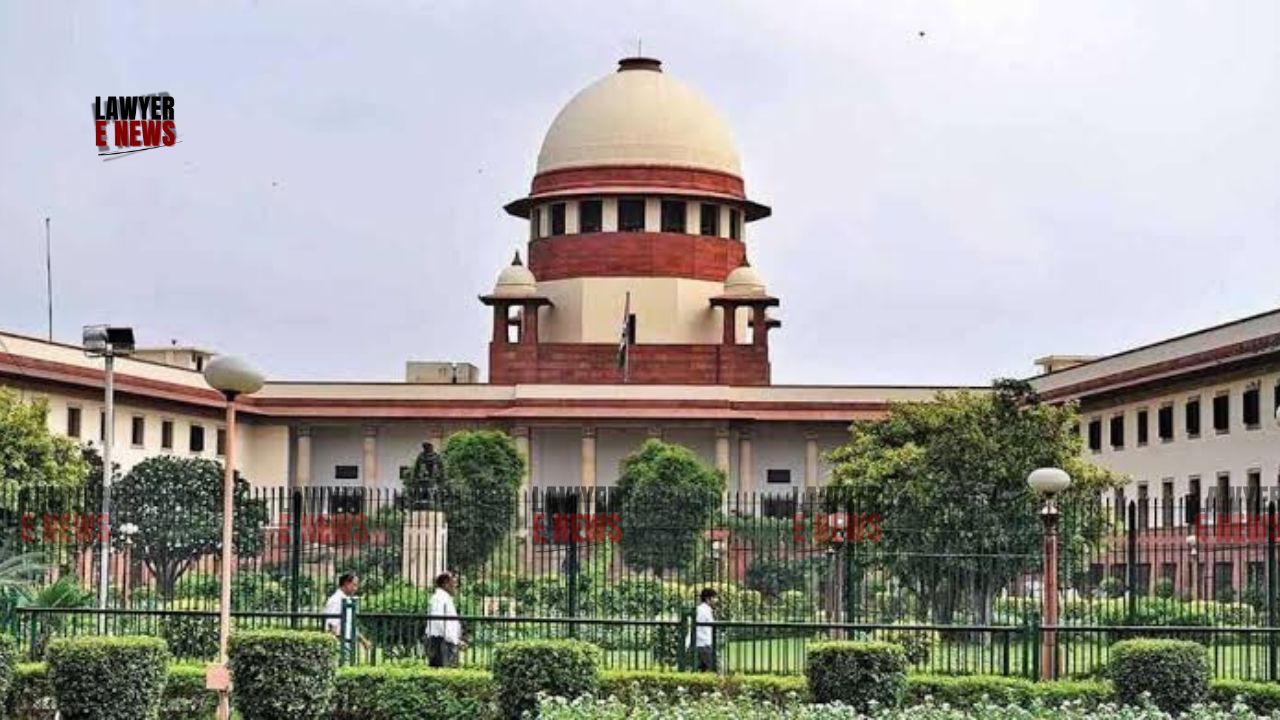
"Section 22(2) of the Specific Relief Act is Clear — There Shall Be No Refund Unless Specifically Claimed" — On May 2, 2025, the Supreme Court of India delivered a crucial ruling and decisively holding that the forfeiture of advance money under a property sale agreement was valid where the sum, though labeled "advance", functioned as earnest money. The Court ruled that such a sum, paid as security for contractual performance, could be lawfully forfeited upon the purchaser's default. Simultaneously, the Court reaffirmed that no court can grant the relief of refund of earnest money unless it is “specifically claimed” as required by Section 22(2) of the Specific Relief Act, 1963.
The case arose from a sale agreement dated July 25, 2007, wherein the appellant agreed to purchase immovable property in Kengeri Satellite Town, Bangalore, for ₹55,50,000. The appellant paid ₹20,00,000 through cheques at the time of execution. The agreement, while referring to this sum as “advance”, clearly stipulated that in case of purchaser’s default, the said sum would be forfeited, and in case of vendor’s default, double the amount would be refunded.
The appellant failed to pay the remaining ₹35,50,000 within the stipulated four months and later alleged that the vendors had failed to provide a probate certificate of the title-devolving Will, which was needed for his bank to process a loan. The vendors sold the property to third parties after the expiry of four months. The appellant then filed a suit for specific performance and, later, appealed the rejection of his claim for refund of the advance.
The Court observed that although the sum paid was referred to as “advance”, its legal nature was that of earnest money, a term carrying specific legal implications. The Court noted:
“It is not the description by words used in the agreement only that would be determinative of the character of the sum but really the intention of parties and surrounding circumstances as well.”
Referring to the seminal case Shree Hanuman Cotton Mills v. Tata Aircraft Ltd., the Court reiterated that earnest money is a sum paid to bind the bargain and guarantee performance, and is forfeitable in case of default.
The clause in the agreement that provided for forfeiture by the vendor in the event of buyer’s default, and refund of double the amount in case of seller’s default, was held to be a mutual and fair arrangement. The Court underscored:
“Such a clause is neither one-sided nor unconscionable — it reflects equal obligation and consequence for both parties.”
The Court also ruled out the applicability of Section 74 of the Indian Contract Act to earnest money deposits, observing:
“A forfeiture clause in respect of earnest money is not penal. Even if Section 74 were to apply, the vendors in this case had pleaded and proved losses due to the default.”
In considering the claim for refund, the Court turned to Section 22 of the Specific Relief Act. It held that a party seeking refund of earnest money must specifically plead such a relief, either in the original plaint or by amendment, failing which the relief cannot be granted. It emphasized:
“The prayer clause is a sine qua non for grant of decree of refund of earnest money.”
The Court rejected the appellant’s contention that a general prayer for “any relief deemed fit” could suffice. Citing Desh Raj v. Rohtash Singh and Manickam v. Vasantha, the Court clarified:
“Section 22(2) enacts a rule of pleading. The relief must be clearly sought. The law aids the vigilant, not those who sleep over their rights.”
Concluding that the forfeiture was justified and the appellant had failed to claim refund in the manner required under law, the Supreme Court dismissed the appeal. The judgment reaffirms the doctrine that earnest money functions as a guarantee for performance, and its forfeiture is legally permissible where parties have clearly agreed to such a condition and default is proven. Moreover, the Court strictly enforced the statutory requirement of a specific prayer under Section 22(2), ruling that relief cannot be granted in its absence.
Date of Decision: May 2, 2025