-
by sayum
25 August 2026 12:32 PM







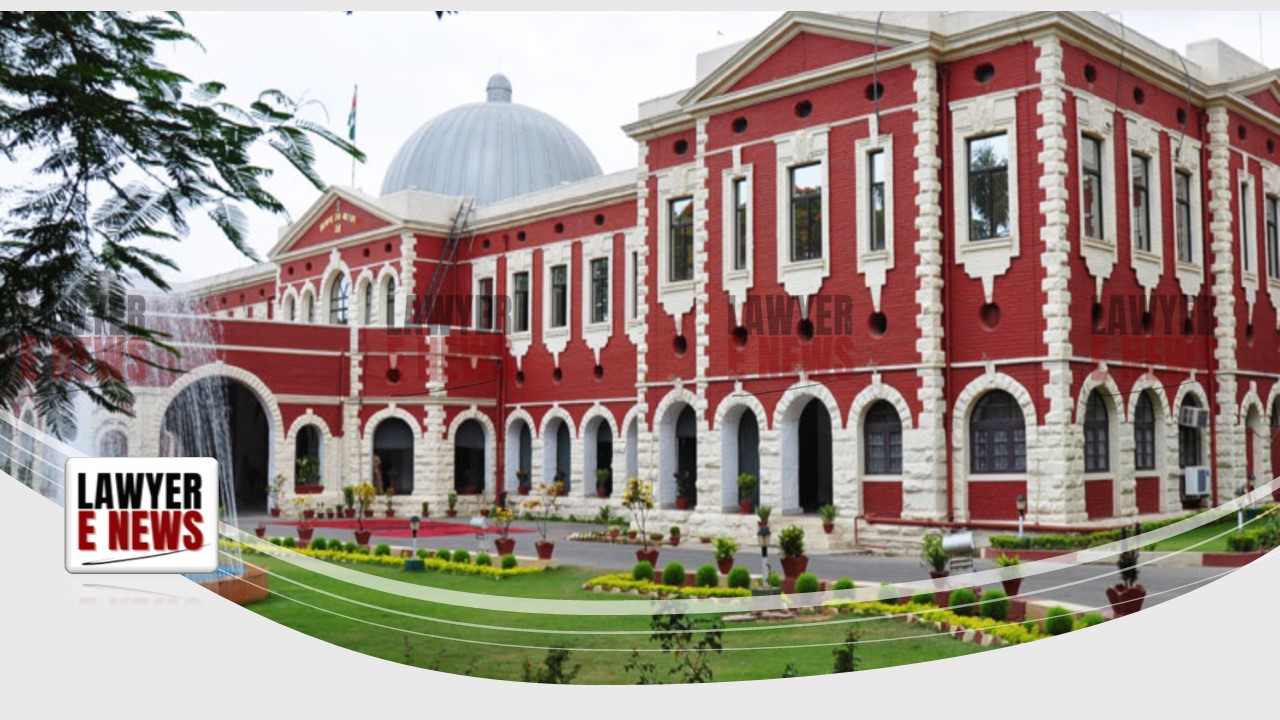
“Split Verdict Is a Weighty Factor Against Capital Punishment Even in the Rarest of Rare Cases” – In a case that shocked the law enforcement fraternity and challenged the authority of the State, the Jharkhand High Court commuted the death sentence awarded to two convicted Maoist insurgents—Sukhlal @ Prabir Murmu @ Pravir Da and Sanatan Baski @ Sahdeo Rai @ Tala Da—in the Pakur SP Ambush case, where Superintendent of Police Amarjit Balihar and five other police personnel were brutally killed in a Maoist-led ambush on 02 July 2013.
The Court, while affirming the conviction of the two appellants under various provisions of the IPC, Arms Act, and CLA Act, held that the existence of a split verdict in the Division Bench—with one judge acquitting and the other confirming the conviction—is a strong mitigating factor against the imposition of the death penalty.
"Despite the gravity of the offence and absence of any mitigating factor, the fact that one of the Hon’ble Judges of this Court had dissented and recorded a judgment of acquittal, weighs heavily against confirming the death sentence," observed Justice Gautam Kumar Choudhary, invoking the principles laid down in Pandurang v. State of Hyderabad, (1954) 2 SCC 826.
“Identification of Accused by Injured Police Witnesses Is Reliable Despite No TIP” – Court Upholds Conviction Based on Eyewitness Testimony
Relying on the direct evidence of two injured police personnel, PW-30 (Bodyguard) and PW-31 (Driver), the Court observed that injured witnesses deserve higher evidentiary value. Their testimony was held to be credible, natural and consistent.
The Court brushed aside the argument that lack of Test Identification Parade (TIP) rendered the dock identification unreliable, citing the principle that TIP is not substantive evidence, and where accused are known by aliases and called out by name during the incident, court identification is sufficient.
“The injured witnesses were not only present but also conscious and capable of perceiving the incident. Their cognitive faculties, sharpened by imminent threat to life, recorded the words and identities around them with clarity,” held the Court.
“Conviction Under Section 109 IPC Unsustainable Where Accused Are Present” – Substituted with Section 114 IPC
While upholding the convictions under Sections 302/149, 307, 333, 353, 396, 427 IPC, Section 27 of the Arms Act, and Section 17 of the CLA Act, the Court found the conviction under Section 109 IPC (abetment without presence) legally untenable as the appellants were present and participated in the crime. Instead, the Court applied Section 114 IPC.
“One cannot ordinarily be both an abettor and a participant. Since the appellants were physically present and engaged in the act, Section 109 has no application,” the Court clarified.
Split Verdict and Lack of Conspiracy Evidence Lead to Commutation of Sentence
The judgment arose from a split decision in the earlier Division Bench. Justice Rangon Mukhopadhyay had acquitted the appellants, citing doubt in eyewitness identification and procedural lapses, while Justice Sanjay Prasad upheld the convictions and confirmed the death sentence.
The matter was referred to Justice Gautam Kumar Choudhary under Section 392 CrPC, who carefully evaluated the testimonies, corroborative evidence, legal precedents, and constitutional principles surrounding the death penalty.
The Court noted the absence of specific evidence of criminal conspiracy, and despite the high gravity of the attack—clearly intended to cripple the anti-Maoist machinery by targeting its senior-most leader in the region—chose to commute the sentence to rigorous life imprisonment, emphasizing:
“While this was indeed an attack on the sovereignty of the State and the rule of law, the presence of a dissenting view within the High Court itself precludes the confirmation of death sentence.”
Court’s Legal Analysis: No Room for Fanciful Doubts, Only Judicially Scrutinized Probabilities
The Court invoked a series of Supreme Court judgments including Rajan v. State of Haryana (2025), M. Narsinga Rao v. State of A.P. (2001), and Balu Sudam Khalde v. State of Maharashtra (2023) to reiterate that minor discrepancies or inconsistencies in witness accounts, especially in high-stress violent events like ambushes, cannot be grounds to discard the core of truthful evidence.
"Law cannot be hypersensitive to trivialities; it must be just, rational, and humane," the Court said, invoking Justice Viscount Simon's dictum that a judge presides not only to protect the innocent but also to ensure the guilty do not escape.
The Court further clarified that evidence under Section 6 of the Evidence Act (res gestae) regarding statements made by injured victims to police arriving after the incident, while debatable in admissibility, was not the sole basis of conviction. The testimony of injured eyewitnesses was independently sufficient.
Conviction Affirmed, Death Sentence Commuted
Summing up, the High Court held:
Conviction under Sections 302/149, 307, 333, 353, 396, 427 IPC, Section 27 Arms Act, and Section 17 CLA Act stands affirmed.
Conviction under Section 109 IPC set aside, as Section 114 IPC is more appropriate.
Death sentence awarded under Sections 302 and 396 IPC is commuted to life imprisonment with a fine of ₹10,000 each.
In default of payment, additional simple imprisonment of three months.
Sentences to run concurrently, with life imprisonment applicable for Sections 302, 396, 307 IPC, and Section 27 Arms Act, and other sentences to follow concurrently thereafter.
"Where Judicial Minds Differ, Death Must Yield to Life" – A Constitutional Balance Between Justice and Certainty
This ruling stands as a judicial affirmation of the principle that death penalty requires the highest level of certainty—not merely in evidence, but also in judicial consensus. The Court, while denouncing the cold-blooded execution of six brave officers, held firm to constitutional mandates and judicial caution, ensuring justice that does not err on the side of irreversibility.
Date of Decision: 08.12.2025